
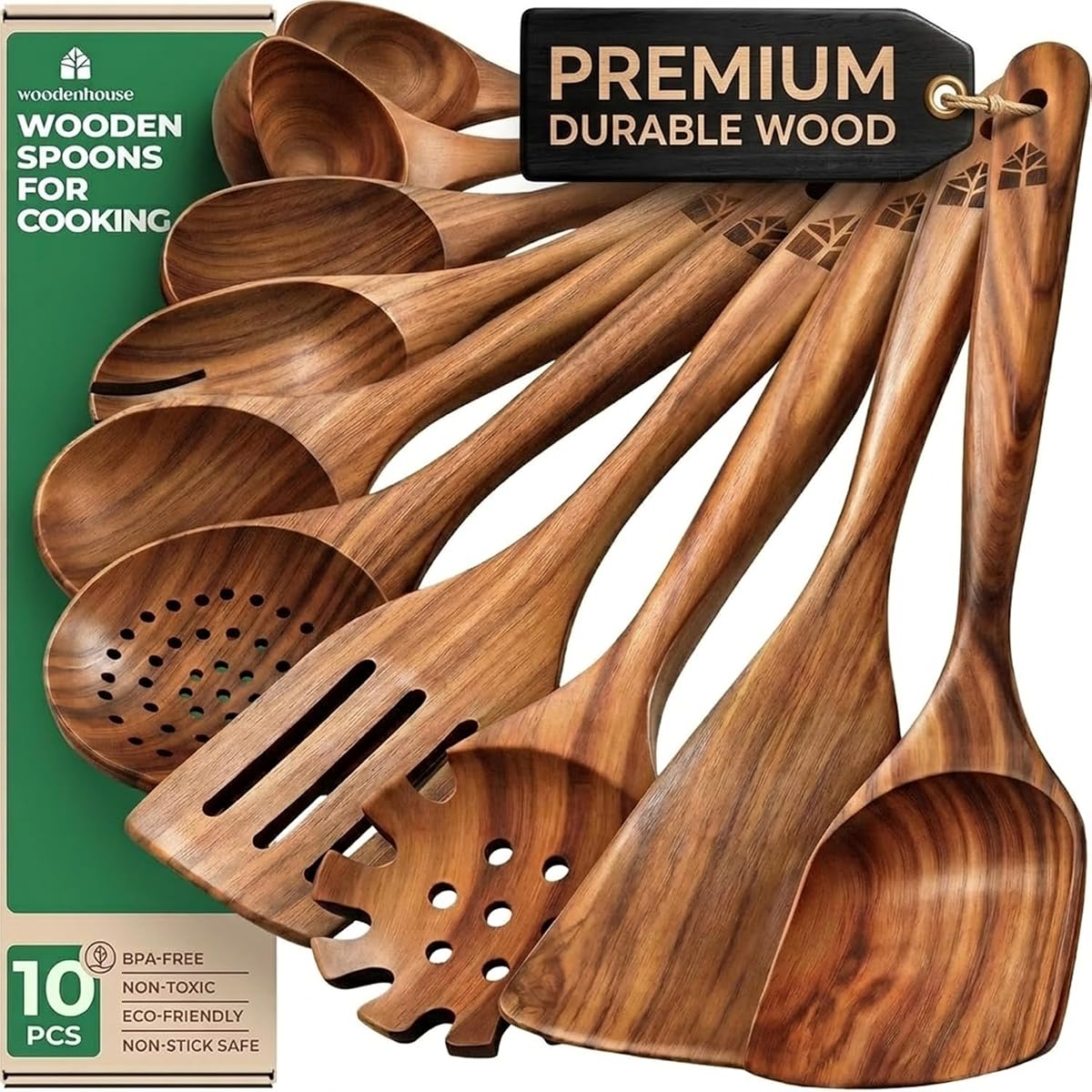
Teak vs. Bamboo: Choosing the Right 10-Piece Wooden Spoon Set
When selecting a wooden spoon set, the wood type matters more than most shoppers realize. Teak is prized for its natural oils, which resist moisture and cracking, while bamboo is lighter but less durable. This 10-piece set offers a range of utensils, but knowing how to assess wood quality and care requirements is key to long-term satisfaction.
Key Considerations Before Buying
- Consider the wood's hardness and oil content. Teak contains natural oils that make it water-resistant and less prone to warping, but be aware that some cheaper sets use rubberwood or acacia, which may not offer the same longevity.
- Evaluate the shape and depth of each utensil. The set includes spoons with varying curvature; one reviewer noted the spice spoon's bowl is shallower than expected, which could affect scooping efficiency. Think about your cooking habits—do you need deep ladles for soups or slotted spoons for frying?
- Check for smoothness and finish. High-quality wooden spoons should be sanded to a silky finish with no rough edges or splinters. A food-safe finish (like mineral oil) is a plus, but avoid varnished or lacquered utensils, as they can chip and are not truly non-toxic.
- Consider the length and handle design. Look for utensils with comfortable, ergonomic handles that provide a good grip, especially if you cook with large pots or deep pans. A length of 12-13 inches is standard, but shorter handles may be easier to store.
- Assess the care routine. Wooden spoons require hand washing and periodic oiling to maintain their appearance and prevent drying. If you prefer dishwasher-safe convenience, wooden utensils may not be the best fit.
What Our Analysts Recommend
Inspect the grain of the wood: tight, straight grains indicate a stronger, more durable piece. Also, look for a smooth, even surface without visible glue seams or cracks. Finally, check the weight—a heavier spoon often signals denser, higher-quality wood.
Spatulas Market Context
Market Overview
The market for wooden kitchen utensils has expanded significantly, with a focus on eco-friendly and non-toxic materials. Teak has become a premium choice due to its durability and natural resistance to bacteria, but price points vary widely, from budget-friendly bamboo sets to high-end teak collections.
Common Issues
Common complaints include splitting or cracking over time, especially if utensils are exposed to high heat or left soaking. Some users report a slightly rough texture or visible wood grain that can harbor food particles if not properly sealed. Also, the shape of certain utensils, like spice spoons, may not always match the intended use, leading to functional disappointments.
Quality Indicators
Look for solid one-piece construction (no glued parts), a food-safe mineral oil finish, and a thickness that feels substantial without being bulky. Reputable brands often provide care instructions and may offer a warranty, which is a good sign of confidence in their product.
Review Authenticity Insights
Grade B Interpretation
The Grade B rating indicates that while the majority of reviews appear authentic, approximately 10% may be fake or incentivized. This is a moderate level of concern, suggesting that the overall rating of 4.50 is only slightly inflated—the adjusted rating of 4.30 is still quite good. You can trust the general sentiment but should read individual reviews with a discerning eye.
Trust Recommendation
Given the 10% fake rate, I recommend focusing on detailed reviews that mention specific use cases, such as 'stirring thick stews' or 'using the slotted spoon for frying.' These are harder to fabricate and more likely to reflect real experiences. Also, consider the negative reviews—if they cite specific flaws like a spoon snapping or a rough finish, that’s valuable information.
Tips for Reading Reviews
When reading reviews, look for those that include photos or videos, as they often reveal the actual size and finish. Also, check the distribution of ratings: if many 5-star reviews are vague and short, but 4-star reviews are detailed, that’s a red flag. Pay attention to reviewers who have purchased other kitchen tools—they tend to offer comparative insights.
Expert Perspective
This 10-piece teak set offers excellent value for the price, especially given the natural durability and water resistance of teak. The adjusted rating of 4.30 suggests that most users are satisfied, with minor complaints about specific utensil shapes or finish. The 10% fake review rate is within an acceptable range, and the product's strong review count (8632) provides a solid sample size for confidence.
Purchase Considerations
Weigh the set's versatility against your cooking needs—while it includes a variety of spoons and spatulas, if you rarely use a slotted spoon or a spice spoon, you might be paying for extras. Also, consider the care required: if you prefer low-maintenance tools, wooden utensils may not be ideal, but for those who appreciate natural materials, this set is a solid choice.
Comparing Alternatives
Before committing, compare this teak set with other wooden spoon sets made from different woods (like olive wood or maple) to see which grain and weight feel best in your hand. Also, check whether the set includes any utensils you might already own, to avoid duplication.


