
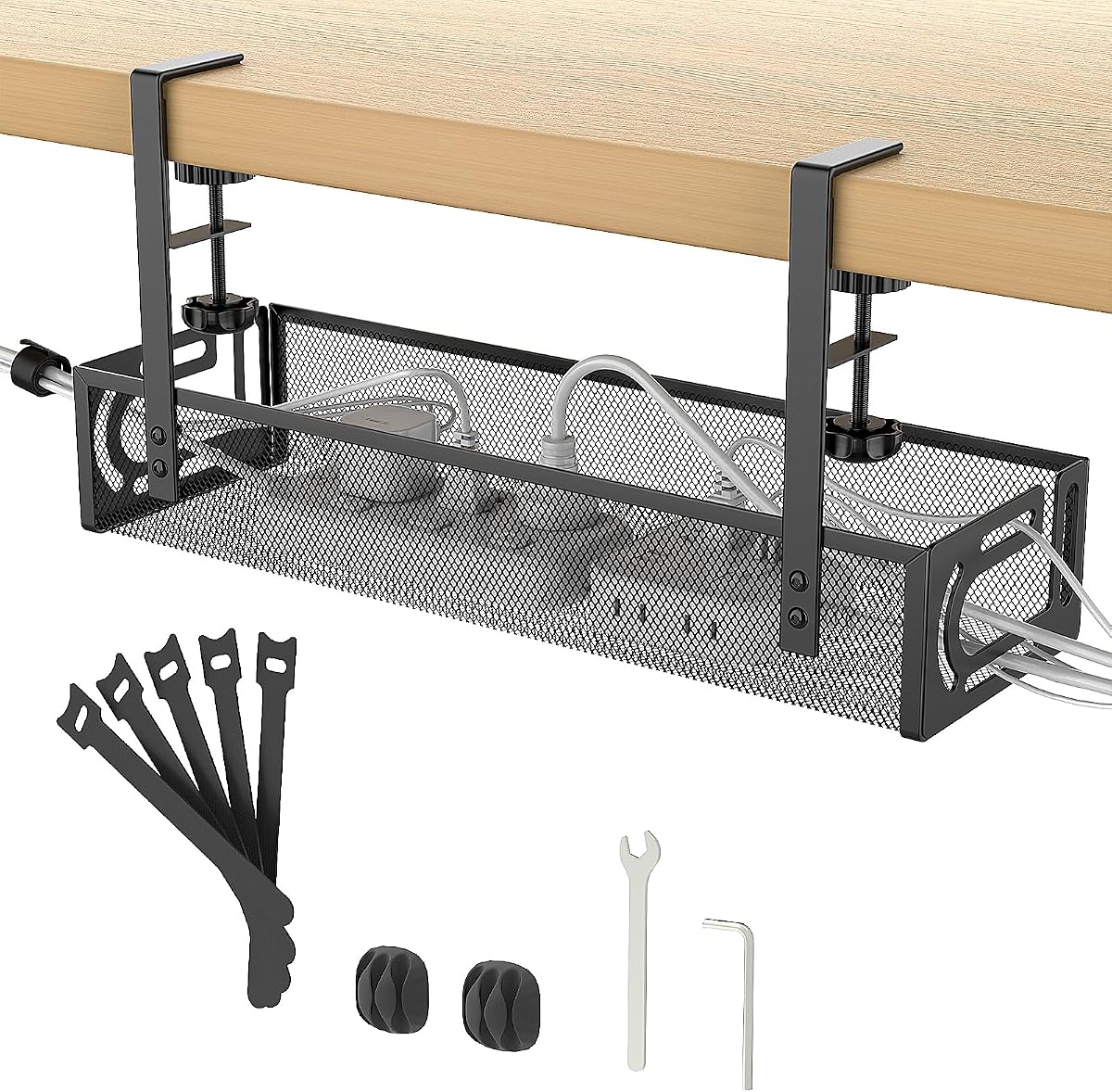
No-Drill Under-Desk Cable Trays: Clamp Fit, Mesh Strength, and Desk Compatibility
This metal mesh cable tray uses a clamp-on mechanism to attach under your desk without drilling, screws, or adhesive—ideal for renters or anyone hesitant to damage furniture. Unlike adhesive-backed organizers, it relies on a physical clamp, so the key questions are whether your desktop edge can accommodate it and how much cable weight it must hold.
Key Considerations Before Buying
- Desk edge thickness and shape: The clamp needs a flat, straight edge within its opening range—typically 2–5 cm. Desks with bevelled, curved, or very thick tops may not fit, so measure before buying.
- Cable load and tray capacity: Metal mesh trays support more weight than plastic or fabric sleeves, but a 30–40 cm tray still has limits. Count your power bricks, adapters, and thick HDMI cables to avoid overloading.
- Access and routing: An open mesh design lets you thread cables in and out easily, but you'll want enough clearance between the tray and the floor or drawer to reach it without kneeling.
What Our Analysts Recommend
Check the clamp's grip material—rubber pads prevent scratching and add stability. Look for powder-coated steel mesh rather than painted wire, as it resists rust and sagging. Also confirm the tray's length and depth match your cable bundle; too small and cables spill, too large and it may hit your chair or legs.
Cable Organizer Bags Market Context
Market Overview
Under-desk cable management has shifted from adhesive clips and zip ties to clamp-on trays and baskets, driven by renters and remote workers who want damage-free solutions. Metal mesh models now compete with plastic troughs and fabric sleeves, with no-drill installation becoming a key selling point across price tiers.
Common Issues
The most frequent complaints in this category are clamps that slip on thin or glossy desks, trays that sag under heavy power bricks, and mesh edges that snag cables during routing. Adhesive-based alternatives often fail in humid or warm environments, which is why clamp designs are gaining traction.
Quality Indicators
A quality tray uses thick-gauge steel wire with even, welded mesh and a smooth powder coat. The clamp should have a wide contact area and a tightening mechanism that doesn't require tools. Look for rounded edges where cables exit to prevent insulation wear over time.
Review Authenticity Insights
Grade A Interpretation
An adjusted rating of 4.70/5 from 443 reviews, with a Grade A authenticity score and only 5% estimated fake reviews, means this product's feedback is highly trustworthy. The negligible manipulation signals that the positive consensus reflects genuine user satisfaction, not incentivized or bot-driven reviews.
Trust Recommendation
You can rely on the overall rating, but still read the 1–2 star reviews for fit issues—especially if your desk edge is unusual. The high volume of specific, detailed reviews suggests real-world testing across different desk types, so patterns in complaints are more informative than isolated negatives.
Tips for Reading Reviews
Focus on reviews that mention desk thickness, cable weight, and clamp stability, as these are the make-or-break factors for no-drill trays. Look for photos showing the tray installed under different desks—they reveal real-world fit and capacity better than star ratings alone.
Expert Perspective
This clamp-on mesh tray solves a common problem—cable clutter under desks—without requiring permanent modifications, which explains its strong 4.78/5 rating and high review authenticity. The metal mesh construction offers durability and airflow that plastic boxes lack, while the no-drill clamp appeals to renters and office workers alike. However, its success hinges entirely on desk compatibility; buyers with non-standard edges may find it doesn't fit. Given the low fake review percentage, the positive feedback is a reliable signal of real-world performance.
Purchase Considerations
Before buying, measure your desk edge thickness and check the clamp's specified range—this is the most common reason for returns. Also assess your cable load: if you have multiple power bricks, consider a longer tray or a second unit. The no-drill design is a major plus, but it means the tray's stability depends on a tight clamp, so avoid overloading it.
Comparing Alternatives
Shoppers should compare this with adhesive-backed trays for very thin desks, or larger under-desk baskets if cable volume is high. No-drill clamp models vary in clamp range and mesh gauge, so check those specs against your setup.


