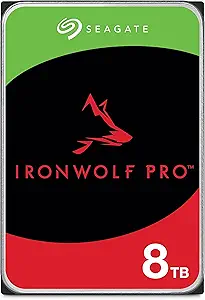
8TB Barracuda: Massive Storage, but Know the SMR Trade-offs
When you're eyeing the Seagate Barracuda 8TB (ST8000DM004), you're looking at one of the highest-capacity drives in the Barracuda line, designed for desktop and mainstream NAS use. But before you buy, understand that this model uses Shingled Magnetic Recording (SMR) technology, which affects write performance during sustained operations—a key factor for your intended workload.
Key Considerations Before Buying
- SMR vs. CMR: The ST8000DM004 uses SMR, which can slow down write speeds significantly during random writes or RAID rebuilds. If you plan heavy write workloads or use it in a RAID array, consider a CMR drive like the IronWolf Pro or WD Red Plus.
- Capacity vs. Cost: At 8TB, it offers a low cost per gigabyte, making it attractive for bulk storage of media, backups, and archives. However, verify your system supports 3.5-inch drives and has a free SATA port.
- Cache Size: The 256MB cache helps mitigate SMR's write penalty in burst scenarios, but sustained writes will still be slower than a CMR drive. For sequential writes like large file transfers, it performs admirably.
What Our Analysts Recommend
In this category, look for drives with a clear specification of recording technology (SMR/CMR), a good warranty (this drive typically comes with 2 years), and user feedback on real-world reliability. Also, check the drive's power consumption and noise levels, as 8TB drives can be noticeable in a quiet PC.
Internal Hard Drives Market Context
Market Overview
The internal hard drive market is now dominated by high-capacity models, with 8TB being a sweet spot for consumers who need massive storage without jumping to enterprise-grade pricing. SSDs are faster but cost more per TB, so HDDs remain relevant for bulk storage.
Common Issues
Common issues in this category include SMR-related performance degradation in RAID or heavy write scenarios, higher failure rates compared to enterprise drives, and noise/vibration in multi-bay setups. Users also report that some drives are not ideal for 24/7 operation unless specifically rated for NAS.
Quality Indicators
Quality indicators include a low annualized failure rate (AFR), a warranty of at least 2 years, positive user reviews over a long period, and a manufacturer's stated workload rating (e.g., TB/year). Drives with a higher workload rating are generally more robust.
Review Authenticity Insights
Grade B Interpretation
With a Grade B and an estimated 10% fake review rate, you can trust the majority of the 28,236 reviews, but be aware that a small fraction may be incentivized or fabricated. The adjusted rating of 4.20/5 suggests the true satisfaction is slightly lower than the raw 4.44, but still positive overall.
Trust Recommendation
Given the 10% fake rate, focus on reviews that provide specific details—like usage scenarios, drive temps, and performance metrics—and ignore overly generic 5-star or 1-star reviews. Look for verified purchase badges and reviews with photos or detailed descriptions.
Tips for Reading Reviews
For HDDs, read reviews that mention long-term use (6+ months) to gauge reliability. Pay attention to any mentions of clicking sounds, SMART errors, or slow write speeds, as these are common red flags. Also, check the negative reviews to see if there are recurring issues with DOA (dead on arrival) or early failures.
Expert Perspective
The Seagate Barracuda 8TB is a solid choice for bulk storage if you understand its SMR limitations. With a 4.20 adjusted rating from a large sample, it demonstrates reliable performance for typical desktop use—media libraries, game storage, and backups. However, it's not designed for heavy multi-user NAS environments or constant write operations, where a CMR drive would be safer.
Purchase Considerations
Consider your workload: if you're mostly reading data (e.g., media server), this drive is excellent value. If you plan to use it in a RAID array or for frequent writes, invest in a NAS-rated drive. Also, check if your system supports 8TB and whether you need a 3.5-inch bay.
Comparing Alternatives
Shoppers should compare with Seagate's IronWolf series (CMR, NAS-optimized) or WD Red Plus, which offer better performance in RAID but at a higher cost per TB. For pure desktop storage, the Barracuda remains a top contender.