
Choosing the Right Dial Thermometer for Your Freezer and Refrigerator Monitoring
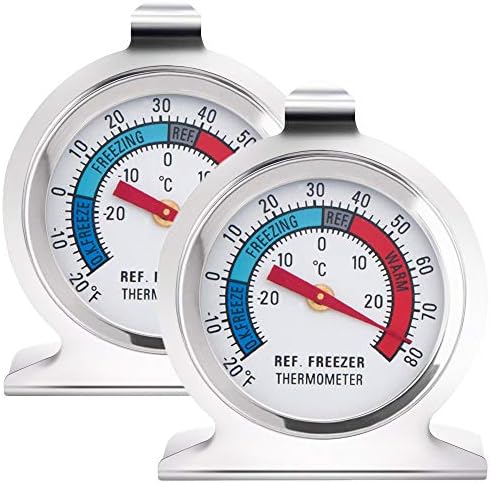
When selecting a refrigerator thermometer like the Anvin dual-scale model, focus on temperature range compatibility with your specific appliances. This particular unit's -30°C to 30°C scale covers both freezer and refrigerator zones, while its dual mounting options (hook or stand) provide installation flexibility that many single-function models lack.
Key Considerations Before Buying
- Verify the temperature range matches your appliance needs—this Anvin model's -30°C minimum is essential for deep freezers but may be excessive for standard refrigerator-only monitoring.
- Consider mounting requirements: the steel construction and dual-position design work well for wire shelves or flat surfaces, but may not adhere to glass or irregular surfaces.
- Evaluate readability needs: the large dial face mentioned in reviews helps with quick checks, but digital alternatives offer precision for temperature-sensitive items like medications or cultured foods.
What Our Analysts Recommend
Quality refrigerator thermometers should maintain calibration through temperature cycling—look for stainless steel construction like this Anvin model that resists condensation damage. The dual-scale printing should be permanently etched rather than painted to prevent fading in humid environments, and the dial should rotate smoothly without sticking at extreme temperatures.
Refrigerator Thermometers Market Context
Market Overview
The refrigerator thermometer market has shifted toward dual-zone models that serve both refrigeration and freezing applications, with dial types maintaining popularity for their simplicity and battery-free operation. Canadian consumers particularly value Celsius-Fahrenheit dual scales for compatibility with both imported appliances and local temperature references.
Common Issues
Many dial thermometers suffer from calibration drift after repeated freeze-thaw cycles, while others feature poorly secured hooks that detach from refrigerator shelves. Condensation buildup behind the glass face frequently obscures readings in high-humidity refrigerator environments.
Quality Indicators
Superior units feature hermetically sealed dial faces to prevent fogging, stainless steel rather than plated construction to resist corrosion, and clearly marked calibration adjustment points. The Anvin's pack-of-two offering addresses the common need for simultaneous freezer and refrigerator monitoring.
Review Authenticity Insights
Grade B Interpretation
The Grade B authenticity rating with 11% estimated fake reviews indicates predominantly genuine feedback, though shoppers should be slightly more critical than with A-grade products. The 0.26-point difference between the raw (4.56) and adjusted (4.30) ratings suggests some review inflation exists but doesn't fundamentally distort the product's reputation.
Trust Recommendation
Focus on reviews discussing long-term performance beyond 6 months, as these are less likely to be incentivized. Pay particular attention to Canadian reviewers mentioning temperature accuracy in garage freezers or seasonal temperature variations, as these represent authentic usage scenarios.
Tips for Reading Reviews
Look for specific mentions of the dual-scale readability in different lighting conditions and experiences with the steel construction's durability. Authentic reviews often describe placement challenges in particular refrigerator models or calibration experiences after purchase.
Expert Perspective
The Anvin thermometer presents a solid value proposition for basic temperature monitoring, with its 4.30 adjusted rating reflecting reliable performance for most household applications. The steel construction and dual-scale design address common consumer pain points, though the dial format inherently limits precision compared to digital alternatives. The pack-of-two configuration is particularly practical for households maintaining separate refrigerator and freezer units.
Purchase Considerations
This product makes most sense for users prioritizing simplicity and durability over exact temperature precision. Consider your monitoring frequency—daily checkers may prefer digital readouts, while weekly monitors will appreciate the instant visual assessment this dial provides. The -30°C lower limit is particularly valuable for deep freezer or garage refrigerator applications common in Canadian climates.
Comparing Alternatives
Shoppers requiring ±0.5°C precision for food safety compliance should compare digital models, while those needing remote monitoring capabilities should consider wireless alternatives.


