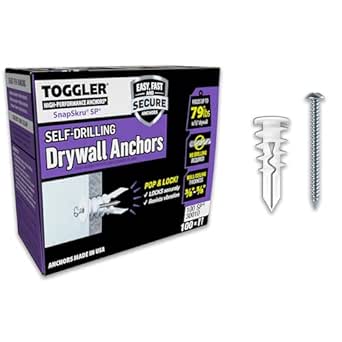
Mastering Drywall Anchors: No-Predrill Solutions for Heavy Loads
When hanging cabinets, shelves, or heavy mirrors on drywall, the right anchor can save you from frustration and wall damage. The #8 Self Drilling Drywall Plastic Anchors with Screws eliminate the need for pre-drilling, offering a 75-pound load capacity per anchor—a significant claim for a plastic anchor. Understanding how these anchors work and their limitations is key to a successful installation.
Key Considerations Before Buying
- Load capacity vs. application: While rated at 75 lbs, ensure your total load (including dynamic forces like door swings) stays well below this per-anchor limit, especially in hollow drywall.
- Drywall thickness: These anchors are designed for standard 1/2-inch drywall; thicker or double-layer walls may require a different approach for optimal grip.
- Installation ease: The self-drilling tip reduces prep time, but you still need a power driver with a #2 Phillips bit; avoid over-torquing to prevent stripping the plastic head.
What Our Analysts Recommend
Quality drywall anchors should have a sharp, hardened tip for clean penetration without cracking the surrounding drywall. Look for consistent plastic molding with no flash or burrs, and screws that fit snugly without wobbling—these details indicate reliable manufacturing and better holding power.
Drywall Anchors Market Context
Market Overview
The drywall anchor market is crowded with options ranging from basic plastic expansion anchors to toggle bolts and metal self-drillers. Plastic self-drilling anchors like these are popular for DIYers seeking a balance of convenience and moderate load capacity, typically competing with brands like E-Z Ancor and TOGGLER.
Common Issues
A frequent complaint with plastic anchors is spinning in the hole during installation, leading to stripped drywall and reduced holding strength. Another issue is brittle plastic that cracks under stress, especially in colder temperatures or when over-tightened.
Quality Indicators
High-quality plastic anchors feature reinforced ribs or wings that grip the drywall tightly, and screws with corrosion-resistant coatings (like zinc or black oxide). Clear load ratings and a substantial number of positive, verified reviews are strong signals of reliability.
Review Authenticity Insights
Grade B Interpretation
With a Review Authenticity Grade of B and an estimated 10% fake reviews, this product has a solid base of genuine feedback, though a small portion may be inflated. The 4.20 adjusted rating (down from 4.40) suggests real-world performance is slightly below the headline score, but still positive overall.
Trust Recommendation
You can trust the majority of reviews here, especially those detailing specific installations like mounting TVs or shelving. However, be cautious of overly brief, five-star reviews with no context—they may be the 10% that are less authentic. Focus on reviews that mention load testing or installation challenges.
Tips for Reading Reviews
For drywall anchors, pay attention to reviews that describe the drywall type (e.g., 1/2-inch vs. 5/8-inch) and the weight of items hung. Look for patterns in complaints about spinning or breakage, as these are more reliable than isolated raves.
Expert Perspective
The #8 Self Drilling Drywall Plastic Anchors offer a convenient solution for medium-duty tasks, backed by a mostly authentic review base. The 75-lbs claim is ambitious for plastic anchors, but practical use suggests they work well for loads up to 50 lbs in standard drywall. The no-predrill feature is a genuine time-saver for DIYers, though careful installation is critical to avoid spinning.
Purchase Considerations
Weigh the convenience against the need for higher load capacity—if you're hanging a heavy mirror or cabinet, consider metal anchors or toggle bolts. For lighter items like picture frames or small shelves, these anchors are a solid choice. The 50-pack provides good value, but ensure the included screws are long enough for your project (they are typically 1.5 inches).
Comparing Alternatives
Shoppers should compare these with metal self-drilling anchors (e.g., from TOGGLER) for higher strength, or with basic expansion anchors if budget is the main concern. Each type has trade-offs in ease of use and holding power.