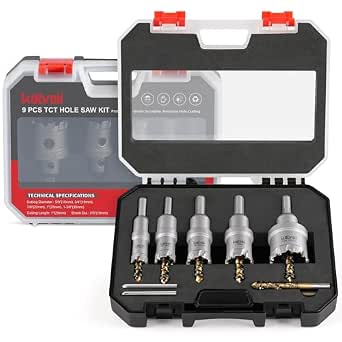
Choosing a Carbide Hole Saw Kit for Stainless Steel & Hard Metals
When tackling tough materials like stainless steel, iron, or thick alloys, a standard bi-metal hole saw often falls short. This 8-piece carbide-tipped kit, ranging from 5/8-inch to 2 inches, is engineered for heavy-duty cutting, making it a specialized choice for metalworkers and DIYers who need clean, precise holes in hard surfaces without frequent blade changes.
Key Considerations Before Buying
- Match the saw size to your project: This kit includes 8 common sizes (5/8 to 2 inches), which is ideal for electrical boxes, plumbing runs, or conduit work. Ensure the range covers your most frequent needs to avoid buying additional single saws.
- Check the pilot bit quality: The included pilot drill bit is crucial for starting the cut accurately. For stainless steel, a sharp, carbide-tipped pilot bit prevents wandering and reduces the risk of damaging the workpiece surface.
- Consider your drill's power: Carbide hole saws require a high-torque drill (preferably corded or a heavy-duty 18V+ cordless) to maintain cutting speed without stalling, especially in harder metals. A lower-power drill may struggle or overheat.
What Our Analysts Recommend
Look for carbide-tipped teeth (not just carbide-coated) for durability in stainless steel. A robust arbor system that securely locks the saw and pilot bit is essential for safety and precision. Also, check for a knockout slot on each saw to easily remove cut-out disks from deep holes.
Hole Saws Market Context
Market Overview
The hole saw market is dominated by bi-metal options for general wood and metal cutting, but carbide-tipped kits are gaining traction for heavy-duty applications. This kit targets a niche of users who frequently drill into stainless steel, cast iron, or other abrasive alloys where standard saws dull quickly.
Common Issues
A frequent problem with hole saw kits is the pilot bit breaking or dulling before the saw itself, especially in hard metals. Another issue is saw teeth stripping or chipping when excessive pressure is applied or when cutting at too high an RPM. Users also report arbors loosening during use, which can cause wobble and inaccurate cuts.
Quality Indicators
High-quality carbide hole saws feature a thick, reinforced body to resist flexing under torque. The carbide tips should be brazed (not glued) onto the saw edge. A well-designed arbor with a hex shank or wrench flats prevents slipping, and a spring-loaded ejector simplifies debris removal.
Review Authenticity Insights
Grade B Interpretation
The Grade B rating and estimated 10% fake review rate suggest that while most feedback is genuine, you should still approach a small portion of reviews with caution. This is common for popular tool kits where incentivized or unverified reviews can inflate the average rating slightly.
Trust Recommendation
Focus on reviews with 'Verified Purchase' tags that describe specific use cases—like 'cut 1/4-inch stainless steel plate' or 'used on schedule 40 iron pipe.' These provide actionable reliability data. Be skeptical of overly brief, five-star reviews that lack material details or mention unrelated products.
Tips for Reading Reviews
For hole saws, prioritize reviews that mention the number of holes cut before dulling, compatibility with different drill brands, and any issues with the pilot bit. Photos of the saw after use (showing wear) are especially valuable for assessing real-world durability.
Expert Perspective
This 8-piece carbide hole saw kit appears to be a solid mid-range option for users who regularly work with hard metals, given its 4.44-star average from 366 reviews and a mostly authentic review base. The 4.20 adjusted rating indicates that the product performs well but may have minor consistency issues—likely related to pilot bit longevity or arbor fit. For the price, it offers good value compared to buying individual carbide saws, but serious professionals might still prefer premium brands like Milwaukee or Diablo for extreme durability.
Purchase Considerations
If your primary projects involve stainless steel, iron, or thick aluminum, this kit is a worthy consideration—especially if you need multiple sizes. However, if you mostly cut wood or drywall, a cheaper bi-metal set would be more cost-effective. Ensure your drill has sufficient torque (at least 8 amps or 500 in-lbs) to drive these saws effectively.
Comparing Alternatives
Shoppers should compare this kit against other carbide-tipped options from brands like Lenox or Bosch, which may offer longer warranty periods or more robust arbors, but often at a higher price point.