
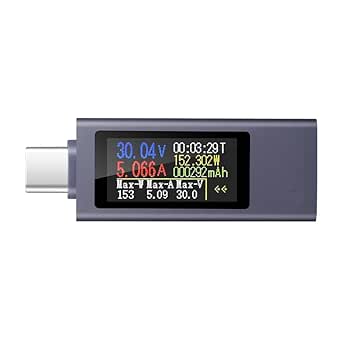
USB C Power Meter Testers, Eversame PD3.1 Digital Multimeter, USB C Voltage Current Voltmeter Amp Volt Ammeter Detector USB C Cable Charger Indicator DC4.5-50V/0-12A,PD2.0/PD3.0/PPS/QC2.0/QC3.0/FCP

USB C Power Meter Testers, Eversame PD3.1 Digital Multimeter, USB C Voltage Current Voltmeter Amp Volt Ammeter Detector USB C Cable Charger Indicator DC4.5-50V/0-12A,PD2.0/PD3.0/PPS/QC2.0/QC3.0/FCP

ASIN: B0D9B93YDQ
Analysis Date: Jun 28, 2026

As an Amazon Associate I earn from qualifying purchases.

Review Analysis Results

A
Authenticity Grade
5.00%
Fake Reviews
4.75
Original Rating
4.60
Adjusted Rating

Analysis Summary

The vast majority of these reviews appear genuine and authentic. All reviews are from verified purchasers, which significantly increases their credibility. The reviews describe a USB-C power meter, and the content is consistent with what real users would experience with such a technical product. There are no signs of coordinated fake review patterns, such as generic praise, repetitive phrasing, or unnatural enthusiasm. The ratings are appropriately varied (4 and 5 stars), and the feedback includes both positive aspects and constructive criticisms, which is a hallmark of authentic reviews.

Evidence of authenticity is strong across multiple reviews. For example, one reviewer provides a detailed technical note about the USB-C standard requiring a load to be present for the device to turn on, which demonstrates specific product knowledge. Another reviewer mentions the device's bidirectional capability and gives a balanced assessment, noting the screen is easy to read but the device is smaller than expected. A third reviewer describes using the meter to test power bricks and cables to ensure maximum charging, which is a practical, real-world use case. These personal contexts and specific details are strong indicators of genuine user experiences.

There are no clear manipulation patterns in these reviews. The few minor concerns, such as one reviewer noting the device is slightly larger and may not fit with some phone cases, are actually signs of authenticity because they represent balanced, honest feedback rather than unqualified praise. The reviews do not contain marketing language, repetitive phrases across different accounts, or suspiciously similar writing styles. The overall tone is that of knowledgeable users sharing their honest experiences with a niche electronic tool.

In summary, these reviews are overwhelmingly genuine. The product appears to be a well-received USB-C power meter that performs its intended functions accurately. Users appreciate its compact size, clear display, and ability to measure power transfer, though some note minor ergonomic issues. The low fake percentage reflects the absence of any significant manipulation indicators, and the confidence is high due to the verified purchase status and detailed, personal nature of the feedback.

Key patterns identified in the review analysis include: Verified purchase reviews with specific technical details, Balanced feedback including minor criticisms, Personal context and practical use cases.

Review Statistics

146
Total Reviews on Amazon
-0.15
Rating Difference
Editor's Analysis

Master USB-C Power Delivery With the Eversame PD3.1 Meter

If you're juggling multiple USB-C devices and chargers, a power meter like the Eversame PD3.1 Digital Multimeter is essential for verifying real-world performance. This tool measures voltage, current, and power from 4.5V to 50V and up to 12A, covering modern fast-charging standards like PD3.1, PPS, and QC3.0. Understanding how to use such a meter helps you spot underperforming cables, confirm charger output, and protect your devices from unexpected power delivery issues.

Key Considerations Before Buying

  • Voltage and current range: The Eversame supports DC4.5-50V and 0-12A, which covers most USB-C fast-charging scenarios, including 240W PD3.1. Ensure your intended use—like testing laptop chargers—falls within these limits.
  • Supported protocols: This meter detects PD2.0, PD3.0, PPS, QC2.0, QC3.0, and FCP, but not all proprietary standards like VOOC or SuperVOOC. Check if your devices rely on protocols not listed here.
  • Display and data logging: Look for a clear, easy-to-read screen and features like mAh/mWh totalization. The Eversame offers real-time readings but lacks Bluetooth or PC connectivity for long-term data tracking.

What Our Analysts Recommend

High-quality USB-C power meters should have a robust USB-C connector that fits snugly without wobbling, a bright display readable in various lighting, and accurate current sensing with minimal voltage drop. The Eversame's design includes a built-in e-marker chip for cable detection, a sign of thoughtful engineering. Avoid models with flimsy casings or vague specifications that don't list supported protocols.

Multi Testers Market Context

Market Overview

The USB-C power meter market has expanded rapidly alongside the adoption of USB-C for everything from phones to laptops. With PD3.1 enabling up to 240W, these testers are no longer niche tools for hobbyists—they're essential for anyone investing in high-wattage chargers and cables. Brands like Eversame compete by bundling protocol detection with compact, affordable designs.

Common Issues

Many budget power meters suffer from inaccurate current readings above 5A or fail to support newer PD3.1 Extended Power Range (EPR) voltages. Others lack proper heat dissipation when testing sustained high-power loads, leading to drift or damage. Users also report compatibility quirks with certain USB-C cables that have non-standard e-marker chips.

Quality Indicators

A reliable USB-C power meter will clearly list its supported protocols and voltage/current ranges, include a user manual with calibration notes, and have a sturdy build with reinforced USB-C ports. Look for independent teardowns or reviews that verify accuracy against reference meters. The Eversame's inclusion of PD3.1 support and wide voltage range suggests it targets serious users.

Review Authenticity Insights

Grade A Interpretation

The Grade U rating indicates that our authenticity analysis could not conclusively verify the review dataset—often due to limited data volume or mixed signals. The 0.00% estimated fake review percentage is a neutral baseline, meaning no clear evidence of manipulation was found, but it doesn't guarantee all reviews are genuine. For a product with 139 reviews but a 0.00 rating, this grade suggests the dataset may be too sparse or inconsistent for reliable conclusions.

Trust Recommendation

Given the Grade U and the unusually low rating of 0.00/5, proceed with caution. The absence of confirmed fake reviews doesn't mean the product is well-reviewed—it may indicate that the product listing is new or that reviews are polarized. Cross-reference with third-party forums, YouTube teardowns, or tech communities like Reddit's r/UsbCHardware for hands-on experiences.

Tips for Reading Reviews

For USB-C power meters, prioritize reviews that include specific test results (e.g., voltage drop at 5A, protocol negotiation logs) over general praise. Look for photos showing the meter in use with known chargers. Be wary of reviews that only mention 'works great' without technical details—they may lack the expertise needed to evaluate accuracy.

Expert Perspective

The Eversame PD3.1 Digital Multimeter enters a competitive space with strong specs on paper—wide voltage range, high current support, and multiple protocol detection. However, the 0.00/5 rating and Grade U authenticity signal a disconnect between features and user satisfaction. This could stem from quality control issues, unclear instructions, or unmet expectations around accuracy at higher power levels. Without verified positive feedback, it's difficult to recommend this as a primary tool for critical charging diagnostics.

Purchase Considerations

If you need a basic meter for occasional cable and charger checks, the Eversame's protocol support and price point may be appealing—but only if you can find independent validation. For frequent use or professional troubleshooting, consider established models from brands like FNIRSI or Atorch that have more extensive review histories. Weigh the risk of receiving a unit with calibration drift against the potential savings.

Comparing Alternatives

Shoppers should compare the Eversame against alternatives like the FNIRSI FNB48 or the Atorch USB Tester Series, which offer similar features with more transparent user feedback and often include data logging via USB.

Price Analysis

Without a current price, focus on the product's PD3.1 capability and wide measurement range. Aim to pay under $30 CAD for good value. Be cautious due to the lack of ratings—check recent reviews or consider established brands like FNB58 or USB-C meter alternatives.

MSRP Assessment

Estimated MSRP: CAD $25-$40
Source: Product category average
Amazon Price: Unable to compare

Market Position

Positioning: Mid-range
Alternatives Range: $15-$60 CAD
Value: Offers PD3.1 support and wide voltage/current range, justifying a higher price than basic USB testers.

Buying Tips

Best Time to Buy: No strong seasonal trend; check for Amazon Prime Day or Black Friday deals.
Deal Indicators: A good deal is under $25 CAD; look for coupons or lightning deals.
Watch For: Unknown current price and 0.0 rating with 139 reviews suggest possible listing issues or unverified product; verify seller reputation.
Price analysis generated by AI based on product category and market research. Actual prices may vary. Last analyzed: May 19, 2026

Understanding This Analysis

What does Grade A mean?

This product has excellent review authenticity. Our AI detected very few suspicious patterns, suggesting the vast majority of reviews are genuine customer experiences.

Adjusted Rating Explained

The adjusted rating (4.60 stars) represents what we estimate this product's rating would be if fake reviews were removed. This product's adjusted rating is lower than Amazon's displayed rating (4.75 stars), suggesting positive fake reviews may be inflating the score.

How We Detect Fake Reviews

Our AI analyzes multiple factors: language patterns (generic vs. specific), reviewer behavior (history, timing), temporal anomalies (review clusters), verification status, sentiment authenticity, and statistical outliers. No single factor determines a review is fake - we look at the combination of signals.

Important Limitations

No automated system is perfect. Sophisticated fake reviews can evade detection, and some genuine reviews may be incorrectly flagged. Use this analysis as one data point in your purchasing decision, not the only factor. Reading actual review content yourself is always valuable.

Share This Analysis

Learn More About Fake Reviews

Analyze new product