
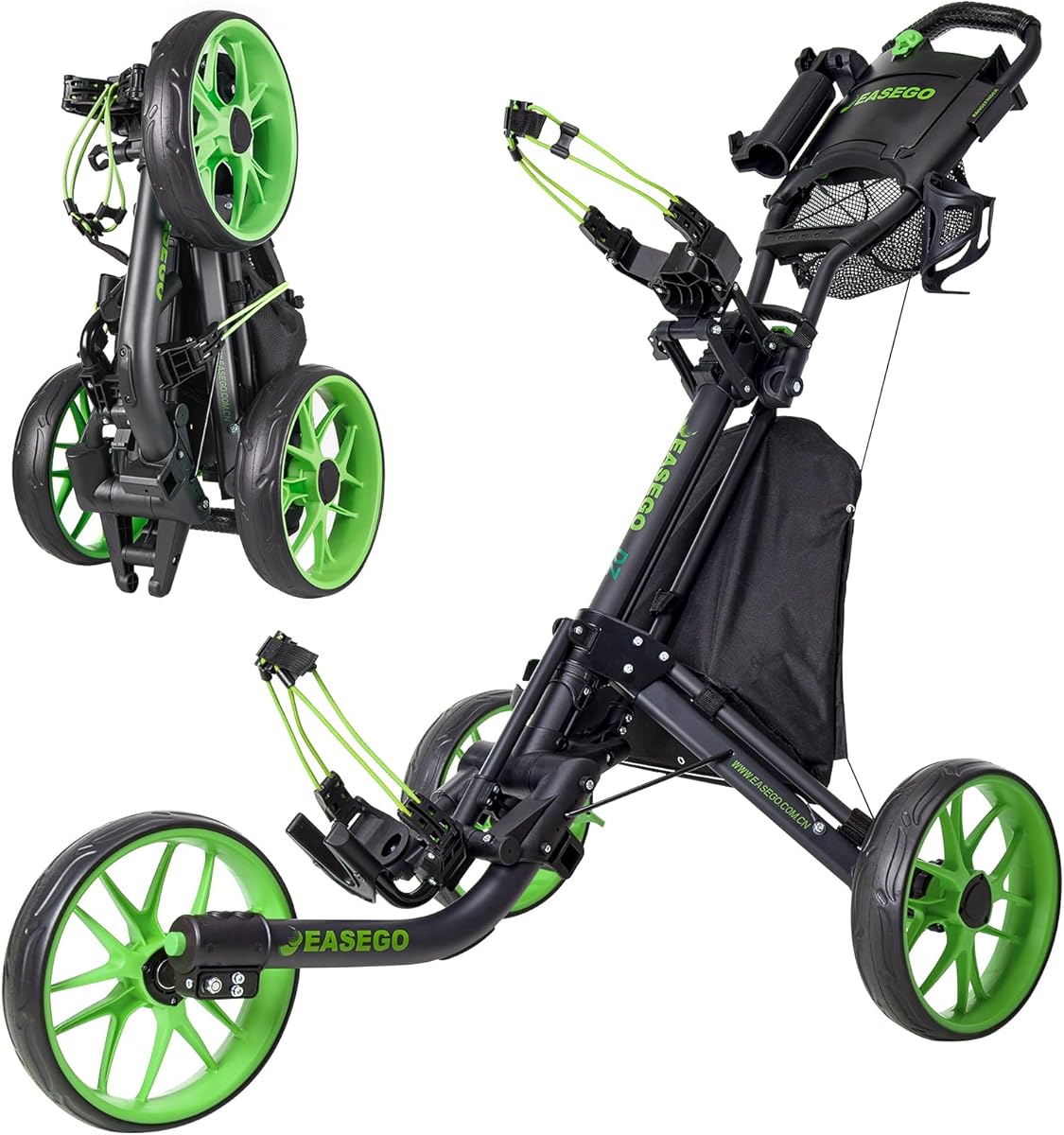
Choosing a 3-wheel push cart: Balance lightweight design with terrain versatility
When selecting a golf push cart like this specific 3-wheel model with one-click folding, buyers should prioritize how the lightweight aluminum frame performs across varied course conditions. The inclusion of a cooler bag and multiple holders adds convenience, but structural integrity during repeated folding cycles matters most for Canadian golfers facing diverse terrain.
Key Considerations Before Buying
- Evaluate the 'one-click folding' mechanism's durability—look for reviews mentioning smooth operation after 20+ rounds, as plastic latches on budget carts often fail first.
- Assess wheel performance on actual terrain; this cart's 'different terrain' claim requires verification on hills, wet grass, and uneven paths common to Canadian courses.
- Consider accessory integration—the cooler bag's capacity and phone holder's security during movement are practical concerns beyond mere inclusion.
What Our Analysts Recommend
Quality indicators include reinforced joints at folding points and sealed wheel bearings that prevent grass buildup. Premium carts use aircraft-grade aluminum rather than standard tubing, which affects both the 18lb weight and long-term stability when carrying a full bag with cooler attachments.
Push & Pull Carts Market Context
Market Overview
The push cart market has shifted toward ultra-compact folding designs, with 3-wheel models dominating for their maneuverability, though durability varies significantly between brands using similar marketing claims.
Common Issues
Budget carts frequently develop wheel alignment problems, have flimsy brake mechanisms that slip on slopes, and feature phone holders that fail to secure devices during typical course vibration. The folding mechanism is the most common failure point across the category.
Quality Indicators
Superior carts maintain wheel tracking through adjustable tension systems and use rubberized grips on handlebars. Look for carts specifying terrain-tread tires rather than smooth plastic wheels, which slip on damp inclines.
Review Authenticity Insights
Grade B Interpretation
A Grade B with 11% estimated fake reviews suggests generally reliable feedback, though approximately 1 in 9 reviews may be inauthentic. The adjusted 4.00/5 rating (from 4.22/5) indicates genuine satisfaction sits slightly below the initial impression.
Trust Recommendation
Focus on verified purchase reviews discussing specific Canadian course conditions or long-term use beyond 3 months. Be skeptical of reviews emphasizing only the cooler bag or umbrella holder without mentioning core functionality.
Tips for Reading Reviews
Prioritize reviews mentioning actual terrain testing—look for keywords like 'hilly,' 'wet fairways,' or 'bunker paths.' Canadian golfers often note temperature effects on plastic components, so winter storage comments carry particular weight.
Expert Perspective
This cart's value proposition centers on its accessory bundle and compact folding, but the 4.00 adjusted rating suggests some users experience compromises. The lightweight design (approximately 18lbs) benefits transport but may trade off stability with heavier bags. The terrain versatility claim requires scrutiny—while three-wheel designs generally handle better than four-wheel options on curves, specific tire composition determines actual performance on varied surfaces.
Purchase Considerations
Canadian buyers should weigh the convenience of included accessories against potential longevity concerns in damp conditions. If your course has significant elevation changes, verify the brake system's holding power through detailed reviews. The one-click mechanism saves time but may wear faster than multi-step folding systems.
Comparing Alternatives
Compare this model's wheel width and brake type against competitors—broader pneumatic tires often outperform narrow plastic wheels on soft ground.


