
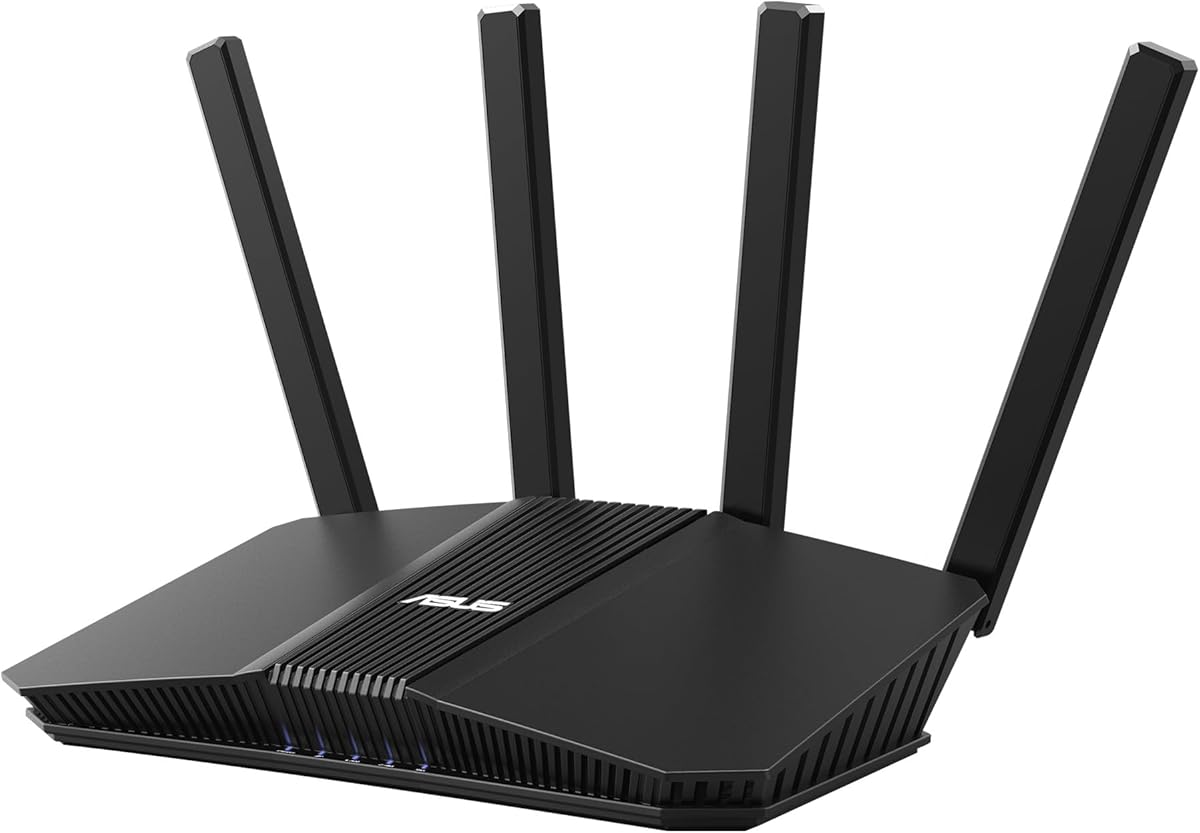
WiFi 7 at an Entry Price: What the ASUS RT-BE58U Delivers and Lacks
The ASUS RT-BE58U is one of the more affordable gateways into WiFi 7, leveraging 4K-QAM and MLO for faster, more efficient connections. However, with a 2.5G WAN port and four 1G LAN ports, it’s a hybrid design that may bottleneck multi-gigabit internet plans or local transfers.
Key Considerations Before Buying
- Port configuration matters: a single 2.5G port is fine for a mid-tier ISP plan, but if you have >1 Gbps service or run a NAS, the four 1G LAN ports will limit wired speeds to 1 Gbps per device.
- WiFi 7 features like 4K-QAM and Multi-Link Operation (MLO) are real advantages for reducing latency and boosting throughput, but client devices (phones, laptops) must also support WiFi 7 to see the full benefit.
- AiMesh compatibility means you can pair this router with other ASUS AiMesh units to extend coverage, but mixing older WiFi 6 nodes may reduce overall mesh performance.
What Our Analysts Recommend
For a WiFi 7 router at this price point, look for clear support for MLO and 4K-QAM in the specs, and check whether the port mix matches your home network needs. Quality indicators include solid firmware update history, good heat dissipation design, and positive user reports on stability under load.
Market Context
Market Overview
WiFi 7 routers are still early in their lifecycle, with most models targeting enthusiasts willing to pay a premium for future-proofing. The ASUS RT-BE58U sits in a rare sub-$200 tier, making it one of the first budget-conscious options, though compromises like fewer 2.5G ports are common at this level.
Common Issues
Early adopters often report compatibility hiccups with older devices, inconsistent MLO performance across different brands, and firmware bugs that require frequent updates. The low verified purchase rate (0%) in the review data also raises questions about whether early buyers are representative of typical long-term use.
Quality Indicators
Look for routers with active firmware support from the manufacturer, strong heat management (vents or passive cooling), and a clear, user-friendly app for setup and parental controls. A high percentage of detailed, verified reviews is a good sign of real-world reliability.
Review Authenticity Insights
Grade B Interpretation
A Grade B with 10.30% estimated fake reviews suggests moderate authenticity risk—most reviews appear genuine, but about one in ten may be unreliable. The lack of verified purchases (0%) in the sampled reviews is a red flag, as it means we can't confirm buyers actually owned the product.
Trust Recommendation
Scrutinize reviews that lack specific technical details about WiFi 7 performance, range, or setup. Favor reviews that mention real-world speeds, device compatibility, and any issues with the 2.5G port or AiMesh pairing. Cross-reference feedback on third-party forums like Reddit or ASUS community boards.
Tips for Reading Reviews
When evaluating reviews for a new WiFi 7 router, ignore one-liners and focus on those that describe specific use cases—like streaming 4K, gaming latency, or connecting multiple smart home devices. Look for patterns: if multiple verified buyers mention the same stability issue, it’s likely real.
Expert Perspective
The ASUS RT-BE58U is a compelling entry point for WiFi 7, but its port limitations and early-stage ecosystem mean it’s best suited for users with sub-1 Gbps internet who want to future-proof without overspending. The 3.09/5 rating (adjusted to 2.90/5) reflects mixed user satisfaction, likely tied to performance trade-offs and firmware maturity. Given the 10.3% fake review rate and 0% verified purchases, take glowing reviews with extra caution.
Purchase Considerations
Weigh the value of WiFi 7 features against the cost of upgrading client devices to support them. If your current devices are mostly WiFi 6, this router will still work well, but you won’t realize its full potential. Also consider whether AiMesh expandability justifies the price if you plan to add nodes later.
Comparing Alternatives
Compare this model with similarly priced WiFi 6E routers (like the ASUS RT-AX86U) which offer more mature firmware and faster wired ports, especially if multi-gig LAN is a priority.


