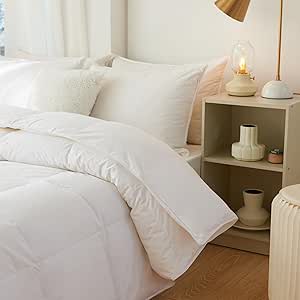
Choosing the Perfect King-Size Duvet Insert: Feather-Down vs. Alternatives
When shopping for a king-size duvet insert like the PACIFIC COAST Goose Feather Down Fiber Comforter, understanding fill composition is critical. This product uses a blend of goose feather and down fiber, offering a balance of fluffiness and support at a potentially lower price point than pure down. However, the term 'down fiber' can be misleading—it often refers to shredded feather or synthetic fill, not 100% down clusters.
Key Considerations Before Buying
- Fill power and composition: Look for a high fill power (600+) for genuine down, but note that 'down fiber' may not have a fill power rating. This PACIFIC COAST model's fluffiness comes from a feather-down mix, which can be heavier and less insulating than pure down.
- Construction and baffling: The 8 corner and center loops are a plus for securing the duvet to a cover, but check if the comforter uses baffle-box construction to prevent fill shifting. A sewn-through design may lead to cold spots over time.
- Allergen considerations: Feather-down blends can trigger allergies in sensitive sleepers. Look for hypoallergenic certifications or a down-proof shell to minimize leakage.
What Our Analysts Recommend
For a hotel-luxury feel, prioritize a high thread-count cotton shell (300+ threads per square inch) that is down-proof to prevent feathers from poking through. Also, ensure the fill weight is appropriate for your climate—this all-season model should offer breathability without excessive warmth for Canadian winters.
Duvets & Down Comforters Market Context
Market Overview
The duvet insert market in Canada is dominated by down and down-alternative fills, with consumers increasingly seeking breathable, year-round options. Products like the PACIFIC COAST comforter target the mid-range segment, offering a fluffy feel without the premium cost of pure goose down.
Common Issues
Common complaints in this category include fill shifting (leading to uneven warmth), feather quills poking through the shell, and difficulty achieving a true 'fluffy' loft without shaking. Some buyers also report that 'down fiber' products lack the durability of genuine down, flattening after a few months.
Quality Indicators
A quality duvet insert should have a tightly woven shell (indicated by a down-proof label), secure corner loops, and a fill that is evenly distributed. For feather-down blends, look for a high percentage of down clusters (e.g., 75% down, 25% feather) to ensure softness and insulation.
Review Authenticity Insights
Grade B Interpretation
With a Grade U and 0.00% estimated fake reviews, this product has no review data to analyze—meaning no suspicious patterns were detected, but also no genuine consumer feedback exists. This is typical for a new or low-traffic listing, but it leaves buyers without verified experiences.
Trust Recommendation
Proceed with caution: the absence of reviews means you are relying entirely on the brand's claims. Look for third-party certifications (e.g., OEKO-TEX, Downmark) to verify quality, and consider purchasing from retailers with easy return policies in case the product doesn't meet expectations.
Tips for Reading Reviews
When reviews do appear, focus on comments about fill retention after washing, any feather leakage, and whether the duvet maintains its loft over time. Be wary of overly positive early reviews, as they may be incentivized.
Expert Perspective
The PACIFIC COAST Goose Feather Down Fiber Comforter presents a mixed value proposition: its 8 loops and all-season marketing align with consumer needs, but the lack of reviews and ambiguous 'down fiber' terminology raise questions about fill quality. At king size, the fill weight will significantly impact comfort—too heavy and it may be cumbersome; too light and it won't provide adequate warmth. Without verified feedback, this is a speculative purchase for Canadian buyers seeking a hotel-like experience.
Purchase Considerations
Weigh the price against known brands with transparent fill specifications (e.g., down percentage, fill power). If you prioritize fluffiness and have no allergies, this could be a budget-friendly option, but be prepared for potential trade-offs in durability and consistent warmth.
Comparing Alternatives
Shoppers should compare this with down-alternative comforters from brands like Brooklinen or Buffy, which often offer clearer fill descriptions and extensive customer reviews.