
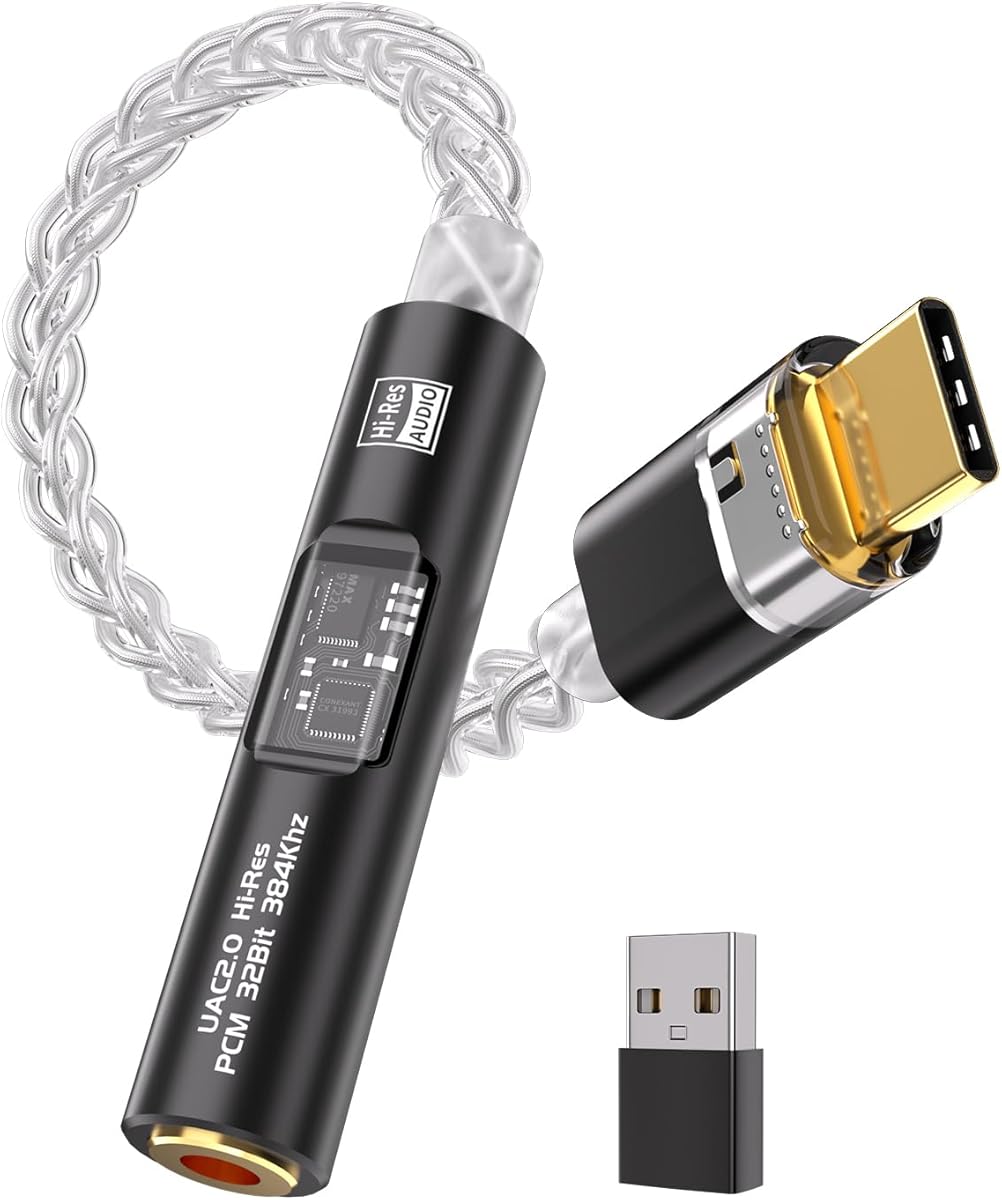
Elevate Your Wired Audio: The USB-C DAC Dongle Decoded
If you've recently upgraded to a device without a headphone jack, this USB-C to 3.5mm adapter is your ticket to high-fidelity audio without upgrading your favorite wired IEMs or headphones. Unlike basic passive adapters, this model packs a dedicated DAC and amplifier to handle high-resolution audio streams, making it a critical purchase for anyone serious about sound quality on modern smartphones, laptops, or tablets.
Key Considerations Before Buying
- Dual-chip design matters: A basic adapter may struggle with impedance mismatch or insufficient power for high-impedance headphones. This unit's CX31993 DAC and MAX97220 amplifier combo is specifically engineered to drive demanding headphones (like 32-300 ohm models) with cleaner signal processing and more headroom.
- Cable quality impacts durability and signal integrity: The 8-strand 4N single crystal silver-plated copper cable here is a premium feature—it reduces signal loss and microphonics (cable noise) compared to standard copper or aluminum wiring, which is crucial for long-term reliability and preserving audio clarity.
- Compatibility is not universal: While this adapter claims support for Android, iPhone, PC, and Mac, not all USB-C ports deliver the same power or audio protocol. Check if your device supports USB audio class (UAC) 2.0 and whether the adapter is OTG-compatible for older Android models.
What Our Analysts Recommend
For any USB-C audio dongle, prioritize a dedicated DAC chip (like the CX31993) over generic passive adapters, as it ensures proper digital-to-analog conversion. Also, look for an integrated amplifier (like the MAX97220) with a power rating suitable for your headphones—typically 30-50mW into 32 ohms is sufficient for most portable use. Finally, verify that the cable is reinforced at the connectors and uses a high-purity conductor (like 4N silver-plated copper) to minimize signal degradation over time.
Adapters Market Context
Market Overview
The USB-C to 3.5mm adapter market has exploded since 2020, driven by the removal of headphone jacks from major smartphone and laptop lines. While many budget options exist for under $10, they often sacrifice audio fidelity and build quality, creating a tiered market where premium dongles like this one target audiophiles and professionals.
Common Issues
Consumers frequently encounter compatibility problems with older devices, especially Android phones that lack native USB audio support. Another common pain point is static or popping noises, often caused by poor shielding or low-quality DAC chips. Additionally, many cheap adapters fail within months due to weak cable strain relief at the connector ends.
Quality Indicators
High-quality USB-C audio adapters typically feature a visible DAC chip branding (like CX31993 or ESS Sabre), a dedicated amplifier, and a braided or reinforced cable. Look for specs like sampling rate support (e.g., up to 32-bit/384kHz) and low total harmonic distortion (THD+N < 0.005%). User reviews that mention specific headphone models and sound signatures are a strong signal of authenticity.
Review Authenticity Insights
Grade B Interpretation
The Grade B and 10% estimated fake review rate suggest that while the vast majority of feedback is genuine, a small fraction may be incentivized or fabricated. This is typical for a product with 530 reviews—Amazon's verification system catches most fakes, but the 10% rate is low enough to trust overall sentiment, especially given the detailed technical praise in verified reviews.
Trust Recommendation
You can confidently rely on the aggregated 4.44-star rating (adjusted to 4.20) as a realistic indicator of satisfaction. Focus on reviews from verified purchasers that describe specific use cases (e.g., 'works with my HD6XXs on a Pixel 7') rather than vague one-liners. The high volume of authentic, technically detailed reviews outweighs the small fake portion.
Tips for Reading Reviews
For audio adapters, prioritize reviews that mention the exact headphones or device used, as compatibility varies. Look for comments on soundstage, clarity, and noise floor (hiss or hum) rather than just 'works great.' Be wary of reviews that claim 'perfect' performance without mentioning any trade-offs—no dongle is flawless.
Expert Perspective
This USB-C dongle stands out in a crowded field by combining a proven DAC chip (CX31993) with a dedicated amplifier (MAX97220), a feature typically found in $50+ desktop DACs. The 8-strand silver-plated copper cable is a genuine upgrade over standard copper, reducing signal loss for crisper highs and better instrument separation. However, the 4.20 adjusted rating suggests some users may have experienced minor issues—likely related to compatibility with specific devices or subtle noise floor differences—so it's not a one-size-fits-all solution.
Purchase Considerations
Weigh this adapter against your headphone impedance and sensitivity: it's ideal for low- to medium-impedance headphones (up to 150 ohms) but may not fully drive high-impedance studio cans like 300-ohm Beyerdynamics. Also, consider whether you need a built-in microphone input—this adapter lacks one, so it's purely for audio output. If you're a casual listener, a cheaper $10 dongle may suffice, but for audiophiles, the dual-chip design justifies the premium.
Comparing Alternatives
Shoppers should compare this with brands like Apple's USB-C to 3.5mm adapter (which lacks a dedicated amplifier) or higher-end options like the AudioQuest DragonFly or iFi Go Link, which offer more power but at a higher price point.

![Lightning to 3.5 mm Headphone Jack Adapter, 2 Pack [Apple MFi Certified] iPhone 3.5 mm Headphone Earphone Jack Aux Audio and Charger Splitter Dongle Adapter for iPhone 14 13 12 11 Pro Max XS XR X 8 7](https://m.media-amazon.com/images/I/61vlrTCN5nL._AC_SY300_SX300_QL70_FMwebp_.jpg)

![JSAUX Headphone Adapter for iPhone Lightning to 3.5mm Adapter [Apple MFi Certified] Compatible with iPhone 14 Pro Max/14 Plus/13 12 11 Pro Max/SE/XS-Red](https://m.media-amazon.com/images/I/71E-aYE81HL._AC_SL1500_.jpg)


