
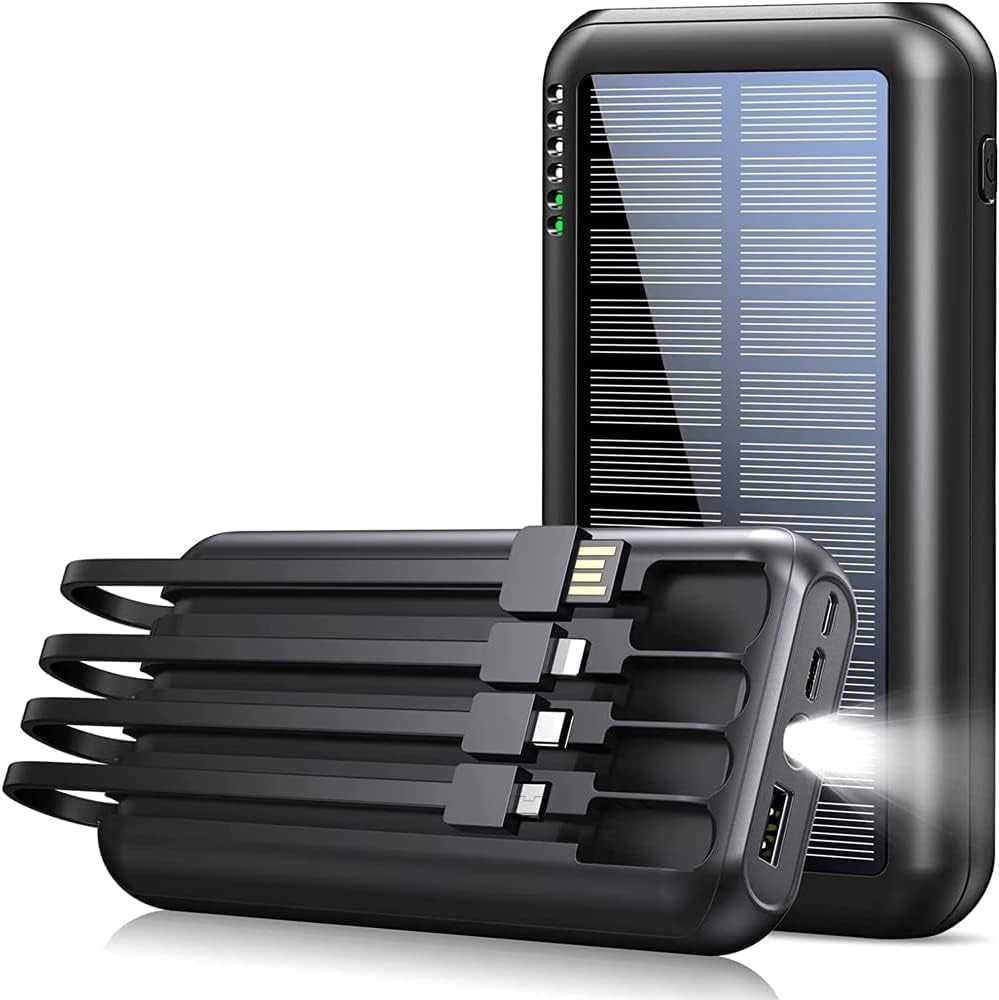
40000mAh Solar Power Bank: What to Know Before Buying
When considering a 40000mAh solar power bank like this one, you're looking at a high-capacity device designed for extended trips or emergencies. Its built-in cables and flashlight add convenience, but the solar charging feature is a key differentiator that requires realistic expectations about efficiency.
Key Considerations Before Buying
- Solar charging speed: The solar panel on this unit is a backup feature, not a primary charging source. Expect it to take days under direct sunlight to fully charge the 40000mAh battery, so plan to charge it via USB before heading out.
- Capacity vs. portability: A 40000mAh power bank is heavy and bulky—it's ideal for camping or power outages but not everyday pocket carry. Ensure you're okay with the trade-off between massive capacity and weight.
- Built-in cables convenience: This model includes three output and one input cable, reducing the need to carry separate cords. Verify the cable types (e.g., USB-C, Lightning) match your devices to avoid compatibility issues.
What Our Analysts Recommend
Look for power banks with high-quality lithium-ion cells that support stable output at 5V3.1A for fast charging. Ensure the solar panel is monocrystalline for better efficiency, and check for safety certifications like CE or FCC to prevent overheating or overcharging.
Solar Chargers Market Context
Market Overview
The solar power bank market is growing as outdoor enthusiasts and emergency preppers seek off-grid charging solutions. However, most units under $100 rely on small solar panels that provide trickle charging at best, making them supplementary to traditional USB charging.
Common Issues
A frequent complaint with large-capacity solar power banks is slow solar recharge times—often requiring 50+ hours of direct sunlight. Additionally, some units advertise capacities that are not achievable in real-world use due to efficiency losses, leading to disappointment.
Quality Indicators
Quality solar power banks use monocrystalline solar panels for better efficiency, have robust battery management systems (BMS) for safety, and include clear specifications for solar charging rates. Look for verified purchase reviews that mention actual solar performance.
Review Authenticity Insights
Grade B Interpretation
The Grade B rating with 15% estimated fake reviews suggests most feedback is authentic, but a notable minority may be incentivized or fabricated. This is typical for popular electronics on Amazon, where some sellers boost ratings with unverified or paid reviews.
Trust Recommendation
You can trust the overall rating of 4.10/5 (adjusted) as a reliable indicator of user satisfaction, but focus on detailed reviews from verified purchasers who discuss real-world solar charging and battery life. Be cautious of overly short or generic 5-star reviews.
Tips for Reading Reviews
When reading reviews, look for specific usage contexts—like camping trips or power outages—and comments on solar charging speed, cable durability, and flashlight brightness. Ignore reviews that lack photos or technical details, as they may be less reliable.
Expert Perspective
This 40000mAh power bank offers substantial capacity and convenient built-in cables, making it a solid choice for extended off-grid use or emergency preparedness. The 5V3.1A output is adequate for fast charging most smartphones, and the flashlight adds utility. However, the solar charging is a minor bonus rather than a primary feature, so don't rely on it for quick top-ups. With a 4.10 adjusted rating and mostly authentic reviews, it appears to deliver on its core promise of high-capacity backup power.
Purchase Considerations
Weigh the need for 40000mAh capacity against the unit's weight—if you're backpacking, a smaller 10000mAh option may be more practical. Also, consider that the solar panel's real-world output is low, so this is best for scenarios where you have extended sun exposure and patience.
Comparing Alternatives
Shoppers should compare this with similar high-capacity solar power banks from brands like Anker or Goal Zero, which may offer better solar efficiency or lighter designs, albeit at higher prices.


