Choosing a Canadian indoor TV antenna requires understanding your location and signal environment
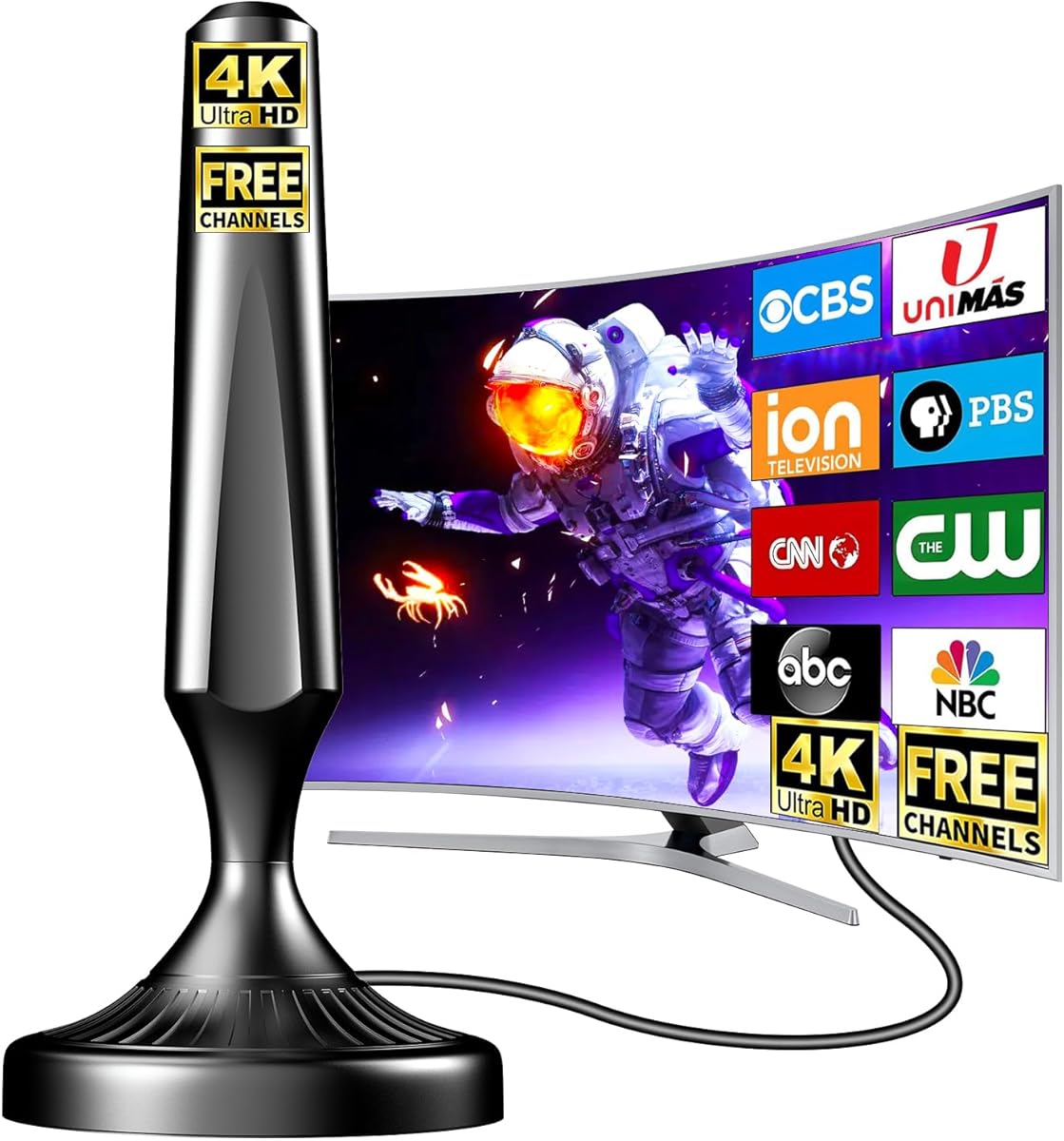
This specific indoor antenna promises 360° reception and a magnetic base for flexible placement, targeting Canadian channels like CBC, CTV, and Global. Buyers should know that 'long range' claims for indoor antennas are highly dependent on your distance from broadcast towers and local obstructions, not just the antenna's design.
Key Considerations Before Buying
- Your proximity to major Canadian broadcast towers (like those in Toronto, Vancouver, or Calgary) is the primary factor for receiving CBC, CTV, and Global; an antenna's 'range' is secondary.
- The 360° reception claim suggests an omnidirectional design, which is convenient but may sacrifice some signal strength compared to a directional antenna aimed at specific towers.
- The magnetic base allows for mounting on metal surfaces (like a window frame or HVAC duct), which can sometimes act as a signal ground plane to improve VHF/UHF reception.
What Our Analysts Recommend
For Canadian indoor antennas, prioritize models that transparently support both VHF and UHF bands, as local channels may broadcast on either. A low-noise amplifier isn't included here, which is fine for strong signal areas but a potential limitation for fringe reception. Check for standard 75-ohm coaxial output and compatibility with your TV's tuner (ATSC 1.0).
Antennas Market Context
Market Overview
The Canadian indoor antenna market is flooded with nearly identical products making similar claims for free local channels, creating a challenge for differentiation. Success hinges less on brand and more on a user's specific geography relative to ISED-licensed broadcast towers.
Common Issues
Consumers often overestimate 'range' claims and are disappointed by pixelation or missing channels due to local obstructions like buildings or terrain. Another frequent issue is interference from household electronics, which can degrade the signal for VHF bands in particular.
Quality Indicators
Look for robust physical connectors and a shielded coaxial cable to minimize signal loss. A genuine multi-element design (visible through the casing) for UHF and longer elements for VHF is better than a simple flat panel. Transparency about reception limitations is a sign of a reputable listing.
Review Authenticity Insights
Grade B Interpretation
A Grade 'B' with an estimated 11% fake review rate indicates a generally trustworthy review pool with a minor level of inauthentic activity. This is common in competitive, low-cost electronics categories where some sellers attempt to boost visibility.
Trust Recommendation
Focus on the verified purchase reviews (marked 'V') that discuss specific Canadian channels received and installation details. Be slightly more skeptical of reviews that only parrot marketing terms like 'crystal clear' without geographic context.
Tips for Reading Reviews
The most helpful reviews for antennas detail the user's city or region, the channels successfully pulled in (e.g., 'I get Global, CBC, and CityTV in Mississauga'), and the antenna's placement. Look for reviews that mention rescanning channels and dealing with signal fluctuations.
Expert Perspective
With an adjusted rating of 4.1/5 from a reasonably authentic review set, this antenna likely performs adequately for users within approximately 30-50 km of major urban broadcast towers, which is typical for non-amplified indoor units. The magnetic base is a practical differentiator for installation flexibility. The lack of an amplifier means it's a passive design, which avoids overloading signals in strong areas but offers no boost for weaker ones.
Purchase Considerations
Weigh this antenna if you live in a suburban or urban Canadian area and want a simple, compact solution with easy mounting options. Consider a model with a removable amplified signal booster if you experience weak signal strength or are in a basement apartment. First, use the ISED's TV Tower Locator tool to check your distance and direction to local transmitters.
Comparing Alternatives
Shoppers should compare this with other indoor antennas that offer a detachable amplifier, as this provides adaptability if initial reception is poor with a passive model.