
Leave-in Meat Thermometers: Precision for Perfectly Cooked Meats
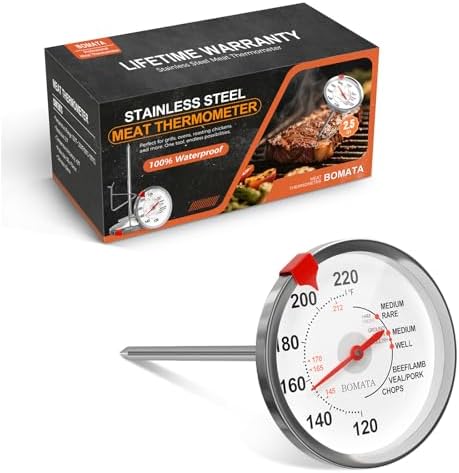
When roasting a turkey, steak, or pork loin, an oven-safe leave-in meat thermometer like the BOMATA with its 2.5-inch extra-large dial is a game-changer. This category of thermometer allows you to monitor internal temperature without opening the oven door, ensuring consistent heat and perfectly cooked results every time. Key features to consider include probe length, dial readability, and accuracy certification.
Key Considerations Before Buying
- Dial size and readability: The BOMATA's 2.5-inch dial is larger than standard, making it easy to read at a glance—especially helpful in busy kitchens or for those with visual impairments.
- Oven safety and probe material: Ensure the thermometer is oven-safe and made of stainless steel, like this model, which can withstand high heat without warping or corroding.
- Certification and accuracy: Look for NSF certification, as seen here, which indicates the product meets strict public health standards for safety and accuracy in food temperature measurement.
What Our Analysts Recommend
Quality indicators include a clear, durable dial with bold markings, a long probe for deep insertion, and a secure clip or stand to hold the thermometer in place. Also, verify that the temperature range covers both low and high cooking temperatures (e.g., 120°F to 200°F) for versatility across meats.
Meat Market Context
Market Overview
The leave-in meat thermometer market has grown as home cooks seek precision and convenience, with analog dial models remaining popular for their simplicity and no-battery reliability. However, digital options are also widespread, offering features like programmable alarms. The BOMATA competes in the analog segment, appealing to traditionalists who value instant readability.
Common Issues
Common problems include inaccurate readings from poor calibration, fragile probes that bend or break, and dials that fog up or become unreadable from steam. Some thermometers also lack proper oven safety ratings, leading to damage during high-heat roasting. The BOMATA's stainless steel construction and NSF certification aim to address these concerns.
Quality Indicators
To identify a quality analog thermometer, check for a hermetically sealed dial to prevent fogging, a shatterproof lens, and a response time of under 10 seconds. Also, look for a calibration nut on the back for adjustment, and ensure the probe is at least 5 inches long for deep meat insertion.
Review Authenticity Insights
Grade B Interpretation
With a Grade B rating and an estimated 10.00% fake review rate, the BOMATA thermometer's reviews are mostly genuine, but some may be incentivized or untruthful. This suggests that the 4.89/5 average rating is slightly inflated, and the adjusted rating of 4.60/5 is a more realistic reflection of customer satisfaction. The high percentage of verified purchases (nearly all) adds credibility, but skepticism is warranted for a small subset of reviews.
Trust Recommendation
Given the Grade B authenticity, you can trust the overall positive sentiment but should focus on detailed, balanced reviews that mention specific cooking scenarios (e.g., roasting a turkey or grilling steak). Avoid putting too much weight on overly brief or generic 5-star reviews, as these may be fake. The adjusted rating of 4.60/5 still indicates strong performance, so the product is likely reliable.
Tips for Reading Reviews
For this type of product, prioritize reviews that describe the thermometer's readability during use, its durability after multiple cooks, and any calibration issues. Look for mentions of specific meats and oven temperatures to gauge real-world accuracy. Ignore reviews that lack personal context or sound like marketing copy, as these are more likely to be fake.
Expert Perspective
The BOMATA Stainless Steel Meat Thermometer stands out with its extra-large dial and NSF certification, which signal a focus on usability and safety. The high adjusted rating of 4.60/5 from mostly genuine reviews suggests it performs well in real kitchens, particularly for tasks like roasting turkey or checking steak doneness. Its analog design is a plus for those who prefer no-fuss, battery-free operation, though it lacks the programmable alerts of digital models. Overall, it's a solid choice for home cooks who value simplicity and reliability.
Purchase Considerations
Before buying, consider whether you prioritize analog simplicity or digital features like alarms and timers. Also, ensure the thermometer's temperature range (typically 120°F-200°F) covers your cooking needs, and check that the probe length works for your largest roasts. The BOMATA's 2.5-inch dial is a unique advantage, but if you cook at very high temperatures, verify the maximum oven-safe rating.
Comparing Alternatives
Shoppers should compare this model with other analog thermometers from brands like Taylor or ThermoPro, which offer similar features but may have different dial sizes or certifications. Digital options, such as instant-read or wireless probes, provide alternative benefits for tech-savvy cooks.


