
Choosing a 16-port powered USB hub: Why port mix and power delivery matter
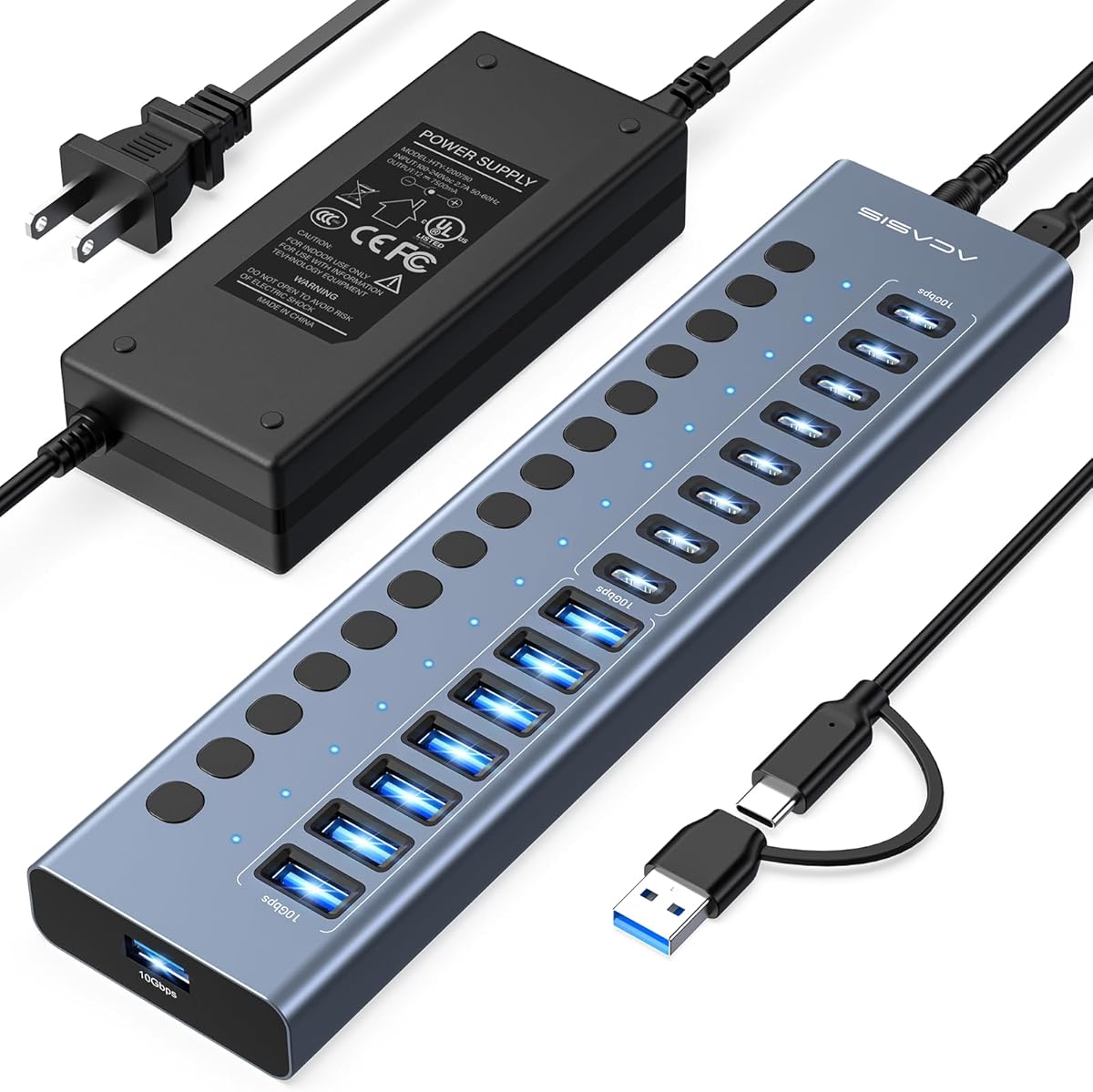
The ACASIS 16-port hub represents a specialized solution for users needing simultaneous connectivity for both legacy USB-A and modern USB-C devices. This specific configuration—with eight of each port type—addresses the transitional period many users face as they migrate from older peripherals to newer USB-C equipment. The 96W power adapter is particularly crucial for maintaining stable operation across all ports when connecting multiple power-hungry devices.
Key Considerations Before Buying
- The 8 USB-A/8 USB-C split requires assessing your current device ecosystem and future needs, as this hybrid approach serves users with mixed device generations rather than those fully committed to USB-C.
- The 96W power supply must be evaluated against your intended device load; connecting multiple external drives, webcams, or charging smartphones simultaneously could approach this hub's power distribution limits.
- Aluminum construction provides better heat dissipation than plastic alternatives, which is essential when operating 16 ports continuously, but requires verifying thermal management in real-world multi-device scenarios.
What Our Analysts Recommend
Quality indicators for this hub category include robust power delivery specifications (measured in watts per port), proper heat dissipation design in the aluminum chassis, and clear documentation about data transfer speed maintenance when multiple ports are active. The ACASIS hub's specific 96W rating suggests it's designed for moderate multi-device use rather than intensive charging applications.
USB Hubs Market Context
Market Overview
The 16-port powered USB hub market has evolved significantly with the USB-C transition, creating distinct segments between all-USB-C hubs and mixed-port configurations like this ACASIS model. Manufacturers increasingly differentiate by power delivery capabilities and port arrangements rather than just port count, as users demand hubs that accommodate both legacy peripherals and modern devices.
Common Issues
High-port-count hubs frequently encounter power distribution problems when multiple devices draw current simultaneously, leading to intermittent disconnections or underpowered peripherals. Data transfer speeds often degrade when all ports are active, particularly with USB 3.2 Gen 1 (5Gbps) implementations that share bandwidth across ports. Build quality variations in aluminum housings can affect both durability and thermal performance.
Quality Indicators
Superior hubs in this category feature individual port power management, proper heat sinking in the aluminum construction, and transparent specifications about simultaneous operation limits. The presence of a sufficiently powerful external adapter (like this model's 96W unit) and clear documentation about supported device types indicate more thoughtful engineering.
Review Authenticity Insights
Grade B Interpretation
The Grade B authenticity rating with 10% estimated fake reviews suggests generally reliable feedback with minor concerns about review manipulation. For this ACASIS hub, this means approximately 9 of the 10 reviews appear genuine, providing a reasonably trustworthy representation of user experiences, though shoppers should remain slightly cautious about overly enthusiastic assessments.
Trust Recommendation
Focus on reviews discussing specific technical aspects like simultaneous device operation, power delivery consistency, or heat generation during extended use, as these detailed accounts are less likely to be fabricated. The verified purchase status of all reviews adds credibility, but consider that the small sample size (10 reviews) limits comprehensive assessment of long-term reliability.
Tips for Reading Reviews
For technical products like this 16-port hub, prioritize reviews that mention specific device combinations tested, data transfer speed measurements, or power delivery observations over vague praise about 'working great.' Reviews discussing the 8+8 port arrangement's practical utility or the 96W adapter's adequacy provide more actionable insights than general compliments.
Expert Perspective
The ACASIS 16-port hub presents a compelling solution for users in transition between USB-A and USB-C ecosystems, with its balanced port allocation addressing a specific connectivity niche. The 4.80 adjusted rating from verified purchases indicates strong initial satisfaction, though the limited review volume warrants caution about long-term performance assessment. The aluminum construction and 96W power supply suggest mid-tier positioning in the powered hub market, targeting users who need extensive connectivity without requiring maximum power delivery per port.
Purchase Considerations
This hub makes most sense for users with approximately equal numbers of USB-A and USB-C devices, or those anticipating gradual migration to USB-C while maintaining legacy peripheral support. Consider your simultaneous usage patterns carefully—while 96W seems substantial, distributing it across 16 ports averages just 6W per port, which may insufficient for multiple high-power devices. The aluminum housing should provide adequate cooling for typical office/desktop applications but may struggle with continuous high-bandwidth data transfers across all ports.
Comparing Alternatives
Shoppers should compare this hybrid-port configuration against both all-USB-C hubs and hubs with different power distribution designs, particularly if their device mix skews heavily toward one connector type.


