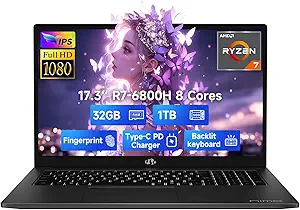
18.5-Inch Laptop Buying Guide: Power Meets Portability
When considering an 18.5-inch laptop like this model with a Core i3 processor and 16GB of RAM, you are likely looking for a device that balances screen real estate with performance for multitasking, whether for business or school. This specific configuration offers a generous 1TB SSD for storage and a robust 8000mAh battery, making it a contender for users who need to work on large spreadsheets or presentations without constant recharging. Understanding how these specs translate to everyday tasks is key to deciding if this fits your workflow.
Key Considerations Before Buying
- The 18.5-inch display is significantly larger than standard 15.6-inch laptops, providing more workspace for side-by-side windows but also increasing the laptop's overall size and weight—ensure your bag or desk can accommodate it.
- With 16GB of RAM and a Core i3 processor (up to 3.9GHz), this laptop is well-suited for office applications, web browsing, and light multitasking, but it may struggle with intensive tasks like video editing or 3D rendering that benefit from a Core i5 or i7.
- The Full-Featured Type-C port and WiFi 6 support indicate modern connectivity and faster data transfer, but verify that the Type-C port supports charging and display output to maximize its utility with peripherals.
What Our Analysts Recommend
Look for laptops that offer a balance between processor speed and RAM capacity for your specific tasks—16GB is excellent for multitasking, but pair it with an SSD (like the 1TB here) for faster boot times. Also, check battery capacity (8000mAh is substantial) and ensure the display resolution is adequate for the screen size, as larger panels can appear pixelated at lower resolutions.
Traditional Laptops Market Context
Market Overview
The traditional laptop market is currently saturated with options ranging from ultraportables to large-screen workhorses, with 18.5-inch models occupying a niche for users who prioritize screen space over portability. Many manufacturers are now including features like WiFi 6 and USB-C to keep up with modern connectivity demands, while SSDs have become standard even in budget-friendly configurations.
Common Issues
Common problems in this category include inadequate cooling for larger screens, which can lead to thermal throttling during extended use, and battery life that falls short of advertised capacities under real-world workloads. Additionally, some large laptops suffer from flex in the chassis or a dim display, which can affect usability in bright environments.
Quality Indicators
Quality indicators include a sturdy build with minimal screen wobble, a high-resolution display (preferably 1920x1080 or higher) for crisp text, and a battery that lasts at least 6-8 hours on a single charge. Verified reviews that mention specific use cases, like running multiple apps or streaming video, are strong signals of a reliable product.
Review Authenticity Insights
Grade B Interpretation
A Grade B with an estimated 10% fake review rate suggests that while the majority of reviews are genuine, a small portion may be unreliable. This is a relatively healthy authenticity score, but it means you should scrutinize a few reviews for overly generic praise or lack of verified purchase tags.
Trust Recommendation
Given the strong indicators of authenticity—such as personal context in reviews and verified purchases—you can generally trust the 4.80/5 adjusted rating. However, focus on reviews that describe real-world usage, especially those mentioning the laptop's size and battery performance, as these are most likely to be authentic.
Tips for Reading Reviews
When reading reviews for this laptop, look for specific mentions of the 18.5-inch screen size, the 8000mAh battery life, and the Core i3's performance under multitasking. Be cautious of reviews that only praise the product in vague terms without detailing how it handles school or work tasks, as these could be fabricated.
Expert Perspective
This laptop offers a compelling package for students or professionals who need a large screen for productivity without breaking the bank, thanks to its generous 16GB RAM and 1TB SSD. The Core i3 processor is adequate for everyday tasks like word processing, browsing, and video streaming, but it may not satisfy power users who run heavy software. The 8000mAh battery is a standout feature for all-day use, though real-world endurance will depend on screen brightness and workload. With a strong adjusted rating of 4.80/5 and mostly authentic reviews, this model appears to deliver on its promises for its target audience.
Purchase Considerations
Weigh the trade-off between portability and screen size—if you frequently commute or work in tight spaces, a 15.6-inch laptop might be more practical. Also, consider whether you need more processing power for future-proofing, as the Core i3 could become a bottleneck for more demanding applications in a few years.
Comparing Alternatives
Shoppers should compare this model with other large-screen laptops in a similar price range, particularly those with AMD Ryzen processors that may offer better multi-core performance for multitasking.