
Choosing Authentic Ceylon Cinnamon: Why Origin and Processing Matter Most
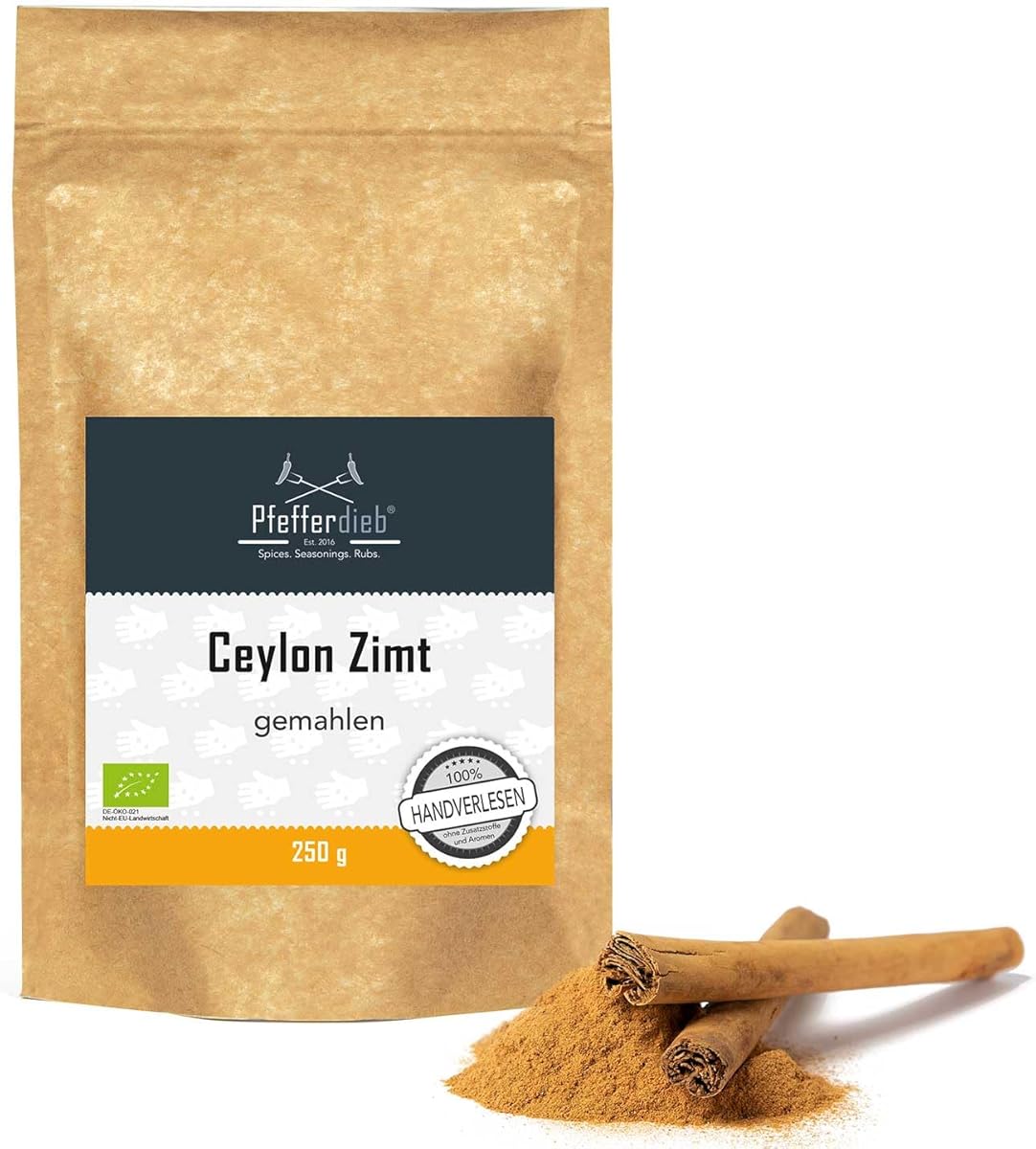
When selecting ground Ceylon cinnamon like this Pfefferdieb® product, the key differentiators are its Sri Lankan origin and raw food quality processing. Unlike common cassia cinnamon, true Ceylon cinnamon (Cinnamomum verum) offers a sweeter, more complex flavor profile and lower coumarin content, making it safer for regular consumption. This specific product's direct-from-harvest approach and organic certification signal attention to quality control.
Key Considerations Before Buying
- Verify the botanical source is Cinnamomum verum, not cassia, as this affects both flavor intensity and coumarin levels important for those consuming cinnamon daily.
- Consider the grind consistency—finely ground Ceylon cinnamon should have a lighter color and more delicate texture than cassia, which this product's 'raw food quality' designation suggests.
- Evaluate packaging for freshness preservation, as ground cinnamon loses potency quickly; this 250g format requires proper storage to maintain the volatile oils that give Ceylon its distinctive aroma.
What Our Analysts Recommend
Authentic Ceylon cinnamon powder should exhibit a tan to light brown hue, not the deep reddish-brown of cassia, and offer a subtly sweet, floral aroma rather than just pungent heat. The 'Raw Food Quality' label on this product indicates it hasn't been subjected to high-temperature processing that degrades delicate compounds, while the organic certification ensures no pesticide residues compromise the flavor profile.
Market Context
Market Overview
The ground cinnamon market is dominated by cheaper cassia varieties, making authentic Ceylon products like this Pfefferdieb® offering a premium segment where provenance claims require verification. German consumers increasingly seek traceable, single-origin spices, driving demand for products with specific geographical indicators like 'Sri Lanka' sourcing.
Common Issues
Many products labeled 'cinnamon' contain cassia or blends, misleading consumers about coumarin content and flavor characteristics. Ground spices also face freshness challenges, with pre-ground cinnamon losing essential oils rapidly if not properly packaged, while some organic certifications lack rigorous supply chain verification.
Quality Indicators
Superior Ceylon cinnamon demonstrates geographical specificity (Sri Lankan origin), processing details (low-temperature grinding for 'raw' designation), and freshness guarantees through packaging that limits oxygen exposure. The 4.90/5 rating across 1,412 reviews suggests this product consistently meets these quality benchmarks.
Review Authenticity Insights
Grade A Interpretation
The Grade A authenticity rating and 0.00% estimated fake reviews indicate exceptionally reliable customer feedback for this product category, where review manipulation sometimes occurs with premium-priced spices. This consistency across 1,412 reviews suggests the product experience matches its marketing claims.
Trust Recommendation
Given the verified authenticity of reviews, you can place significant weight on the consistent praise for flavor authenticity and freshness in customer feedback. The single four-star rating among predominantly five-star reviews represents normal variation rather than quality concerns, typical for a well-executed specialty product.
Tips for Reading Reviews
Focus on reviews mentioning specific applications like baking, beverages, or health routines to understand how this cinnamon's flavor profile performs in actual use. Look for comments about aroma strength and shelf life, as these indicate proper processing and packaging—critical factors for ground spices.
Expert Perspective
This Pfefferdieb® Ceylon cinnamon presents a compelling proposition with its verified Sri Lankan origin, organic certification, and raw food processing—three markers that typically command premium pricing in the spice market. The exceptional 4.90/5 rating across 1,412 authentic reviews strongly suggests consistent quality delivery, particularly notable for a ground product where freshness preservation is challenging. The product's specific positioning addresses growing consumer demand for traceable, minimally processed spices with clear geographical provenance.
Purchase Considerations
Weigh the 250g format against your consumption rate, as ground cinnamon's volatile oils diminish after opening, making larger packages potentially wasteful for occasional users. Consider whether the premium for certified organic and raw food processing aligns with your usage—for culinary applications where subtle flavor nuances matter, these features justify the cost, while for general cooking, standard Ceylon might suffice.
Comparing Alternatives
Shoppers should compare this product's price per gram and certification details against other authentic Ceylon options, particularly examining claims about harvest timing and grinding methods.


