
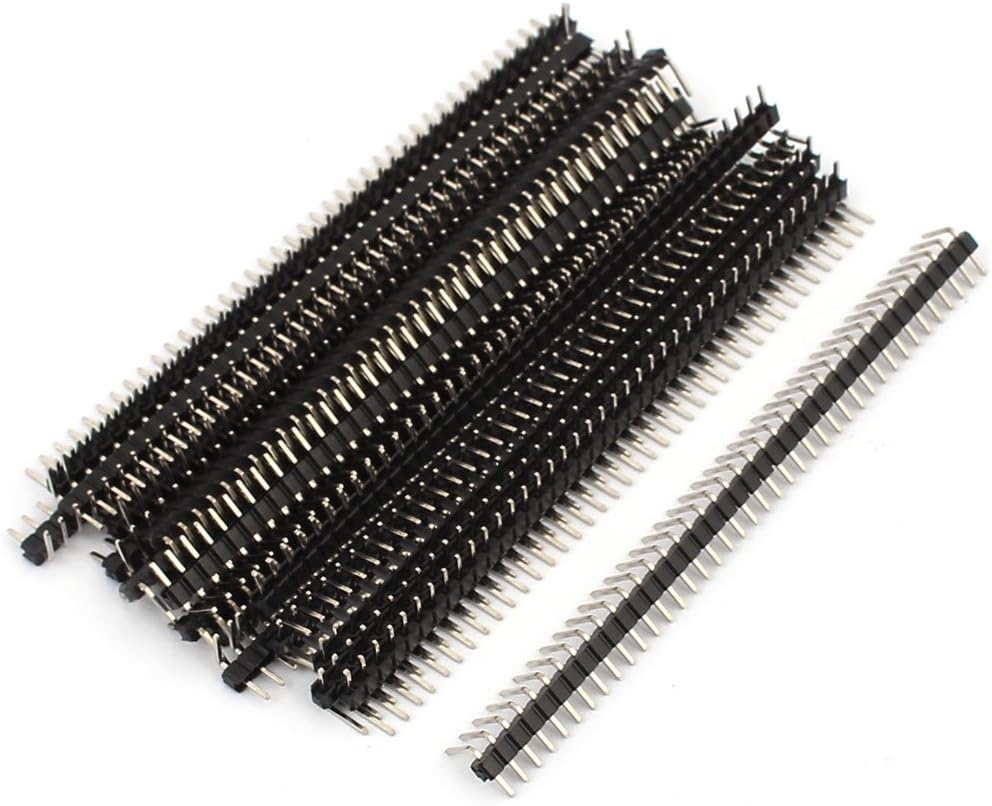
Choosing the Right 2.54mm Right-Angle Pin Header for Your PCB Prototyping Projects
When selecting a 2.54mm pitch right-angle pin header strip like the sourcing map 18-piece set, you're buying a fundamental interconnect component for PCB development. This specific product offers 40-pin single-row connectors with a right-angle orientation, which is crucial for creating perpendicular board-to-board or board-to-cable connections in tight spaces. Understanding the specifications and build quality directly impacts your prototyping success and long-term reliability.
Key Considerations Before Buying
- Pin count and strip segmentation: This 40-pin configuration is ideal for medium-density connections, but verify you can break the strip cleanly to your required pin count without damaging adjacent pins or the plastic housing.
- Right-angle orientation and PCB clearance: The 90-degree bend must provide sufficient clearance from your PCB surface; check the specific bend radius and pin length to ensure compatibility with your board thickness and enclosure constraints.
- Material composition and plating: These connectors typically use phosphor bronze pins with tin plating—verify the plating thickness (usually 1-3μm) for reliable solderability and corrosion resistance through multiple soldering cycles.
What Our Analysts Recommend
Examine the molding quality of the black nylon housing—it should be uniform without flash or sink marks, with crisp, legible pin numbering. The pins should be straight, evenly spaced at exactly 2.54mm pitch, and maintain consistent alignment when viewed from the side. Quality right-angle headers will have a clean bend at the pin base without stress marks or deformation in the metal.
Terminal Blocks Market Context
Market Overview
The 2.54mm pitch pin header market is saturated with offerings ranging from premium industrial-grade connectors to budget prototyping options, with German suppliers like sourcing map typically positioning themselves in the reliable mid-range segment. Right-angle variants command a slight premium over straight headers due to the additional manufacturing step, but remain essential for space-constrained designs where vertical clearance is limited.
Common Issues
Budget right-angle headers often suffer from inconsistent pin alignment after the bending process, leading to insertion force variations when mating with female sockets. Another frequent problem is brittle plastic housings that crack during manual break-apart, particularly in cold environments or when using improper cutting tools. Some cheaper imports also exhibit poor pin plating that oxidizes quickly, resulting in unreliable solder joints.
Quality Indicators
Superior right-angle headers maintain precise pin alignment throughout the strip, with the bend occurring at a consistent position relative to the housing. The plastic should have slight flexibility without being rubbery, and the pin retention force should be sufficient to prevent pins from pushing out during handling. Look for clean, burr-free pin ends and consistent gold or tin plating thickness across all contacts.
Review Authenticity Insights
Grade B Interpretation
The 'B' authenticity grade with 11% estimated fake reviews suggests mostly genuine feedback with some potentially incentivized reviews. For this specialized electronic component, even genuine reviews often come from experienced users who can identify subtle quality differences in pin headers that casual buyers might overlook.
Trust Recommendation
Focus on reviews that mention specific technical details like pin straightness, plating quality, or compatibility with particular PCB thicknesses—these are more likely genuine. Given the 4.70 adjusted rating (down from 5.00), expect the product to perform well but potentially have minor consistency issues in larger batches.
Tips for Reading Reviews
Prioritize German-language reviews from verified purchasers who reference actual prototyping use cases. Look for mentions of 'Biegewinkel' (bend angle) consistency, 'Lötbarkeit' (solderability), and 'Passgenauigkeit' (fit accuracy) with common sockets—these indicate technically knowledgeable feedback rather than generic praise.
Expert Perspective
The sourcing map 18-piece set represents solid value for prototyping applications where you need multiple identical right-angle connectors. The 40-pin length provides flexibility for various projects, though breaking them down requires care. The maintained 4.70 rating after authenticity adjustment suggests reliable performance for most hobbyist and prototyping needs, though production applications might warrant higher-grade alternatives. The right-angle design is particularly useful for Raspberry Pi HATs, Arduino shields, and other stacked board configurations where vertical space is constrained.
Purchase Considerations
Evaluate your actual pin count requirements—if you consistently need fewer than 40 pins, consider whether breaking these strips represents wasted material versus buying pre-cut lengths. Also assess your soldering equipment's capability; right-angle headers can be trickier to solder evenly than straight versions due to heat sinking through the bend. The 18-piece quantity makes sense for batch projects or team use, but individual makers might prefer smaller packs.
Comparing Alternatives
Compare pitch accuracy and pin retention force against established brands like TE Connectivity or Würth Elektronik, though expect significant price differences for similar specifications.


