
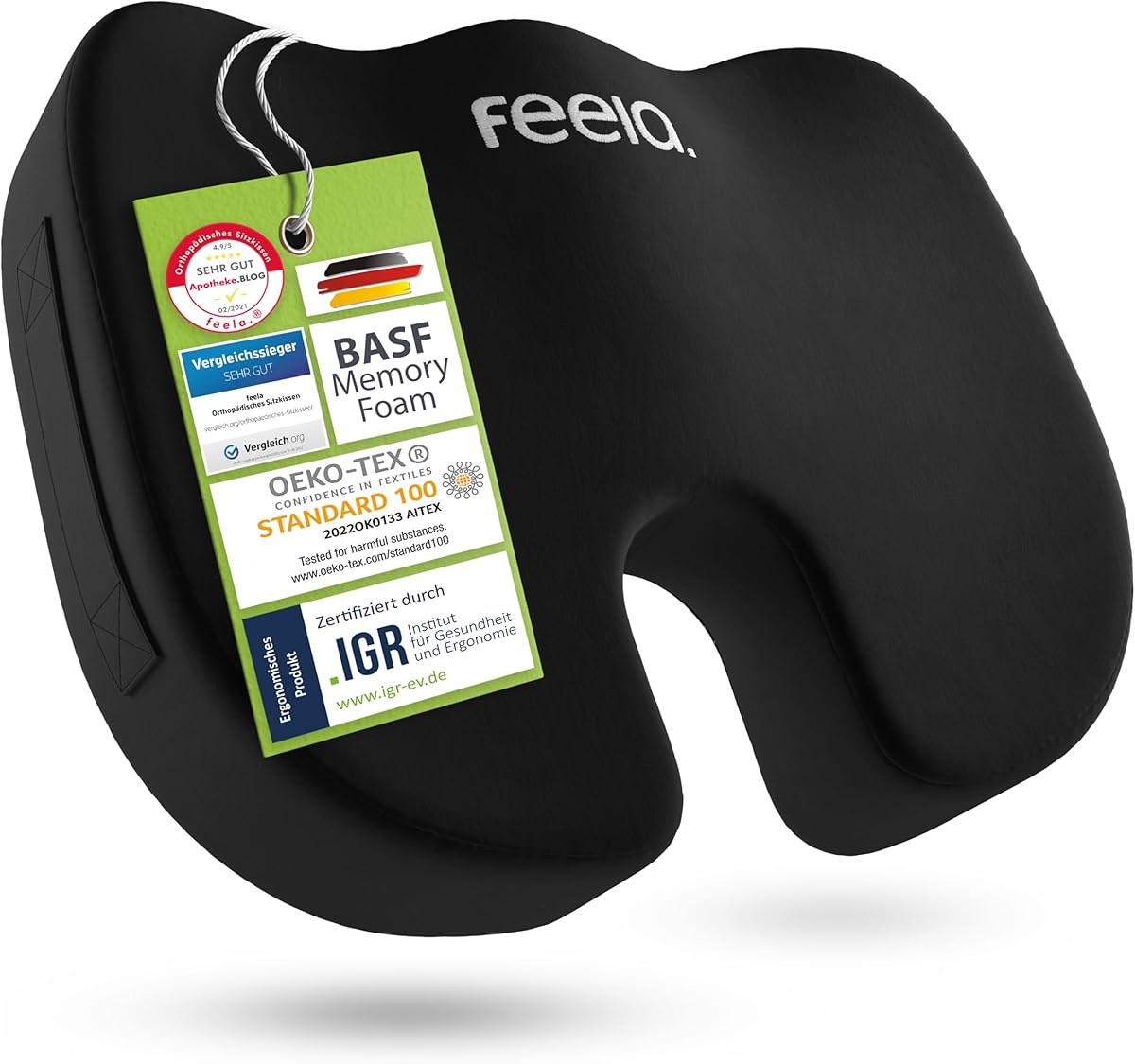
Choosing an Orthopaedic Seat Cushion: Focus on Firmness Levels and Coccyx Relief
When evaluating the feela.® Orthopaedic Seat Cushion, the key differentiator is its three adjustable firmness levels, which directly address varying pressure relief needs. Unlike single-density cushions, this feature allows users to customize support for tailbone pain, posture correction, or general comfort throughout the day. The medium size and specific ergonomic cutout for the coccyx are designed for targeted relief, making it crucial to assess whether this matches your chair dimensions and pain points.
Key Considerations Before Buying
- The three firmness levels (soft, medium, firm) are the product's core feature; consider whether you need this adaptability or if a single density would suffice for your consistent seating environment.
- The U-shaped cutout is specifically for coccyx (tailbone) relief; if your primary discomfort is in the ischial tuberosities (sitting bones) or lower back, a different contour might be more effective.
- The non-slip bottom and medium size (approximately 40x40cm) must be checked against your office chair dimensions to ensure stability and full coverage without overhang.
What Our Analysts Recommend
High-quality orthopaedic cushions like the feela.® use high-resilience foam that maintains its shape and firmness over time, resisting permanent compression. The cover should be breathable, removable, and machine-washable to manage hygiene, especially for all-day use. Look for clear articulation of the foam's density (often measured in kg/m³) and the specific ergonomic design intent—whether for coccyx relief, pelvic tilt, or even pressure distribution.
Back & Seat Cushions Market Context
Market Overview
The seat cushion market is saturated with products claiming pain relief, but genuine orthopaedic designs with medically-informed shapes, like coccyx cutouts or waterfall edges, command a premium. The trend is toward customization, with adjustable firmness and modular inserts becoming key selling points for serious users. In Germany, there's strong demand for ergonomic home office solutions backed by TÜV or similar certifications, though not all products carry them.
Common Issues
Many cushions fail due to foam that quickly bottoms out, losing support within months, or covers that cause heat buildup during prolonged sitting. Poorly sized cutouts can actually increase pressure on sensitive areas, and cushions that slide excessively on chair surfaces become a safety hazard. Inflatable or gel alternatives often solve one problem but introduce issues like instability or coldness.
Quality Indicators
Beyond foam density, examine the base fabric; a non-slip, dot-grip pattern is superior to smooth finishes. Seams should be double-stitched and reinforced, especially around the cutout. Reputable brands provide detailed dimension diagrams and firmness specifications, not just generic 'orthopaedic' claims. A removable, washable cover with a zip is a minimum for hygiene in daily use.
Review Authenticity Insights
Grade B Interpretation
A Grade B with an 11% estimated fake review rate indicates a generally trustworthy review pool for the feela.® cushion, but advises healthy skepticism toward extreme outlier opinions. The adjusted rating of 4.40/5 (down from 4.67) suggests the genuine customer satisfaction is still very high, though slightly tempered when potentially incentivized reviews are considered.
Trust Recommendation
Prioritize verified purchase reviews that detail long-term use (3+ months) and specifically mention the durability of the foam or the practical benefits of the three firmness levels. Be cautious of reviews that only generically praise 'comfort' without mentioning a specific pain point (e.g., coccyx, sciatica) or the adjustability feature.
Tips for Reading Reviews
For this product, search reviews for keywords like 'firmness settings,' 'coccyx,' 'tailbone,' and 'all-day sitting' to find experiences relevant to therapeutic use. Pay close attention to reviews discussing the cover's breathability in summer and whether the cushion stays put on different chair materials (leather vs. fabric).
Expert Perspective
The feela.® cushion's standout feature is its three firmness levels, a legitimate innovation in a market of static foams. The high adjusted rating of 4.40/5 from a large review sample (21,806) strongly indicates it delivers on core promises for most users, particularly for coccyx relief. The Grade B authenticity score suggests you can base a decision on the review consensus, focusing on the detailed experiences of users with similar pain profiles and chair types. The product positions itself as a therapeutic tool, not just a comfort accessory, which is reflected in its specific design.
Purchase Considerations
Weigh the premium for adjustable firmness against your need; if your discomfort varies (e.g., post-injury recovery vs. static discomfort), it's valuable. Consider your primary seating scenario—this medium-sized cushion is designed for standard office chairs, not deep sofas or car seats. The investment is justified if you require targeted, adaptable support for 6+ hours of daily sitting.
Comparing Alternatives
Shoppers should compare this model's adjustable approach against single-firmness memory foam or gel-infused cushions, which may offer different pressure relief properties at a different price point.


