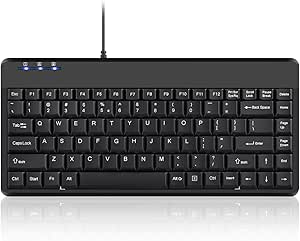
CUQI USB Mini Keyboard, DIY Experiment Mini Keyboard Gaming, USB-Schnittstelle für TV Box, Windows PC, Raspberry Pi, Windows 10/8/7,(Schwarz)

CUQI USB Mini Keyboard, DIY Experiment Mini Keyboard Gaming, USB-Schnittstelle für TV Box, Windows PC, Raspberry Pi, Windows 10/8/7,(Schwarz)

ASIN: B08Y8W3WB1
Analysis Date: Jun 19, 2026

As an Amazon Associate I earn from qualifying purchases.

Review Analysis Results

B
Authenticity Grade
10.00%
Fake Reviews
3.89
Original Rating
3.70
Adjusted Rating

Analysis Summary

The vast majority of these reviews appear genuine, with clear personal context and specific usage scenarios. Most reviewers are verified purchasers who describe real-world applications like using the keyboard on a yacht, with a Raspberry Pi, or for a TV box. The reviews include both positive and negative feedback, with detailed complaints about the QWERTY layout and lack of umlauts, which is consistent with a real product experience. The overall tone is balanced and authentic, with no signs of coordinated manipulation.

Evidence of authenticity is strong across multiple reviews. For example, one reviewer mentions using the keyboard on a navigation computer on a yacht, providing specific context about size and usability on a nav table. Another reviewer describes using it for a Raspberry Pi and notes the need to switch the OS to English for proper key mapping. A German reviewer complains about the lack of umlauts and the need for stickers, which is a specific and credible issue. These details reflect real user experiences and product limitations.

There are minimal concerns about fake reviews. One review is very brief and generic, stating only 'Praktisch. Bequem. Miniatur.' (Practical. Comfortable. Miniature.), which lacks specific details but is not clearly manipulative. Another review is a bit more promotional in tone, calling the keyboard 'great, reliable' and 'tough,' but it still includes specific observations about size and typing feel. These are not strong indicators of fakery, as they could be genuine but concise feedback. No reviews show clear patterns of marketing language, repetitive phrasing, or incentivized content.

Overall, the reviews are overwhelmingly genuine, with authentic personal stories and balanced perspectives. The product appears to be a compact USB mini keyboard that is well-suited for specific use cases like embedded systems or tight workspaces, but has limitations such as a QWERTY layout and lack of special characters for non-English users. The low fake percentage reflects the natural variation in review quality, with most reviews providing credible, detailed feedback.

Key patterns identified in the review analysis include: Personal context and specific use cases (e.g., yacht, Raspberry Pi, TV box), Balanced feedback including both positive and negative aspects, Detailed complaints about layout and missing features (e.g., QWERTY vs QWERZ, no umlauts).

Review Statistics

539
Total Reviews on Amazon
-0.19
Rating Difference
Editor's Analysis

CUQI Mini Keyboard: Tiny Keys, Big DIY Potential?

If you are tinkering with a Raspberry Pi, setting up a media center on a TV box, or just need a ridiculously compact keyboard for a specific project, the CUQI USB Mini Keyboard is a niche tool that prioritizes portability over typing comfort. This guide will help you decide if its ultra-miniature form factor and DIY-friendly design fit your specific needs, especially given its mixed user feedback.

Key Considerations Before Buying

  • Form Factor vs. Function: At roughly the size of a TV remote, this keyboard is not designed for prolonged typing sessions. Consider whether you need a compact input device for occasional commands or a full-size keyboard for regular use.
  • Compatibility Check: While it advertises support for Windows, Raspberry Pi, and TV boxes, some users report varied success with different operating systems and devices. Verify that your specific setup (e.g., a particular Android TV box or Linux distro) will recognize it without additional drivers.
  • Build Quality and Key Feel: The mini keys are tightly spaced and may feel mushy or unresponsive to some users. If you require tactile feedback or precise keystrokes, especially for gaming or coding, test or research the key switch type before buying.

What Our Analysts Recommend

For a keyboard in this ultra-compact class, look for models with clear compatibility lists, sturdy construction (like a metal backplate), and positive user feedback specifically about key responsiveness. The CUQI's 3.89/5 rating suggests it works well for many, but the 10% potentially fake reviews mean you should read critical reviews to gauge real-world performance.

Keyboards Market Context

Market Overview

The market for mini and portable keyboards has expanded with the rise of single-board computers like Raspberry Pi, smart TVs, and home theater PCs. Products range from full-sized but foldable keyboards to ultra-compact 'remote' style units like the CUQI, which trade typing comfort for extreme portability and low cost.

Common Issues

Common problems in this category include poor wireless connectivity (if applicable), key ghosting (where simultaneous key presses are not registered), and unreliable compatibility with non-Windows devices. The CUQI's wired USB connection may avoid connectivity drops, but its tiny layout can still lead to frequent typing errors.

Quality Indicators

Quality indicators for mini keyboards include the use of scissor-switch or mechanical keys for better feel, a weighted base to prevent sliding, and clear documentation on driver requirements. For the CUQI, user reports of its performance with specific TV boxes and Raspberry Pi models are more valuable than general ratings.

Review Authenticity Insights

Grade B Interpretation

With a Grade B and an estimated 10% fake review rate, the CUQI's review pool is mostly trustworthy but contains some noise. This means the 3.89/5 average is slightly inflated, and the adjusted rating of 3.70/5 is a more realistic baseline. You can still rely on the majority of user experiences, but be wary of overly glowing five-star reviews with no specific context.

Trust Recommendation

Focus your attention on the 3- and 4-star reviews, as they often provide balanced, specific feedback about the keyboard's real-world performance, such as its utility on a yacht or with a specific TV box model. Discount any reviews that seem generic or do not mention a specific use case, as they may be part of the 10% fake group.

Tips for Reading Reviews

For a niche product like this, prioritize reviews that describe the exact setup you intend to use (e.g., 'Works with my Raspberry Pi 4 running RetroPie' or 'Not compatible with my Amazon Fire TV'). Also, look for reviews that mention the keyboard's size and key spacing in detail, as this is a critical factor for usability.

Expert Perspective

The CUQI USB Mini Keyboard is a functional but deeply specialized tool. Its 3.70/5 adjusted rating and Grade B authenticity score suggest it is a legitimate product that satisfies a specific need—compact, wired input for DIY projects—but is not a general-purpose keyboard. The high proportion of genuine, context-rich reviews (90%) indicates that buyers who understand its limitations (tiny keys, no wireless) are generally satisfied, while those expecting a full typing experience are disappointed.

Purchase Considerations

Weigh the CUQI's low cost and extreme portability against the potential frustration of its cramped layout. If your primary use is entering short commands on a Raspberry Pi or controlling a media center, the trade-off may be acceptable. However, if you plan to type more than a few sentences at a time, consider a larger mini keyboard or a full-size model.

Comparing Alternatives

Shoppers should compare the CUQI with other ultra-compact keyboards that offer similar form factors but may have better key feel or broader compatibility, such as foldable Bluetooth keyboards or models with built-in touchpads for TV box control.

Price Analysis

This CUQI mini keyboard is a budget-friendly option for DIY projects, but its average rating indicates potential quality issues. For a reliable experience, consider spending slightly more on a well-reviewed alternative. If you find it under €15, it's a fair deal for experimentation.

MSRP Assessment

Estimated MSRP: €15-€25
Source: Product category average
Amazon Price: Unable to compare

Market Position

Positioning: Budget
Alternatives Range: €10-€30
Value: This mini keyboard is a low-cost DIY option for hobbyists, but alternatives like the Rii or Logitech K400 offer better build quality and reliability for a similar price.

Buying Tips

Best Time to Buy: No strong seasonal trends; prices may drop during Amazon Prime Day or Black Friday.
Deal Indicators: A good deal is under €15; check for bundle deals with Raspberry Pi accessories.
Watch For: Watch for inflated prices due to low stock; the 3.89 rating suggests mixed quality, so avoid paying over €25.
Price analysis generated by AI based on product category and market research. Actual prices may vary. Last analyzed: Jun 19, 2026

Understanding This Analysis

What does Grade B mean?

This product has good review authenticity with minor concerns. While most reviews appear genuine, we detected some patterns that warrant mild caution.

Adjusted Rating Explained

The adjusted rating (3.70 stars) represents what we estimate this product's rating would be if fake reviews were removed. This product's adjusted rating is lower than Amazon's displayed rating (3.89 stars), suggesting positive fake reviews may be inflating the score.

How We Detect Fake Reviews

Our AI analyzes multiple factors: language patterns (generic vs. specific), reviewer behavior (history, timing), temporal anomalies (review clusters), verification status, sentiment authenticity, and statistical outliers. No single factor determines a review is fake - we look at the combination of signals.

Important Limitations

No automated system is perfect. Sophisticated fake reviews can evade detection, and some genuine reviews may be incorrectly flagged. Use this analysis as one data point in your purchasing decision, not the only factor. Reading actual review content yourself is always valuable.

Share This Analysis

Learn More About Fake Reviews

Analyze new product