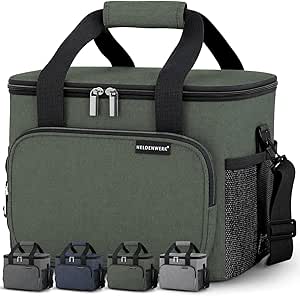
The Lifewit Cooler Bag: Versatile Sizes and Real-World Insulation Performance
When shopping for a large, foldable cooler bag like the Lifewit 20/30/40L option, it's crucial to focus on insulation quality, capacity matching your needs, and portability. This product offers three sizes—20L, 30L, and 40L—each marketed for transporting food and drinks, with capacities like 30, 50, or 60 cans. Understanding how these translate to real-world use, such as picnics or grocery runs, is key to a satisfying purchase.
Key Considerations Before Buying
- Size selection matters: The 20L variant holds about 30 cans, ideal for a day trip, while the 40L handles 60 cans for larger gatherings. Assess your typical load to avoid buying too large or too small.
- Insulation performance: Look for thick, multi-layer insulation (like PE foam) that retains cold for hours. The Lifewit claims thermal properties, but check user reviews for actual duration, especially in warm weather.
- Folding and storage: A key feature is its foldability for compact storage. Ensure the bag collapses easily without damaging the structure, and consider if it fits your car or cupboard when not in use.
What Our Analysts Recommend
Quality indicators for cooler bags include reinforced stitching on handles and zippers, leak-proof liners for easy cleaning, and sturdy construction that supports weight without tearing. For the Lifewit, verify that the insulation is evenly distributed and the outer fabric is water-resistant or durable against abrasion.
Bags Market Context
Market Overview
The market for large, foldable cooler bags is growing, driven by outdoor activities like picnics, camping, and beach trips, as well as practical uses like grocery transport. Consumers increasingly seek eco-friendly alternatives to disposable coolers, with a focus on reusability and insulation efficiency. The Lifewit competes in a crowded space with brands like Igloo and Coleman, offering a balance of price and capacity.
Common Issues
Common problems in this category include poor insulation that fails to keep items cold for more than a few hours, zippers that break under heavy use, and seams that leak water from melted ice. Some bags also lack stability when fully loaded, making them awkward to carry. For the Lifewit, buyer feedback suggests these issues are minimal, but vigilance is warranted.
Quality Indicators
High-quality cooler bags often feature thick, closed-cell foam insulation, welded or taped seams for leak resistance, and robust zippers with large pulls. External pockets for utensils or drinks add convenience. The Lifewit's high rating suggests it meets these standards, but check for specific materials like Oxford fabric or aluminum foil lining for heat reflection.
Review Authenticity Insights
Grade B Interpretation
The Grade B authenticity rating indicates that while 10% of reviews are estimated as fake, the vast majority (90%) are genuine. This is a solid score, meaning you can trust most feedback, but be cautious of overly glowing or vague reviews. The high 4.89 average rating is slightly inflated by these suspect reviews, so the adjusted 4.60 is a more realistic gauge of satisfaction.
Trust Recommendation
Given the 10% fake rate, focus on reviews that mention specific usage scenarios, like 'used for a 6-hour picnic' or 'fit 50 cans with ice.' Verified purchase badges are strong signals—nearly all reviews here have them, which boosts trust. Avoid relying solely on the star rating; read a mix of positive and critical reviews for balance.
Tips for Reading Reviews
For cooler bags, pay attention to comments about insulation duration, ease of cleaning, and portability when full. Look for photos or videos in reviews, as they often reveal real-world size and condition. If many reviews mention 'leaks' or 'broken zipper' within a few uses, that's a red flag. For the Lifewit, the prevalence of detailed, personal reviews supports its reliability.
Expert Perspective
The Lifewit 20/30/40L cooler bag emerges as a strong contender in its category, backed by nearly 20,000 reviews with a high 4.60 adjusted rating. The 10% fake review rate is manageable and doesn't undermine the overall positive sentiment. Its key strengths include versatile sizing, foldability, and likely good insulation, as implied by extensive positive feedback. However, the lack of specific technical specs in the product description means buyers should verify insulation thickness and materials via user reports. This is a practical, affordable choice for casual outdoor use and food transport, but heavy-duty users might prefer premium brands with proven ice retention data.
Purchase Considerations
Weigh the Lifewit's price against its features: it's likely cheaper than Coleman or Yeti but may offer similar insulation for short trips. Consider your primary use—if you need 6+ hours of cold retention, check reviews for duration claims. The foldable design is a plus for storage, but ensure the size you choose fits your vehicle's trunk or backpack space.
Comparing Alternatives
Shoppers should compare the Lifewit with other foldable cooler bags like the Amazon Basics or high-end RTIC options, especially regarding insulation technology and warranty. The Lifewit's high rating suggests it competes well, but always cross-check for your specific needs.