
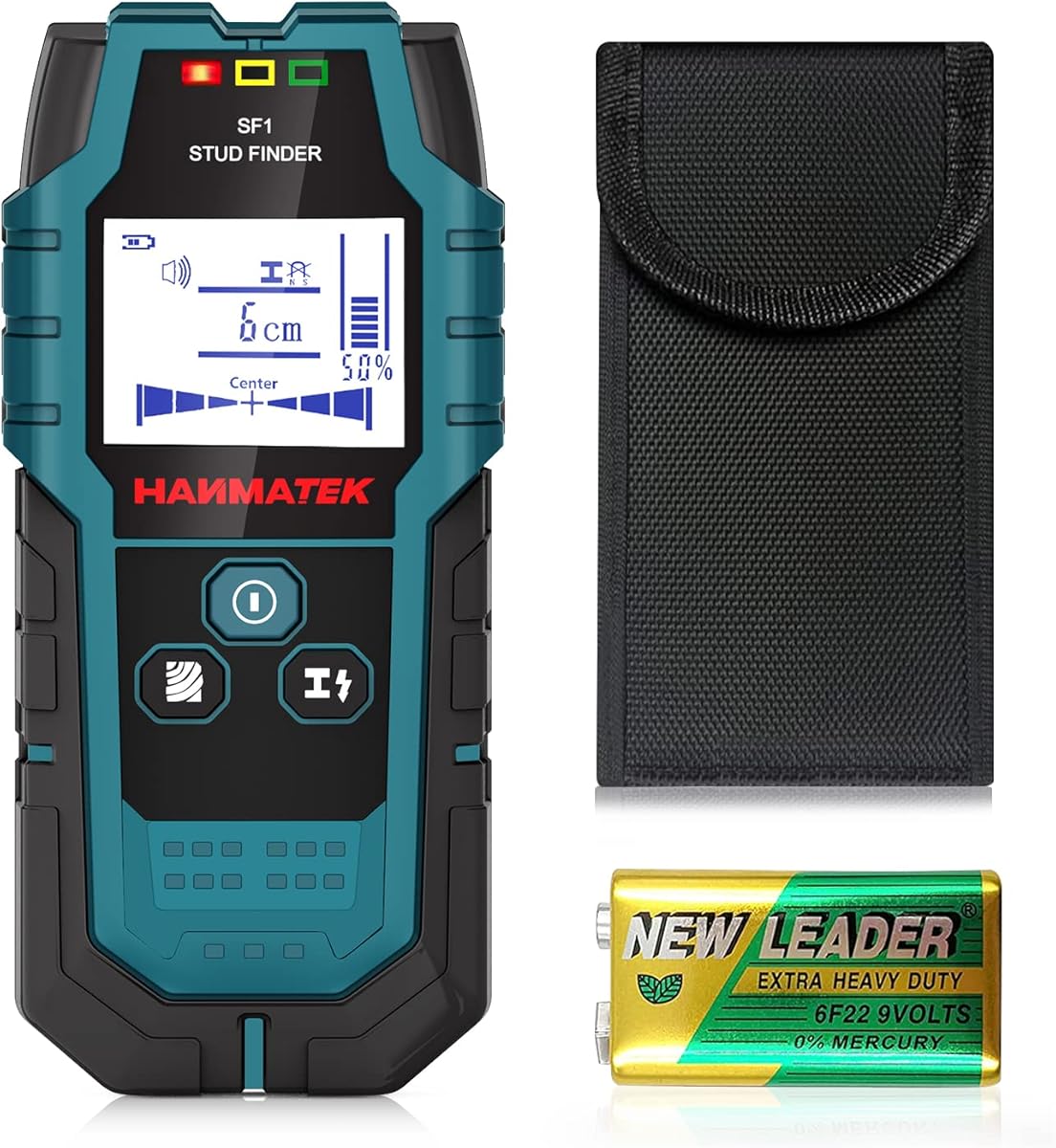
Choosing a Multi-Function Wall Scanner: What the HANMATEK SF1 Delivers
The HANMATEK SF1 positions itself as an all-in-one detector for wood studs, ferrous metals, non-ferrous metals, and live AC wiring. Buyers should understand that this is a budget-friendly, multi-material detector, not a professional-grade, single-purpose tool. Its value lies in consolidating several detection modes into one affordable device for light DIY tasks.
Key Considerations Before Buying
- Consider your primary use: The SF1's 'Cable' mode is for detecting live AC voltage, not for precisely mapping de-energized wires, which requires a more sensitive tracer.
- Evaluate detection depth needs: For a device in this price range, reliable detection is typically limited to standard drywall depths; performance on thicker plaster or lath walls may vary.
- Assess the calibration process: Multi-material detectors like the SF1 require proper surface calibration before each use to minimize false positives from dense drywall compound or surface textures.
What Our Analysts Recommend
Look for consistent performance across its advertised modes, not just one. A quality multi-detector should have clear, distinct audio and visual signals for different materials to prevent confusion. The build should feel sturdy enough for hand-held scanning without being overly bulky.
Market Context
Market Overview
The market for consumer-grade wall scanners is crowded with devices claiming multi-functionality, often at sub-€50 price points. Products like the HANMATEK SF1 compete by offering more detection modes than basic stud finders, targeting homeowners and DIYers who want a single tool for various small projects.
Common Issues
Common problems include inconsistent depth readings, difficulty distinguishing between closely spaced studs and pipes, and 'phantom' readings caused by dense wall materials or improper calibration. Cheaper multi-detectors often struggle with accurate non-ferrous metal detection compared to dedicated tools.
Quality Indicators
Quality indicators include a reliable auto-calibration feature, low battery indication to prevent erratic readings, and a clear display that differentiates between detection modes. The sensor array's size also matters; a wider array can provide better scanning coverage and more accurate edge detection.
Review Authenticity Insights
Grade A Interpretation
A Grade A with a 0.00% estimated fake review rate is exceptional for this category, indicating the 4.3/5 rating from 7,240 reviews is highly trustworthy. This suggests the feedback accurately reflects real-world user experiences with the SF1's performance and limitations.
Trust Recommendation
You can place significant confidence in this product's overall rating. Focus your review analysis on the 3 and 4-star reviews, as they typically contain the most balanced, substantive feedback about specific scenarios where the SF1 performs well or falls short.
Tips for Reading Reviews
Pay close attention to reviews that mention specific wall types (e.g., 'altbau plaster' or 'rigips') and what users were trying to detect. Look for patterns in complaints about the cable detection mode's sensitivity, as this is often the weakest function in multi-detectors.
Expert Perspective
The HANMATEK SF1's strong, authentic rating suggests it reliably meets core expectations for a budget multi-detector. Its high review volume and consistent score indicate it generally performs its basic functions—wood and metal stud finding—adequately for occasional DIY use. The inclusion of a live wire detection mode, even if limited, adds preventative safety value. However, the rating distribution with genuine critical reviews confirms it has the typical limitations of its class, particularly regarding depth accuracy and material discrimination in complex walls.
Purchase Considerations
Weigh the convenience of having four detection modes in one tool against the likelihood you'll need professional-grade precision. If your projects involve simple stud finding for shelves or pictures and basic metal detection, the SF1 is a sensible choice. If you frequently work on older buildings with complex walls or need to trace de-energized cables, invest in a more specialized, higher-end detector.
Comparing Alternatives
Shoppers should compare the SF1's feature set and user feedback against similar multi-detectors from brands like Bosch DIY or Stanley to find the best interface and reliability for their needs.


