
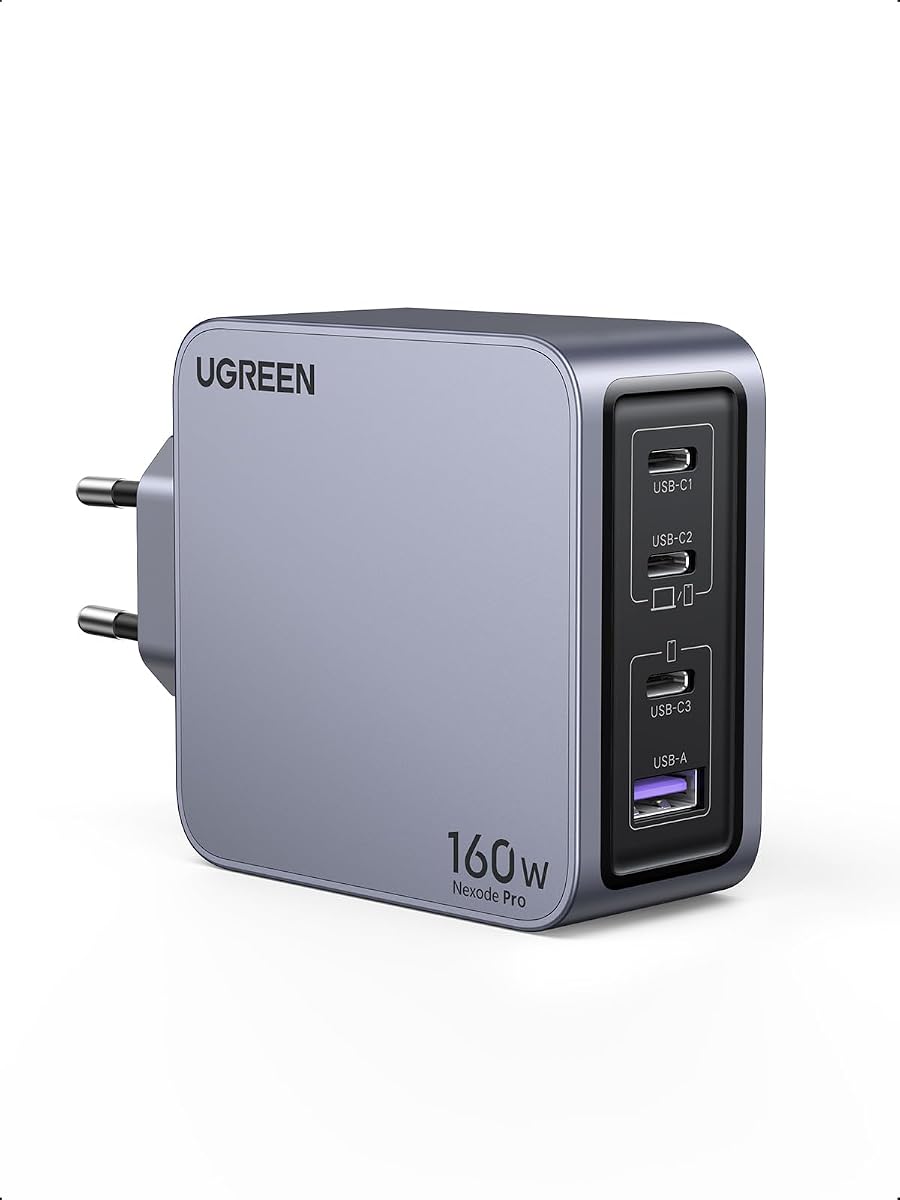
160W GaN Charger: Power Your MacBook and More with 4 Ports
When shopping for a high-wattage GaN charger like the UGREEN Nexode Pro 160W, you're looking at a device that must balance raw power delivery with thermal management and port flexibility. This charger promises 140W for laptops and 60W PPS for phones, making it a central hub for your daily charging needs. Understanding how GaN technology and PPS affect your specific devices is key to a satisfying purchase.
Key Considerations Before Buying
- Check if your laptop supports USB-C Power Delivery (PD) at 140W or 100W; the UGREEN Nexode Pro's 140W output is ideal for MacBook Pro 16-inch, but other ultrabooks may cap at 65W or 100W, so verify compatibility to avoid overpaying for unused power.
- Consider the 4-port configuration: with two USB-C and two USB-A ports, you can charge a laptop, phone, and earbuds simultaneously, but note that the maximum 160W total is shared, so using all ports reduces the per-port output—ensure your primary device gets enough wattage.
- Look at the PPS (Programmable Power Supply) support: the 60W PPS on one USB-C port is designed for fast charging Samsung Galaxy and other PPS-compatible phones, but not all devices support PPS, so don't rely on it for older gadgets.
What Our Analysts Recommend
In a GaN charger, prioritize safety certifications (CE, UL, FCC) and thermal management features like over-temperature protection. Also, check the physical size and weight—'Mini' claims should be verified against your travel needs, and ensure the foldable plug (if present) suits your region's sockets.
Chargers & Power Supplies Market Context
Market Overview
The GaN charger market has exploded as consumers seek compact, high-power adapters to replace bulky laptop bricks. With 140W+ outputs becoming standard, brands like UGREEN compete on port count, PPS support, and multi-device charging efficiency, catering to power users with laptops, tablets, and phones.
Common Issues
Users often report heat buildup under high load, which can throttle charging speed or damage the charger. Another issue is port power sharing: many chargers reduce output when multiple ports are active, leading to slower charging than expected. Finally, compatibility with non-PD laptops can be hit-or-miss, so read specs carefully.
Quality Indicators
Look for GaN II or GaN III chips (better efficiency), a high power density (watts per cubic inch), and independent port ratings that are clearly stated. Trusted brands provide detailed output tables and have responsive customer support, which is crucial for a device that handles expensive electronics.
Review Authenticity Insights
Grade B Interpretation
The Grade B and 15% estimated fake review rate suggest that while the majority of the 588 reviews are genuine (4.89/5 average), a notable minority may be incentivized or fabricated. This is common in the charger category, where brands often run 'review for a free gift' campaigns, so the adjusted rating of 4.50/5 is a more conservative, realistic view of user satisfaction.
Trust Recommendation
Given the 15% fake rate, you should weigh the overall positive sentiment but also look for detailed, verified-purchase reviews that mention specific device compatibility and real-world charging speeds. Don't let the 4.89 star rating alone convince you—consider the adjusted 4.50 as your baseline for decision-making.
Tips for Reading Reviews
When reading reviews for this charger, focus on those that include photos of the device in use, mention specific laptop models and wattage readings, or describe long-term reliability after months of use. Be wary of overly short, generic praise like 'Lädt gut' without context, as these are often fake or incentivized.
Expert Perspective
The UGREEN Nexode Pro 160W is a strong contender in the premium GaN charger space, offering a rare combination of 140W laptop charging and 60W PPS for phones in a compact form factor. However, the 15% fake review rate and adjusted rating of 4.50 suggest that while the product is likely good, it may not be flawless—potential issues with heat or port sharing could be underreported. The verified purchase rate and detailed user experiences support its core value, but I'd recommend cross-checking with independent tech reviews.
Purchase Considerations
Before buying, assess your daily charging needs: if you own a MacBook Pro 16-inch and a PPS-compatible phone, this charger is nearly ideal, but if you have a 65W laptop and only need one port, a smaller 65W charger might be more cost-effective. Also, consider the warranty and brand support, as GaN chargers can fail after a year of heavy use.
Comparing Alternatives
Shoppers should compare with other 140W+ GaN chargers from Anker, Baseus, and Satechi, which offer similar power but may differ in port layout, size, or price. Check for real-world tests on YouTube to see how each handles thermal throttling and multi-port performance.


