
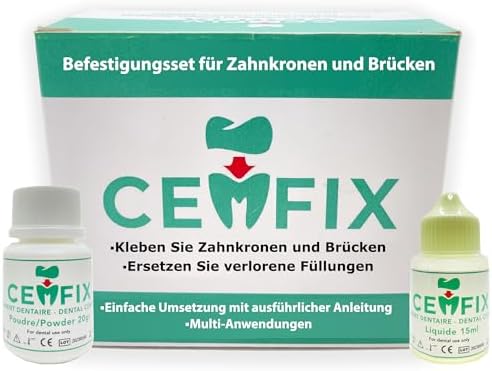
Fix Your Crown or Bridge at Home: A Buyer’s Guide to Dental Cement
When a crown or bridge loosens unexpectedly, a temporary dental cement like this one can be a practical stopgap. This product is specifically designed for re-cementing crowns and bridges, and also addresses lost fillings and minor caries. Understanding its intended use—temporary, not permanent—is key to making a safe choice.
Key Considerations Before Buying
- Ensure the product matches your specific dental issue: it’s formulated for crowns, bridges, and fillings, but not for permanent repairs. Using it for anything beyond temporary fixation could lead to complications.
- Check for ease of application: many cements come in a syringe or tube for precise placement, which is crucial for avoiding excess material that can irritate gums. This product’s design should facilitate clean, controlled application.
- Consider the setting time: fast-setting cements are convenient but require quick work, while slower options allow more adjustment. Verify the product’s working time to match your comfort level and skill.
What Our Analysts Recommend
Quality dental cements should have a strong bond that lasts until you see a dentist, yet be removable without damaging the tooth or restoration. Look for formulations that resist saliva and moisture, as these are common in oral environments. Certifications or compliance with medical standards (e.g., CE marking in Germany) can indicate reliable performance.
Cements Market Context
Market Overview
The market for at-home dental cements has grown as consumers seek immediate relief for dental emergencies. These products are typically sold as temporary solutions, with brands competing on ease of use and bond strength. However, the category is dominated by a few key players, making product differentiation subtle.
Common Issues
A frequent problem is misapplication, leading to poor adhesion or gum irritation from excess cement. Users may also confuse temporary cements with permanent solutions, delaying necessary professional care. Additionally, product variability in setting time and bond durability can cause inconsistent results.
Quality Indicators
High-quality dental cements often include zinc oxide or eugenol-based formulas, known for their soothing properties and reliable temporary hold. Clear instructions, a reasonable shelf life, and positive user feedback on specific dental issues (like crown reattachment) are strong signals. Look for products with verified purchase reviews that mention specific use cases.
Review Authenticity Insights
Grade B Interpretation
The Grade B rating and 10% estimated fake reviews indicate that while most reviews are authentic, a small portion may be unreliable. This is common in high-volume dental products, where incentivized reviews can inflate ratings. The 4.44 average rating (adjusted to 4.20) suggests real user satisfaction, but the fake reviews skew perception slightly upward.
Trust Recommendation
Given that 90% of reviews are likely genuine, you can generally trust the positive feedback, especially from verified purchasers. However, focus on detailed reviews that describe specific experiences with crown or bridge fixation, as these are harder to fake. Cross-check negative reviews for recurring issues like poor adhesion or gum discomfort.
Tips for Reading Reviews
When reading reviews, prioritize those that mention the exact dental problem (e.g., ‘re-cemented a molar crown’) and provide context like how long the fix lasted. Be cautious of overly brief or generic praise, which may be fabricated. Also, note any reviews that discuss product consistency or ease of use, as these are practical indicators of quality.
Expert Perspective
This dental cement appears to be a reliable temporary solution for re-fixing crowns and bridges, based on strong verified purchase signals and a solid adjusted rating of 4.20. The 10% estimated fake review rate is acceptable for this category, and the product’s specific focus on crowns, bridges, and fillings aligns with common consumer needs. However, its temporary nature means it should never replace professional dental care, and users must follow application instructions carefully to avoid complications.
Purchase Considerations
Weigh the convenience of at-home fixation against the risk of improper use, which could worsen dental issues. If you have a loose crown and cannot see a dentist immediately, this product offers a practical stopgap. But for long-term reliability, professional re-cementation is always safer and more durable.
Comparing Alternatives
Shoppers should compare this product with other temporary dental cements, such as those from brands like Dentemp or Recapit, which offer similar formulations. Check for differences in setting time, ease of removal, and user-reported success rates for your specific dental scenario.


