
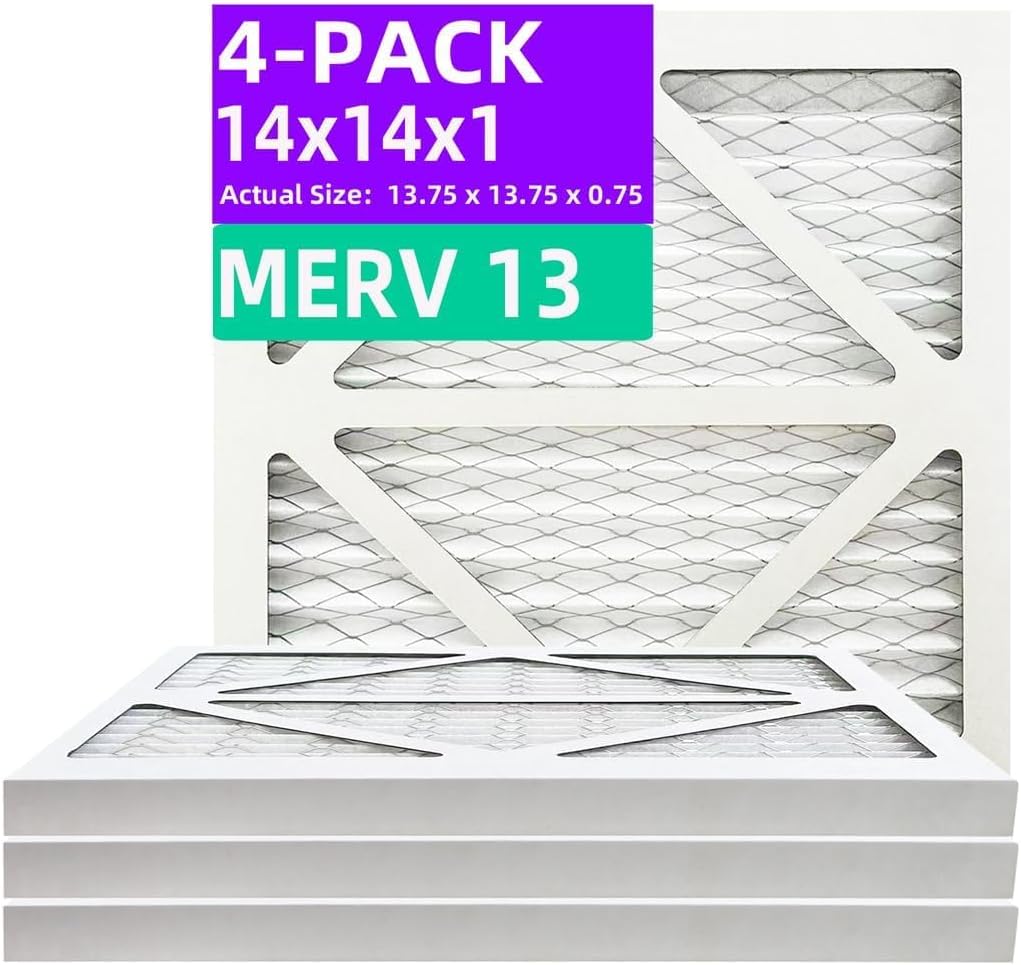
High-Filtration MERV 13 Filters: Balancing Air Quality and HVAC Efficiency
When you're shopping for a MERV 13 plissierter Luftfilter (14 x 14 x 1 Zoll), you're choosing a high-efficiency filter that captures up to 90% of airborne particles, including pollen, mold spores, and bacteria. This 4er-Pack from a brand with MPR 1900 and FPR 10 ratings is designed to fit standard residential furnaces and HVAC systems, but its dense pleating can significantly restrict airflow. Understanding the trade-offs between superior filtration and potential strain on your system is crucial for making the right choice.
Key Considerations Before Buying
- Check your HVAC system's maximum MERV rating: Most residential systems are designed for MERV 8–11; using MERV 13 may reduce airflow and increase energy costs, potentially causing short-cycling or frozen coils.
- Measure your filter slot precisely: The actual size here is 34,9 x 34,9 x 1,9 cm (not the nominal 14x14x1 inches), so ensure your slot dimensions match exactly to avoid bypass air that undermines filtration.
- Consider replacement frequency: MERV 13 filters capture more particles and clog faster than lower-rated filters, requiring more frequent changes (every 30–60 days during peak usage) to maintain airflow.
What Our Analysts Recommend
Look for filters with a balanced pressure drop rating (measured in inches of water gauge) to ensure they don't overburden your blower motor. Verify the filter's actual dimensions against your slot, and opt for brands that provide clear MPR, FPR, or MERV certifications from independent testers like ASHRAE.
Boiler Filters Market Context
Market Overview
The German market for plissierte Luftfilter has seen a surge in demand for higher MERV ratings driven by allergy awareness and wildfire smoke concerns, but many consumers overlook HVAC compatibility. Brands now compete on filtration efficiency versus airflow resistance, with MERV 13 filters occupying a niche between standard residential and commercial-grade options.
Common Issues
A frequent problem is that homeowners buy high-MERV filters without checking their system's static pressure limits, leading to reduced airflow, higher energy bills, and potential compressor damage. Another issue is the mismatch between nominal and actual sizes, causing filters to not seal properly and allowing unfiltered air to bypass.
Quality Indicators
Quality filters have reinforced frames (often cardboard or wire mesh) to prevent warping under high airflow. Look for pleat count (typically 10–12 pleats per foot for MERV 13) and a consistent adhesive bead along the frame edge to prevent particle bypass.
Review Authenticity Insights
Grade B Interpretation
With a Grade B rating and an estimated 10% fake review percentage, this product's reviews are largely trustworthy but require some caution. The adjusted rating of 4.40/5 (down from 4.60/5) suggests that a small number of suspicious reviews may have inflated the score slightly, but the core feedback is reliable.
Trust Recommendation
Given the authenticity grade, you can largely trust the positive reviews, but focus on those from verified purchasers who mention specific HVAC models or pressure drop experiences. Avoid relying solely on generic five-star reviews that lack technical details.
Tips for Reading Reviews
When reading reviews, look for comments about airflow reduction, static pressure, and compatibility with specific furnace brands (e.g., Viessmann, Buderus). Reviews that mention using a manometer or noting a change in energy bills are likely authentic and provide actionable insights.
Expert Perspective
This MERV 13 4er-Pack offers strong filtration for allergy sufferers in Germany, but its effectiveness hinges on your HVAC system's capacity. The 10% fake review rate is manageable, and the adjusted rating of 4.40/5 indicates genuine user satisfaction, though some may experience airflow issues. For systems designed for MERV 8, this filter could cause more harm than good, so verify compatibility before purchase.
Purchase Considerations
Weigh the benefits of improved indoor air quality against the potential for increased energy costs and more frequent filter changes. If you have a modern, variable-speed HVAC system, this filter is a solid choice; for older or fixed-speed systems, consider a MERV 11 alternative to avoid strain.
Comparing Alternatives
Shoppers should compare this with other MERV 13 filters in the same actual size, checking pressure drop ratings and frame construction. Brands like 3M or Camfil offer similar products with detailed spec sheets for informed decision-making.


