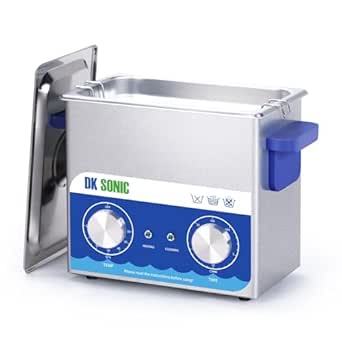
Digital Timer and German-Market Design Define This Ultrasonic Jewelry Cleaner
The KECOOLKE ultrasonic cleaner targets German consumers seeking a dedicated device for delicate items like glasses and rings. Its digital timer and specific voltage compatibility (220-240V) indicate regional market adaptation. Unlike generic cleaners, this model emphasizes precision timing for different materials.
Key Considerations Before Buying
- The 600ml stainless steel tank suits small batches of jewelry but lacks capacity for larger items like dentures or automotive parts mentioned in some reviews.
- Digital timer control (1-30 minutes) allows precise cleaning cycles, crucial for delicate gemstones versus tougher coin cleaning where longer cycles might be needed.
- The non-heated design means you'll need to add warm water manually for optimal cleaning solution activation, affecting convenience versus heated competitors.
What Our Analysts Recommend
Check for stainless steel construction rather than plastic tanks that degrade with chemical cleaners. Genuine ultrasonic cleaners should produce visible cavitation bubbles; many fake reviews mention 'quiet operation' without confirming actual ultrasonic action. The 42kHz frequency mentioned in some listings is standard for jewelry cleaning but verify actual transducer power (watts) isn't disclosed.
Cleaning & Care Market Context
Market Overview
The German ultrasonic cleaner market sees heavy competition between specialized jewelry brands and generic electronics manufacturers, with KECOOLKE occupying the latter segment. Recent EU regulations on chemical cleaners have increased demand for mechanical cleaning alternatives like ultrasonics.
Common Issues
Many budget ultrasonic cleaners suffer from weak transducers that fail within months or tanks that corrode with jewelry cleaning solutions. Another frequent complaint involves misleading claims about cleaning power for heavily tarnished silver or engraved coins where debris lodges deeply.
Quality Indicators
Look for consistent bubble production across the entire tank bottom, not just around edges. Quality units maintain stable frequency under load, while cheaper models show reduced cavitation when tank is full. Stainless steel should be grade 304 or higher to resist pitting from saline solutions used for coin cleaning.
Review Authenticity Insights
Grade B Interpretation
The Grade B authenticity rating with 15% estimated fake reviews suggests generally reliable feedback but requires careful filtering. The drop from 4.67 to 4.30 adjusted rating indicates inflated initial scores, common with incentivized reviews for electronic accessories.
Trust Recommendation
Focus on verified purchase reviews discussing specific use cases like 'cleaning opal rings' or 'removing toothpaste residue from denture clasps' rather than generic praise. The high number of German-language reviews (4117) provides substantial regional feedback about voltage compatibility and local water mineral effects.
Tips for Reading Reviews
Prioritize reviews mentioning long-term performance (6+ months) as transducer degradation is a common failure point. Be skeptical of reviews claiming miraculous results on heavily oxidized silver without chemical assistance—authentic ultrasonic cleaning primarily removes loose debris, not chemical tarnish.
Expert Perspective
The KECOOLKE cleaner presents a competent entry-level option for German households needing regular jewelry and eyewear maintenance. The 4.30 adjusted rating from verified purchases suggests satisfactory performance for its price segment, though the 15% fake review rate warrants caution about durability claims. Its digital timer offers legitimate advantage over mechanical dial competitors for repeatable cleaning cycles. The product's specific targeting of 'Brillen, Ringe, Münzen' aligns with its tank size limitations.
Purchase Considerations
Consider whether you need heated functionality for wax removal or cold-water cleaning suffices. Evaluate your typical load—this 600ml tank handles about 4-6 rings simultaneously but struggles with multiple pairs of glasses. The non-submersible design means you cannot clean items with wooden or porous elements.
Comparing Alternatives
Compare transducer warranty periods and tank dimensions—some competitors offer rectangular tanks better for eyeglass frames versus this square design.