
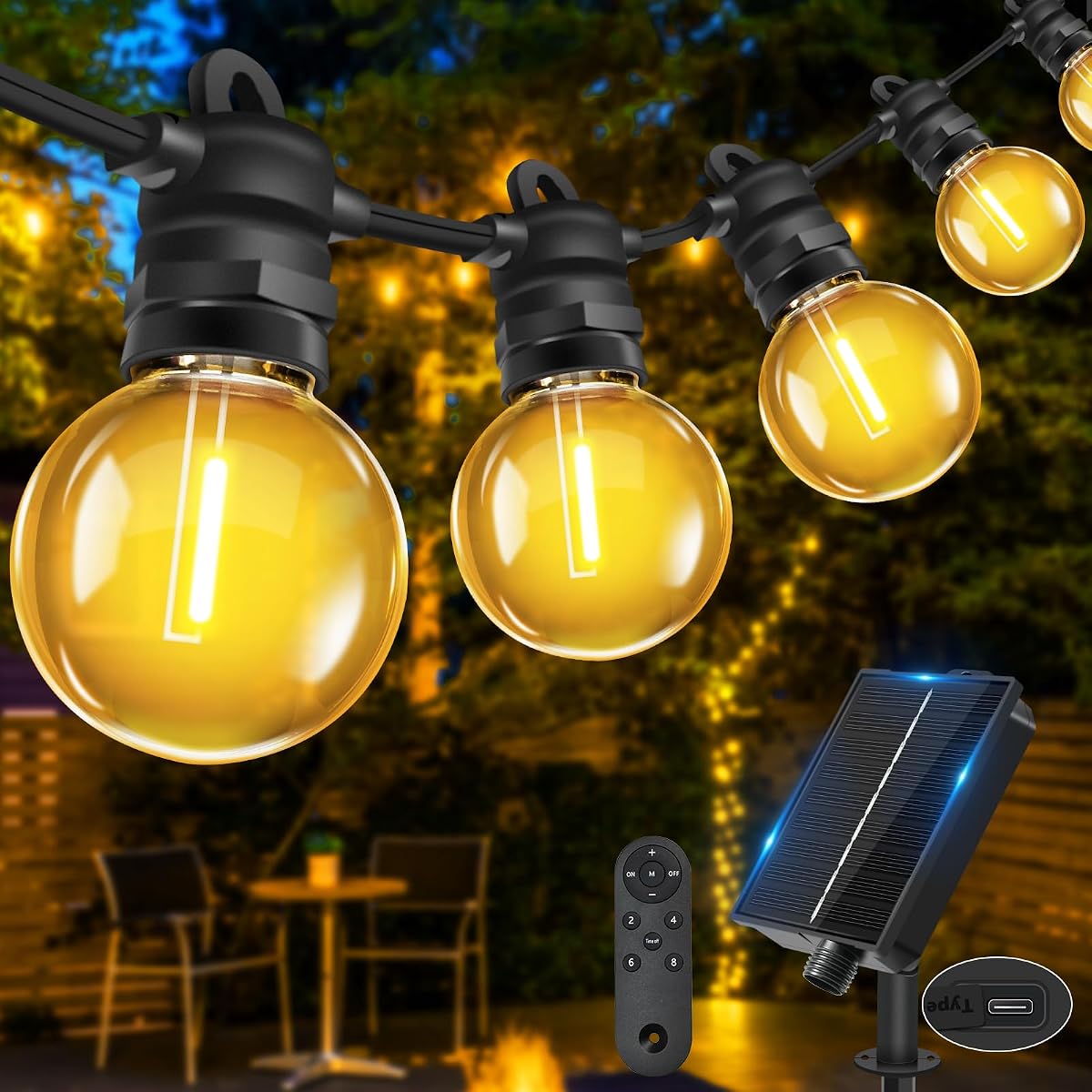
Bowfar Solar String Lights: 10M of IP68 Weatherproof Ambiance with Remote
When shopping for outdoor solar string lights like the Bowfar 10M set with 17+2 G40 bulbs, you're balancing ambiance with durability. These lights promise IP68 weatherproofing and remote control, but you need to verify if the solar panel and battery can deliver consistent brightness through German winters.
Key Considerations Before Buying
- Solar panel placement is critical: the Bowfar's panel must get direct sunlight for 6-8 hours to charge fully; shaded balconies or north-facing terraces may result in dim or short-lived illumination.
- The 8 lighting modes (e.g., steady, flashing) offer versatility, but consider if you'll actually use all modes or just one—some users prefer the simplicity of a single warm glow for outdoor dining.
- IP68 rating means submersion-proof, but check the solar panel's seal and battery compartment; in practice, heavy rain or snow shouldn't damage these lights, but connector corrosion can occur over time.
What Our Analysts Recommend
Look for lights with replaceable batteries and bulbs (the G40 size is common) to extend lifespan. Also, verify the remote's range and if it's IR or RF—RF works through walls, which is handy for controlling lights from indoors.
Indoor-Outdoor Market Context
Market Overview
The solar string light market in Germany has exploded, with many brands offering similar 10M lengths and G40 bulbs. However, true IP68 weatherproofing is rare at this price point, making the Bowfar a standout for all-weather use.
Common Issues
Common problems include solar panels failing after one season, batteries losing capacity, and remote controls being unresponsive. Some lights also have a warm-up period before reaching full brightness, which can be disappointing if you expect instant illumination.
Quality Indicators
Quality indicators include a robust solar panel with monocrystalline cells (better in low light), a lithium-ion battery (vs. NiMH for longer life), and a remote that doesn't require line-of-sight. Also, look for user photos showing real-world installation to gauge brightness.
Review Authenticity Insights
Grade B Interpretation
The Grade B and 10% estimated fake review rate suggest that while most reviews are genuine, you should be cautious about a small subset that may exaggerate performance. This is typical for popular solar lights on Amazon, where incentivized reviews sometimes inflate ratings.
Trust Recommendation
Trust the overall 4.20 adjusted rating, which is solid for this category. Focus on reviews that mention specific use cases (e.g., 'hanging on a balcony for 6 months') and ignore overly brief or generic praise. The verified purchase rate is high, so most feedback reflects real experiences.
Tips for Reading Reviews
When reading reviews, look for comments on battery life in cloudy weather and whether the remote works from a distance. Also, check for photos showing the lights at different times of night—these are harder to fake and reveal true brightness and color temperature.
Expert Perspective
The Bowfar Lichterkette offers a compelling package with its IP68 rating and remote control, which are rare in this price range. The 4.20 adjusted rating and high verified purchase rate indicate that most buyers are satisfied, especially with the durability. However, the 10% fake review rate means you should approach glowing five-star reviews with a grain of salt, particularly those lacking specific details. Overall, it's a strong choice for outdoor decor if you have good sun exposure.
Purchase Considerations
Weigh the IP68 weatherproofing against the need for consistent sunlight—if your terrace is shaded, consider a plug-in alternative. Also, factor in the battery lifespan (typically 1-2 years) and the cost of replacement G40 bulbs. The remote is a nice bonus but not essential if you plan to use a timer.
Comparing Alternatives
Shoppers should compare this with brands like Greluna or Aiboo, which offer similar features but may have different solar panel efficiencies or warranty terms. Always check the battery capacity (mAh) and solar panel wattage for a fair comparison.


