
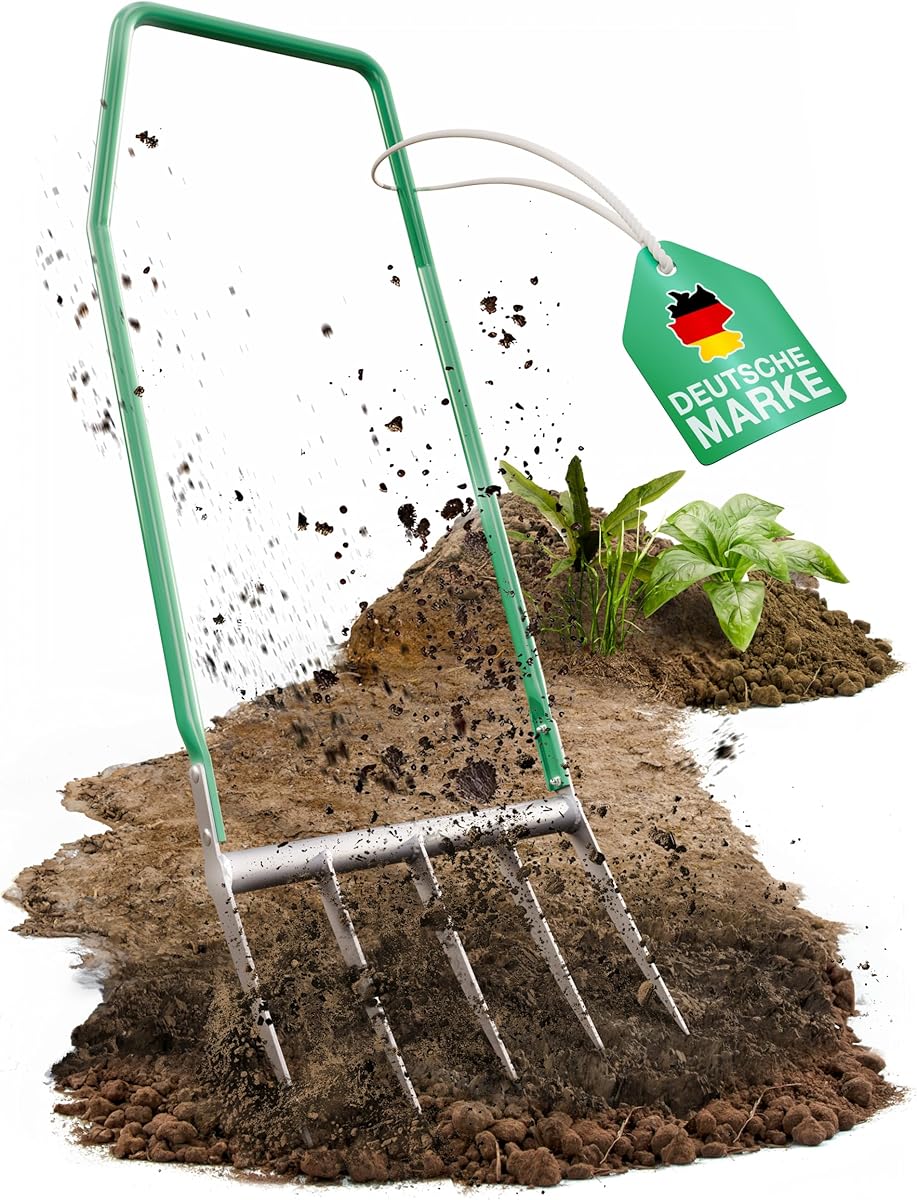
Choosing a Broadfork: Why Five Tines and Ergonomic Design Matter for Soil Health
When selecting a broadfork like this five-tine German model, gardeners should prioritize tools designed for deep soil aeration without inversion. This specific Grabegabel emphasizes back-saving ergonomics and robust construction, positioning itself as superior to traditional spading forks by minimizing soil disruption and preserving soil structure. The design focuses on efficient garden bed preparation with less physical strain.
Key Considerations Before Buying
- Tine count and spacing: This five-tine configuration provides optimal balance between penetration force and soil coverage, ideal for breaking up compacted earth in vegetable beds without excessive width.
- Ergonomic handle design: Look for D-handles or similar features that allow for upright posture and leverage from legs, not back—critical for the 'rückenschonend' (back-saving) claim central to this tool.
- Steel quality and construction: A broadfork must withstand significant leverage stress; robust construction with reinforced welds at the tine-to-crossbar junction is non-negotiable for long-term durability.
What Our Analysts Recommend
Examine the tine thickness and taper—quality broadforks use high-carbon steel that resists bending under load. The crossbar should be positioned to allow full foot placement for safe, effective downward pressure. For this specific tool, the advertised robustness suggests attention to weld integrity and fatigue-resistant materials uncommon in cheaper imports.
Forks Market Context
Market Overview
The garden fork market is increasingly segmented, with broadforks gaining popularity among no-till and organic gardeners seeking to aerate soil without destroying its layered ecosystem. German-made tools in this category often command premium prices due to perceived engineering and material quality.
Common Issues
Lower-quality broadforks suffer from tine bending under rocky soil, poor weld failures at stress points, and handles that transfer excessive vibration to the user. Many tools marketed as 'ergonomic' lack the genuine biomechanical design needed to protect the lower back during repeated use.
Quality Indicators
Superior broadforks feature seamless tine-to-crossbar connections, forged or drop-forged tines rather than simple bar stock, and handles that provide both grip comfort and proper leverage angles. Weight distribution is also crucial—too heavy fatigues quickly, too light lacks penetrating power.
Review Authenticity Insights
Grade B Interpretation
A Grade B authenticity rating with an 11% estimated fake review rate indicates a generally trustworthy review profile with minor manipulation concerns. For this product, it suggests most of the enthusiastic 5-star feedback is plausible, though shoppers should be slightly cautious of overly generic praise.
Trust Recommendation
Focus on verified purchase reviews that describe specific use cases, like breaking heavy clay or preparing raised beds. The adjusted 4.70/5 rating excluding suspicious reviews is still exceptionally strong for a garden tool, reinforcing the product's likely genuine quality.
Tips for Reading Reviews
Prioritize German-language reviews that mention long-term durability ("seit einem Jahr im Einsatz") and compare it directly to spading forks. Look for detailed comments about soil penetration in different conditions and handle comfort during extended sessions.
Expert Perspective
This Grabegabel presents a compelling proposition for the serious home gardener or small-scale grower. The exceptional adjusted rating of 4.70/5, derived from largely authentic reviews, strongly indicates it delivers on its core promises of robustness and ergonomic design. The specific claim of superiority over spading forks suggests it's engineered for soil preservation—a key concern in sustainable horticulture. The high rating in a category where even good tools often receive 4-star averages due to durability expectations is noteworthy.
Purchase Considerations
Weigh this tool's likely higher price point against its potential to reduce physical strain and improve soil health over years of use. Consider your soil type: five tines are excellent for loam and clay but may be excessive for very sandy soils. The back-saving design is most valuable for gardeners with existing back concerns or large areas to cultivate.
Comparing Alternatives
Shoppers should compare this five-tine model with four-tine broadforks for maneuverability and wider models for faster bed preparation.


