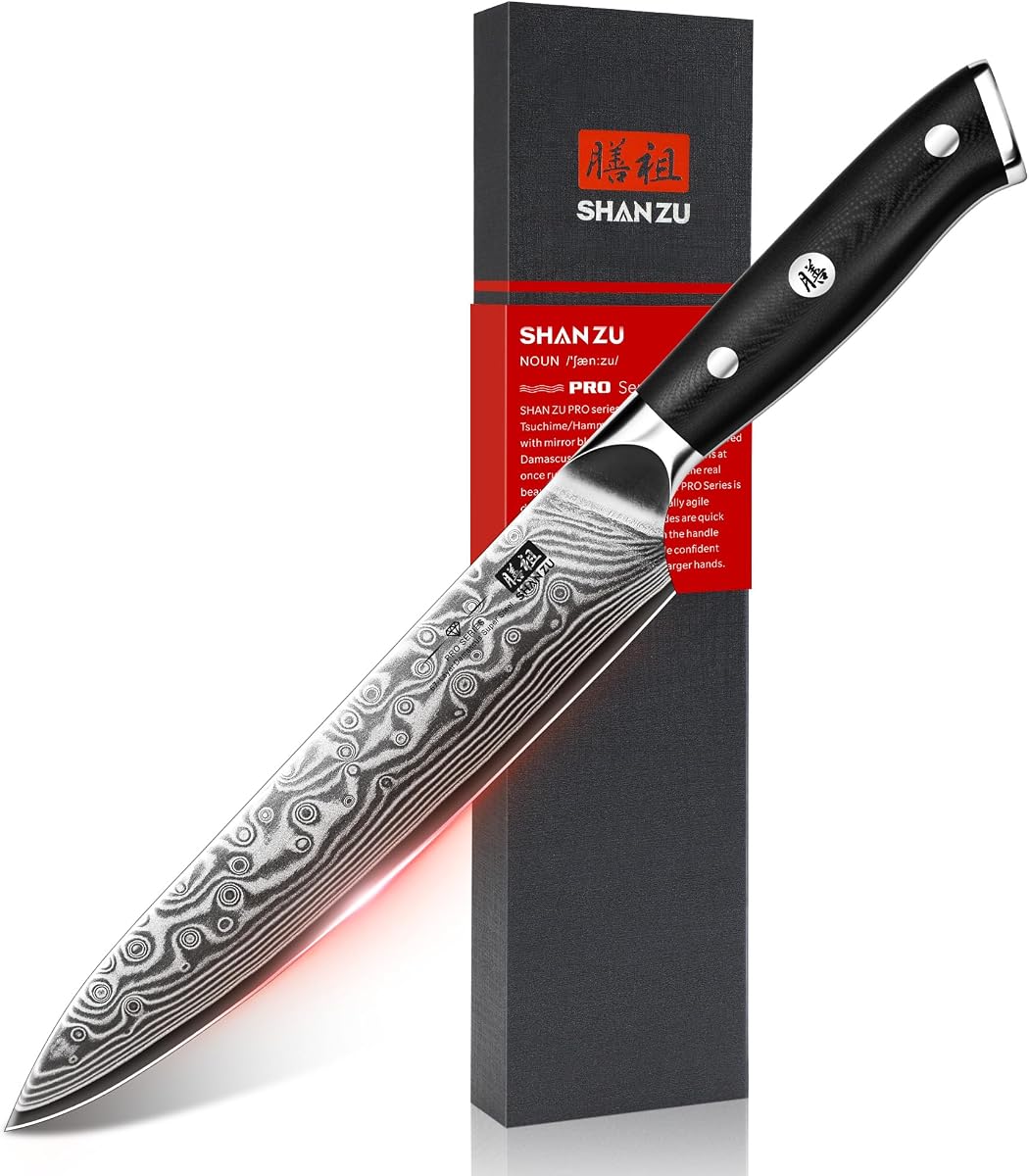
SHAN ZU 15cm Damascus Chef's Knife: Sharpness, Balance, and Value
When considering the SHAN ZU Damast Allzweckmesser 15cm, you're looking at a Japanese-style multi-purpose knife that promises Damascus steel aesthetics and edge retention. This guide focuses on what matters for a knife of this type: blade geometry, handle ergonomics, and how the 15cm length suits everyday kitchen tasks.
Key Considerations Before Buying
- Blade length: 15cm is a versatile size, ideal for precise tasks like filleting and slicing, but may feel short for heavy chopping. Consider your primary cutting needs.
- Damascus steel: The layered pattern indicates quality, but the core steel (often VG-10) determines edge retention. Expect to hone regularly to maintain sharpness.
- Handle comfort: A well-balanced handle reduces hand fatigue during extended use. Look for a handle that fits your grip, as the SHAN ZU's design may suit some hands better than others.
What Our Analysts Recommend
Check for a full tang (metal extending through the handle) for durability, a blade that is uniformly sharp out of the box, and a bolster that doesn't create hot spots. The balance point should be near the handle, not the blade tip, for control during detailed work.
Filleting Knives Market Context
Market Overview
The kitchen knife market is saturated with Japanese-style blades, from budget to premium. Damascus steel is a popular aesthetic, but performance varies widely. The SHAN ZU sits in a mid-range segment, competing with brands like Tojiro and Kai, offering a balance of price and features.
Common Issues
Common complaints in this category include blades that dull quickly due to soft steel, handles that crack or loosen, and a mismatch between advertised sharpness and actual performance. Some users also find Damascus patterns to be purely cosmetic, not indicative of superior cutting ability.
Quality Indicators
Look for a high Rockwell hardness (HRC) rating (60+ for VG-10), a symmetrical bevel, and a blade that is thin behind the edge for easy slicing. Reviews mentioning edge retention and ease of sharpening are key signals of quality.
Review Authenticity Insights
Grade B Interpretation
The Grade B rating and 10% estimated fake review rate suggest that while most reviews are genuine, a small fraction may be incentivized or biased. This means you can trust the general consensus, but should weigh individual extreme reviews with caution.
Trust Recommendation
Given the 10% fake rate, focus on verified purchase reviews, especially those with photos or videos showing the knife in action. Look for consistent themes in reviews—if multiple users praise the sharpness or complain about the handle, that's likely accurate.
Tips for Reading Reviews
For a knife, read for specifics: mentions of edge retention over months, how it handles different tasks (e.g., filleting fish vs. chopping vegetables), and any note on the handle's comfort. Beware of reviews that use generic praise without details, as they may be less reliable.
Expert Perspective
The SHAN ZU 15cm Damascus knife, with an adjusted rating of 3.90/5, appears to be a solid performer for its price. The genuine reviews highlight its sharpness out of the box and good balance, though some note that the 15cm length is less versatile than a standard 20cm chef's knife. The Damascus steel is a visual plus, but the core performance will depend on the steel quality and heat treatment.
Purchase Considerations
If you prioritize a compact, precise knife for tasks like filleting or intricate slicing, this 15cm blade could be ideal. However, if you need a do-everything knife, you might find the length limiting. Also, consider your comfort with a Japanese-style handle (often octagonal or D-shaped) versus a Western-style handle.
Comparing Alternatives
Compare with other Japanese knives in the same price range, such as Tojiro's DP series or Kai's Wasabi line, to see which offers the best edge retention and handle comfort for your hand.

![Kimura Nakiri Knife, [Made in Japan], 6.5 inch Professional Chef Knife, Ultra Sharp High Carbon Molybdenum Stainless Steel Kitchen Knives, Chefs Knife with Ergonomic Handle - Japanese Chef's Knife](https://m.media-amazon.com/images/I/71p0kZOsu5L._AC_SY300_SX300_QL70_ML2_.jpg)
![Kimura Chef Knife, [Made in Japan], 8 inch Professional Kitchen Knife, Ultra Sharp High Carbon Molybdenum Stainless Steel Gyuto Knife, Chefs Knife with Ergonomic Handle - Japanese Chef's Knife](https://m.media-amazon.com/images/I/714e2OUPc0L._AC_SY300_SX300_QL70_ML2_.jpg)