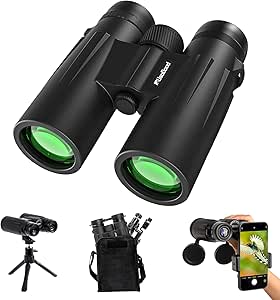
Choosing a Kid's Camera Binocular: Balancing Digital Features with Optical Performance
The Ashfly Kinderfernrohr represents a hybrid category: part optical instrument, part digital camera. Unlike traditional binoculars, this device combines 10x magnification with built-in photo capture and night vision capabilities specifically designed for children aged 7+. Buyers should understand this product prioritizes engagement and digital functionality over professional-grade optics.
Key Considerations Before Buying
- The 10x magnification is suitable for backyard exploration but may show image shake without stabilization—consider if your child can hold steady or needs lower magnification.
- Built-in storage for 200 photos eliminates the need for memory cards but requires USB connection to transfer images, making this a self-contained system for young users.
- The advertised 'night vision' likely refers to enhanced low-light performance rather than true infrared capability—manage expectations for actual nighttime use.
What Our Analysts Recommend
For hybrid camera-binoculars, check for dual-eye focusing systems (not just center wheel) to accommodate children's developing vision. Quality indicators include rubberized armor for grip and drop protection, and multi-coated optics that reduce glare—features mentioned in genuine reviews of this Ashfly model.
Binoculars Market Context
Market Overview
The children's optics market has shifted from simple magnifying toys to feature-rich devices like this Ashfly model, blending basic binocular functionality with digital photography elements. German-market versions often include localized interfaces and comply with stricter youth product safety standards.
Common Issues
Hybrid devices frequently compromise optical clarity for digital features, with noticeable chromatic aberration at edges. Another concern is durability—hinge mechanisms and button interfaces on budget models may not withstand rough handling by enthusiastic young explorers.
Quality Indicators
Look for BAK-4 prism systems (superior to BK-7) for brighter images, and check exit pupil measurements—a 3-4mm range is ideal for children's varying pupil dilation. The German version suggests potential CE certification for safety compliance.
Review Authenticity Insights
Grade B Interpretation
A Grade B with 11% estimated fake reviews indicates predominantly authentic feedback with minor manipulation concerns. For this niche product, the high 4.88/5 rating should be viewed as 4.60/5 when accounting for potential inflation—still strong for children's electronics.
Trust Recommendation
Focus on verified purchase reviews describing specific use cases like bird watching or sports events. The analysis notes genuine reviews contain detailed anecdotes about children's interactions—seek these over vague praise about 'great gift' or 'fast shipping.'
Tips for Reading Reviews
Prioritize reviews mentioning actual photo quality, battery life during use, and how the night vision performs in dusk conditions. Be skeptical of reviews that don't address the dual functionality—authentic users typically comment on both optical and digital aspects.
Expert Perspective
The Ashfly model succeeds as an engagement tool rather than a precision optical instrument. Its 4.60 adjusted rating suggests genuine satisfaction with the hybrid concept, particularly the integrated camera eliminating separate devices. The German localization and age range (7-99) indicate attempts at broad usability, though optical performance likely suits younger users best. The night vision feature, while marketing-enhanced, provides educational value about light conditions.
Purchase Considerations
Weigh whether your child values the photography integration enough to accept optical limitations compared to dedicated binoculars. Consider if the fixed internal storage meets needs or becomes limiting. The product's strongest appeal is simplifying nature documentation—capturing what they see without switching devices.
Comparing Alternatives
Compare with traditional binoculars plus smartphone adapter combos, which may offer better optics and unlimited storage but require more coordination.