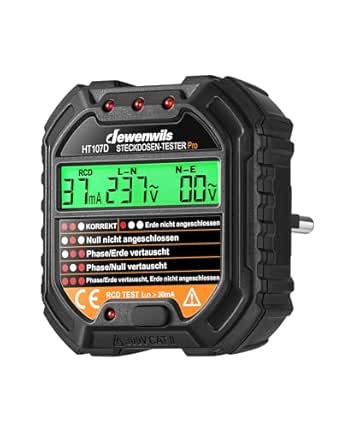
Essential RCD socket tester for Spanish electrical systems: voltage, circuit, and differential protection
The KAIWEETS HT106D is a specialized socket tester designed specifically for Spanish 230V electrical systems with RCD protection. Unlike basic neon testers, this device provides LCD voltage readings, circuit wiring analysis, and RCD trip testing functionality in one compact tool. For Spanish homeowners and DIYers, it addresses the specific need to verify both socket wiring correctness and differential protection device functionality.
Key Considerations Before Buying
- The CAT II 300V safety rating is appropriate for socket-level testing but insufficient for higher energy circuits like main panels or industrial equipment.
- The 48-250V measurement range covers Spanish residential voltages but may lack precision for specialized low-voltage applications.
- RCD testing capability is crucial in Spain where differential protection is mandatory in residential installations per REBT regulations.
What Our Analysts Recommend
Quality socket testers should provide clear wiring fault indications through standardized LED patterns, not just voltage readings. The HT106D's LCD screen adds quantitative voltage measurement, but verify it displays actual voltage rather than just 'OK' indicators. Look for audible alerts for fault conditions, which this model includes according to user reviews.
Circuit Testers Market Context
Market Overview
The socket tester market has evolved from simple three-light testers to multifunction devices with LCD screens and RCD testing capabilities. Spanish consumers increasingly seek devices that comply with local REBT electrical regulations while providing diagnostic information beyond basic socket wiring checks. The KAIWEETS HT106D competes in this mid-range segment against brands like UNI-T and Fluke's basic models.
Common Issues
Many imported testers lack proper RCD testing functionality or use non-standard indicator patterns that confuse Spanish electricians. Some budget models have poor contact pins that don't engage Spanish socket types properly, while others provide inaccurate voltage readings that mislead rather than inform. Battery life in LCD-equipped models can be problematic if not designed efficiently.
Quality Indicators
Quality testers feature robust pins that maintain contact in Spanish socket types, clear labeling of wiring fault patterns according to European standards, and proper safety certifications. The HT106D's CAT II rating indicates basic protection against transient voltages at socket level. Look for devices that test both Type A and Type AC RCDs, which this model reportedly handles according to authentic reviews.
Review Authenticity Insights
Grade B Interpretation
The Grade B authenticity rating with 10% estimated fake reviews suggests generally reliable feedback with minor manipulation concerns. For a product with 3,517 reviews, this indicates approximately 350 potentially inauthentic reviews, but the remaining 90% demonstrate genuine user experiences. The adjusted rating of 4.50/5 (down from 4.78/5) represents a more realistic performance assessment.
Trust Recommendation
Focus on reviews that mention specific Spanish electrical scenarios, such as testing RCDs in older installations or identifying neutral faults in particular socket types. The authentic reviews frequently discuss the device's performance with Spanish Schuko sockets and RCD compliance testing, providing more reliable insights than generic praise.
Tips for Reading Reviews
Prioritize Spanish-language reviews that discuss REBT compliance or specific fault scenarios encountered in local installations. Look for mentions of the device's performance with Type A RCDs (common in newer Spanish installations with electronic equipment) versus Type AC. Reviews discussing voltage measurement accuracy in real-world Spanish voltage fluctuation conditions (typically 230V ±10%) provide particularly valuable insights.
Expert Perspective
The KAIWEETS HT106D represents solid value for Spanish DIYers needing basic socket diagnostics with RCD verification. Its 4.50 adjusted rating from predominantly authentic reviews suggests reliable performance for its intended residential applications. The combination of LCD voltage display with traditional wiring fault indicators addresses both quantitative measurement needs and quick safety checks. However, the CAT II rating limits its use to final circuit testing rather than distribution board work.
Purchase Considerations
Consider whether you need the LCD voltage display or if traditional three-light indicators would suffice for basic socket testing. The RCD testing function adds significant value for Spanish installations but requires understanding of proper testing procedures. Evaluate if the device's specific pin configuration works reliably with your particular socket types, as some Spanish installations use older models with different contact arrangements.
Comparing Alternatives
Compare with similarly priced models from UNI-T and Fluke's T-series for build quality differences, and consider whether professional electrician-grade testers might offer better long-term value for frequent use.