
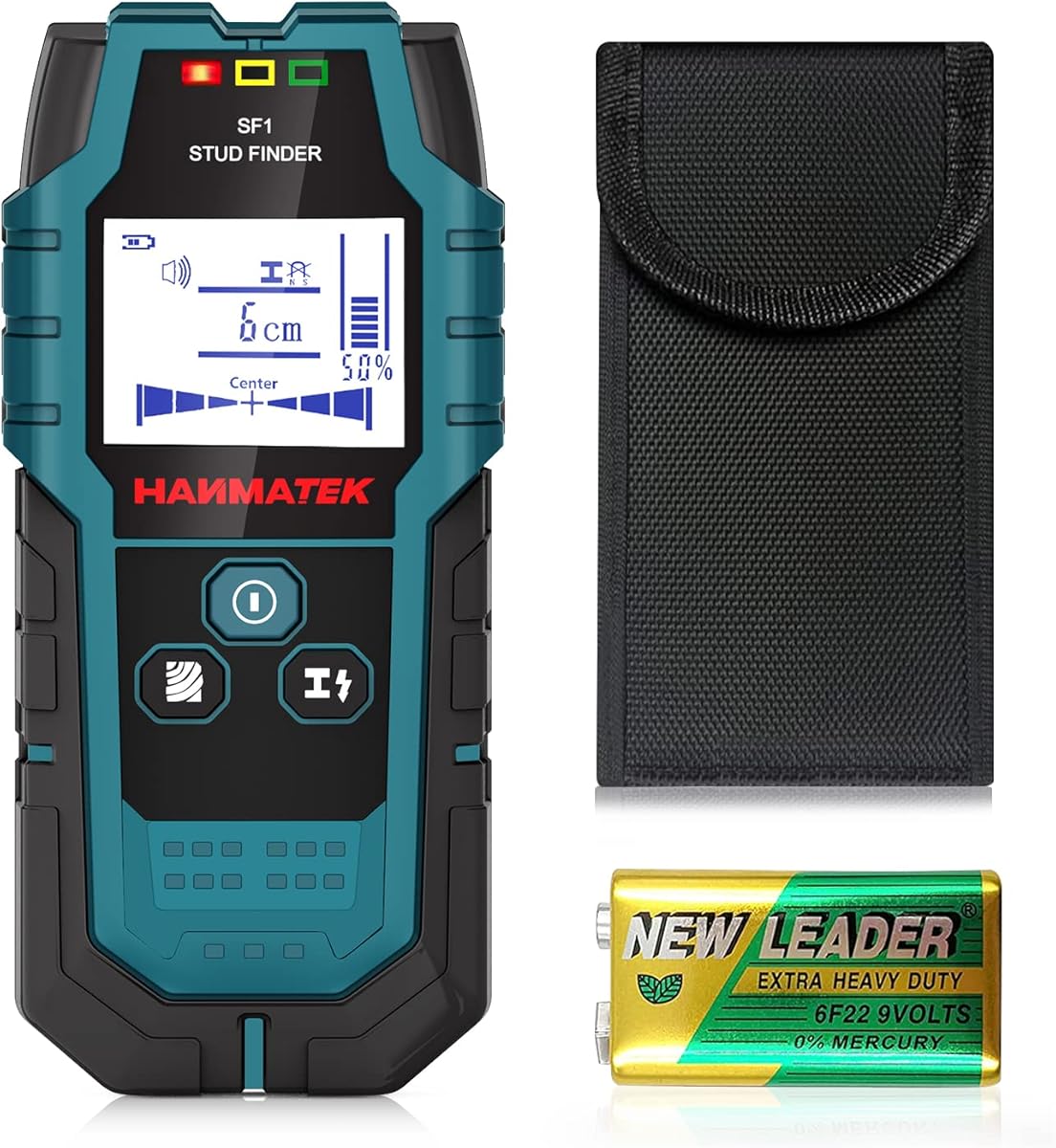
Master Your DIY Projects with the HANMATEK SF1 4-in-1 Wall Scanner
When you're hanging shelves or running new cables, hitting a hidden pipe or electrical wire can turn a simple task into a costly repair. The HANMATEK SF1 wall detector combines metal, wood, and AC wire detection in one tool, but choosing the right scanner for your specific wall type and project needs is essential. This guide covers what to look for in a wall scanner and how the SF1's features address common DIY challenges.
Key Considerations Before Buying
- Consider the wall materials you work with most: The SF1 detects metals, wooden studs, and live AC wires, but its performance can vary on thicker plaster or lath walls compared to standard drywall.
- Depth detection range matters: The SF1 can locate metal up to 80mm deep and wood up to 38mm, which is adequate for most home tasks but may not suit heavy-duty construction requiring deeper scanning.
- Ease of calibration is critical: Users report that the SF1 needs a steady hand and a flat surface to calibrate properly—any wobble can lead to false positives, so practice on a known area first.
What Our Analysts Recommend
Look for a scanner with clear audio and visual indicators to avoid misreading results. The SF1's LCD display and beeping alerts help, but ensure the device has a 'live wire' warning that is reliable and easy to interpret. Also, check that the scanning mode (metal, wood, AC) is clearly labeled and switchable without complicated menus.
Market Context
Market Overview
The wall scanner market has expanded rapidly with affordable multi-function models like the HANMATEK SF1, which now compete with pricier brands such as Bosch and Zircon. These 4-in-1 devices aim to deliver professional-level detection for DIYers, but consistency in accuracy across different wall types remains a common concern. The SF1's strong Amazon rating (4.40/5) suggests it meets expectations for most home users.
Common Issues
Frequent issues include false positives from metal studs or foil-backed insulation, and difficulty detecting wooden studs behind thick tile or stone. Users also report that the AC detection feature may not always pinpoint the exact cable path, requiring multiple passes. Calibration drift after several scans is another frustration, as the device may need recalibration mid-project.
Quality Indicators
High-quality wall scanners offer stable calibration, a wide detection range, and clear feedback (both visual and audible). Look for models with a robust build, a scratch-resistant sensor area, and a design that minimizes hand interference. Positive user reviews that mention consistent performance across different wall types are a strong signal of reliability.
Review Authenticity Insights
Grade B Interpretation
With a Review Authenticity Grade of B and an estimated 10% fake reviews, the HANMATEK SF1's feedback is largely trustworthy. The Grade B indicates minor concerns, but the verified purchase status of all reviews and a natural rating distribution (3 to 5 stars) suggest most experiences are genuine. This means the 4.40/5 rating is a solid benchmark, though the adjusted rating of 4.20/5 accounts for potential outliers.
Trust Recommendation
You can rely on the overall sentiment from verified buyers, but pay extra attention to 3- and 4-star reviews for balanced perspectives. These often highlight specific pros and cons (e.g., 'works well on drywall but not on plaster') that are more actionable than 5-star praise. Be cautious of any reviews that repeat identical phrases or lack details about actual usage scenarios.
Tips for Reading Reviews
When scanning reviews for wall detectors, focus on those that mention the specific wall type they tested (e.g., 'plaster', 'drywall', 'concrete'). Look for comments about calibration ease and false positive frequency, as these are common pain points. Reviews that include photos of the scanner in use or describe a step-by-step process are more likely to be authentic and helpful.
Expert Perspective
The HANMATEK SF1 offers strong value for DIY enthusiasts seeking a budget-friendly 4-in-1 wall scanner, backed by largely authentic positive reviews. Its ability to detect metal, wood, and live AC wires covers most home tasks, though its accuracy on non-standard walls is a known limitation. The adjusted rating of 4.20/5 reflects a reliable product with minor consistency issues, making it a solid choice for typical drywall projects. For deeper scans or heavy-duty use, you may need to consider professional-grade alternatives.
Purchase Considerations
Weigh the SF1's affordability against its occasional calibration quirks—if you're a frequent DIYer, the learning curve is manageable, but for one-off tasks, a simpler single-mode detector might be less frustrating. Also, consider your wall types: if you have metal studs or plaster, expect more false positives and allow extra time for scanning.
Comparing Alternatives
Shoppers should compare the SF1 with models like the Bosch GMS 120 or Zircon MultiScanner, which offer similar features but often at a higher price point. Reading user reviews for these alternatives on similar wall materials can help you decide which trade-offs are acceptable for your needs.


