
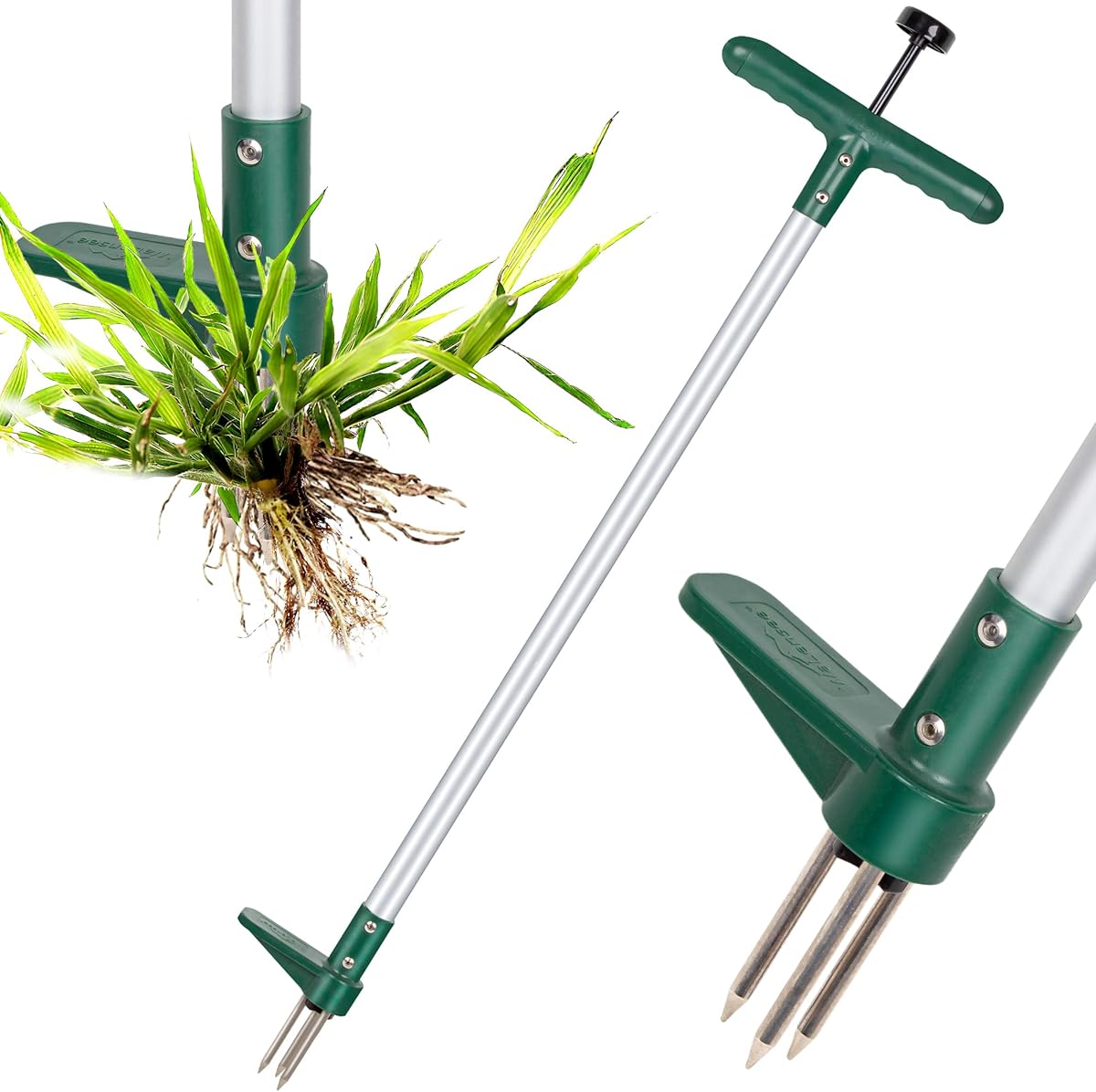
Stand Up Weeding: Does the Walensee 3-Claw Puller Deliver?
For gardeners tired of bending and kneeling, a stand-up weeder like the Walensee model offers a back-saving alternative. This specific tool uses three curved claws to grip dandelion and other taproot weeds at the base, allowing you to pull them out while standing upright. Understanding how claw design and leverage affect extraction success is key to choosing the right tool for your soil and weed types.
Key Considerations Before Buying
- Claw mechanics: The Walensee uses three claws that close around the weed stem when you push down. Check if the claw action is smooth and grips low on the root, as this prevents the stem from snapping off and leaving the root behind.
- Handle length and leverage: A long handle reduces bending but requires enough leverage to extract deep roots. The Walensee's handle should provide a comfortable grip height for your stature, and the foot pedal (if present) should allow you to apply downward force without slipping.
- Durability for your soil type: In heavy clay or rocky soil, the claws and shaft must withstand repeated prying. Look for rust-resistant materials and sturdy construction, as budget models may bend or break under stress.
What Our Analysts Recommend
Quality stand-up weeders feature sharp, well-spaced claws that close fully without jamming. The handle should be made of lightweight yet strong material like aluminum or reinforced steel, with a comfortable, non-slip grip. A foot pedal that distributes force evenly and a release mechanism that ejects the weed cleanly are also signs of thoughtful design.
Manual Weeders Market Context
Market Overview
The manual weeder market has grown as gardeners seek ergonomic alternatives to chemical herbicides and back-breaking hand pulling. Stand-up tools like the Walensee dominate the mid-range, offering a balance of affordability and functionality, with many models now featuring spring-loaded or lever-action claw mechanisms.
Common Issues
A frequent complaint with claw-type weeders is that the claws can fail to grip thin or brittle stems, or they may snap off the weed top, leaving the root intact. Some users also report that the foot pedal is too small or slippery, making it hard to generate enough force in compacted soil.
Quality Indicators
High-quality manual weeders use heat-treated steel for the claws and have a corrosion-resistant coating. A smooth, one-handed release lever and a handle that locks securely are also good signs. Look for models with a warranty or positive long-term user feedback on durability.
Review Authenticity Insights
Grade A Interpretation
The Walensee Weed Puller earned an 'A' grade for review authenticity, with only an estimated 5% of reviews flagged as potentially fake. This is an excellent signal that the overwhelming majority of the nearly 11,600 reviews come from genuine purchasers who actually used the tool in their gardens.
Trust Recommendation
You can trust the overall 4.56 rating (and the adjusted 4.40) as a reliable indicator of real-world satisfaction. Focus on the most recent reviews and those with photos or specific soil-type descriptions to get a true sense of how the tool performs in conditions similar to yours.
Tips for Reading Reviews
Look for reviews that mention specific weeds (like dandelion, thistle, or plantain) and soil conditions (clay, sandy, or loamy). Pay attention to comments about the claw's grip strength and the ease of the release mechanism, as these are the most common pain points for this type of tool.
Expert Perspective
The Walensee Weed Puller appears to be a well-regarded entry in the stand-up weeder category, with a high volume of genuine, positive feedback backing its performance. The low fake review percentage (5%) and strong authenticity grade suggest that its 4.56-star rating is largely earned through real customer satisfaction. However, the slight drop to 4.40 after filtering suspicious reviews indicates that a small number of users may have experienced issues, likely with the claw's grip or durability in tough soil.
Purchase Considerations
If you have a lawn or garden with common taproot weeds like dandelions and your soil is not extremely compacted or rocky, this tool is likely a solid investment. For those with heavy clay or deep-rooted perennial weeds, consider whether the three-claw design provides enough leverage, or if a forked or serrated weeder might be more effective.
Comparing Alternatives
While the Walensee offers strong value, shoppers should compare it with other popular stand-up weeders like the Fiskars or Grampa's Weeder, especially if they need a tool for very tough or varied weed types.


