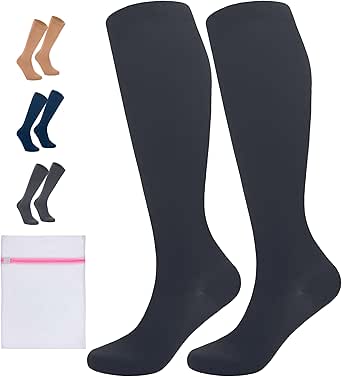
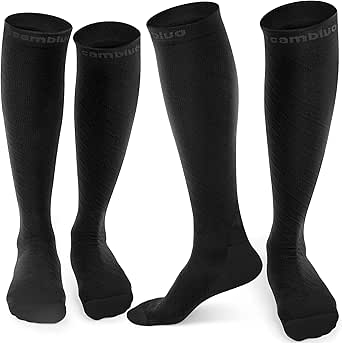
Choosing 20-30 mmHg Compression Socks for Active Recovery and Circulation Support
These 20-30 mmHg compression socks target users seeking moderate medical-grade compression for athletic recovery or circulation issues. The two-pair offering and unisex sizing make them practical for daily rotation, but the specific pressure range dictates appropriate use cases.
Key Considerations Before Buying
- The 20-30 mmHg classification is considered Class 1 medical compression, suitable for managing mild edema, varicose veins, and post-exercise recovery, but not for severe medical conditions without consultation.
- Unisex sizing based on shoe size and calf circumference is critical for proper therapeutic effect; incorrect fit renders the compression ineffective or potentially harmful.
- The blend of nylon, spandex, and rubber described in materials affects durability, moisture-wicking for activities like cycling/running, and the graduated compression profile from ankle upward.
What Our Analysts Recommend
Examine reviews for mentions of consistent graduated compression (tightest at ankle) and seam placement that doesn't irritate. For active use, feedback on breathability and moisture management during cycling or running is a key quality indicator, as is the durability of the toe and heel after repeated washes.
Socks Market Context
Market Overview
The market for 20-30 mmHg compression socks is crowded, spanning medical patients, travelers, and athletes. Products often blur lines between medical devices and wellness accessories, with significant variation in material quality and construction accuracy.
Common Issues
Common complaints include inconsistent compression levels across batches, seams that cause blisters during long wear, and materials that lose elasticity quickly after washing. Sizing charts that don't accurately accommodate larger calf measurements are a frequent point of failure.
Quality Indicators
Look for clear articulation of graduated compression zones, reinforced heels/toes, and flat-knit seams. A high percentage of detailed reviews discussing specific outcomes—like reduced shin splint pain or less swelling on flights—often correlates with a product that delivers on its claims.
Review Authenticity Insights
Grade B Interpretation
A Grade B with an 11% estimated fake review rate suggests a generally trustworthy review pool, but shoppers should be slightly cautious of overly effusive 5-star reviews lacking detail. The adjusted rating of 4.40 from 4.67 is a more reliable performance indicator.
Trust Recommendation
Prioritize reviews that detail specific scenarios like 'wore these for a 50-mile cycle' or 'managed my plantar fasciitis during shifts,' as these contain the authentic usage context that fake reviews typically lack. The high volume (1394 reviews) supports statistical reliability.
Tips for Reading Reviews
For compression socks, pay special attention to 3- and 4-star reviews; they often provide the most balanced insights into fit nuances, long-term durability after multiple washes, and how the compression feels during the stated activities of cycling and running.
Expert Perspective
The product's strong adjusted rating (4.40) and authentic review profile indicate it reliably delivers basic 20-30 mmHg compression for its stated use cases. Its positioning for both athletic recovery and circulation support is common, but the genuine user feedback suggests it performs adequately in both realms without being exceptional. The two-pair value proposition is practical for maintaining compression therapy while one pair is washing.
Purchase Considerations
Weigh your primary use case: if for serious medical management, consult a clinician first. If for athletic recovery, ensure the sizing accommodates post-exercise calf swelling. Consider that 20-30 mmHg is firm compression; first-time users should assess tolerance.
Comparing Alternatives
Shoppers should compare the stated materials and sizing chart against other Class 1 compression socks, particularly for calf circumference, which is often the limiting fit factor.