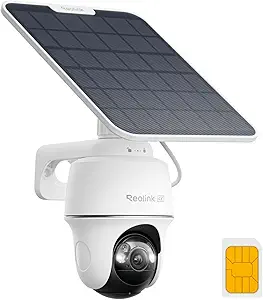
Choosing a 4G cellular security camera requires balancing connectivity, power, and storage options
The Xega 4G LTE camera represents a specific niche: completely wireless outdoor surveillance that operates independently of WiFi. Buyers considering this model must understand it requires a separate SIM card subscription and relies on solar power, making it suitable for remote locations, construction sites, or properties without internet infrastructure. Unlike traditional cameras, its value lies in complete installation freedom rather than integration with existing smart home systems.
Key Considerations Before Buying
- Ongoing cellular data costs are mandatory with this camera—factor in monthly SIM card fees from providers like EE, Vodafone, or Three, which can exceed the camera's purchase price over time.
- Solar dependency means placement is critical; the camera needs consistent sunlight exposure to maintain battery levels, making it unsuitable for permanently shaded areas or regions with prolonged overcast weather.
- The lack of WiFi support means you cannot locally stream footage to your phone on the same network; all access requires cellular data consumption, impacting both performance and costs.
What Our Analysts Recommend
For 4G PTZ dome cameras specifically, examine the solar panel's wattage and battery capacity—larger batteries (ideally 10,000mAh+) provide longer operation during low-light periods. Check supported 4G bands against your chosen network provider's coverage, as compatibility varies. Also, verify whether cloud storage is subscription-based or included with the SIM plan, as this significantly affects total cost of ownership.
Dome Cameras Market Context
Market Overview
The 4G cellular security camera market in the UK is growing, driven by demand for surveillance in areas without broadband, such as rural farms, holiday homes, and temporary sites. These cameras compete on data efficiency, solar charging reliability, and clarity of 2K footage over cellular networks, which can be bandwidth-constrained. Manufacturers like Xega are targeting users who prioritise deployment flexibility over the lower operating costs of WiFi-enabled systems.
Common Issues
Common problems include cellular signal dropouts in weak coverage areas, leading to missed alerts or footage gaps, and solar panels failing to maintain charge during winter months, requiring manual charging. Users also report latency in PTZ controls over 4G and motion detection false alarms triggered by moving foliage, which consumes unnecessary data.
Quality Indicators
Look for cameras with dual storage options (TF card and cloud) for redundancy, IP65 or higher weatherproof ratings for UK climates, and efficient video compression like H.265 to minimise data usage. Genuine reviews often mention specific network performance (e.g., 'works on O2 but not Three') and solar charging performance in real-world conditions.
Review Authenticity Insights
Grade B Interpretation
A Grade B authenticity rating with a 15% estimated fake review percentage indicates that while most feedback is credible, shoppers should be cautious of overly glowing reviews that omit practical drawbacks like data costs. The adjusted rating of 4.10/5 (down from 4.44) suggests the genuine user experience is very positive but slightly more tempered than the raw average implies.
Trust Recommendation
Focus on verified purchase reviews that detail long-term use, especially regarding solar performance in autumn/winter and real-world data consumption per month. Be sceptical of reviews that don't mention network provider specifics or ongoing costs, as these may be inauthentic. The high number of reviews (2167) provides a substantial sample to identify consistent patterns.
Tips for Reading Reviews
Prioritise reviews that mention specific UK network providers, installation locations (e.g., 'in my garden with partial shade'), and month-long usage reports. Look for discussions about the setup process for the SIM card and any latency issues with the 2K live view, as these are authentic pain points for cellular cameras.
Expert Perspective
The Xega 4G camera appears to be a competent solution for its niche, with a strong genuine rating of 4.10/5 reflecting satisfaction among users who need WiFi-independent surveillance. Its combination of 2K PTZ, solar power, and cellular connectivity addresses a clear gap in the market. However, the product's value is entirely dependent on your specific use case—it solves connectivity problems at the expense of introducing recurring costs and placement constraints that don't affect traditional cameras.
Purchase Considerations
Only choose this camera if you truly need a WiFi-free solution; for most homes with broadband, a WiFi camera with local storage will be more cost-effective and reliable. Calculate total cost of ownership including at least 12 months of data plans before purchasing. Ensure your intended location has strong 4G signal (check coverage maps) and receives several hours of direct sunlight daily for the solar panel to function effectively.
Comparing Alternatives
Shoppers should compare data plan requirements and solar efficiency with similar 4G models from Reolink and Zosi, as performance can vary significantly by network.