
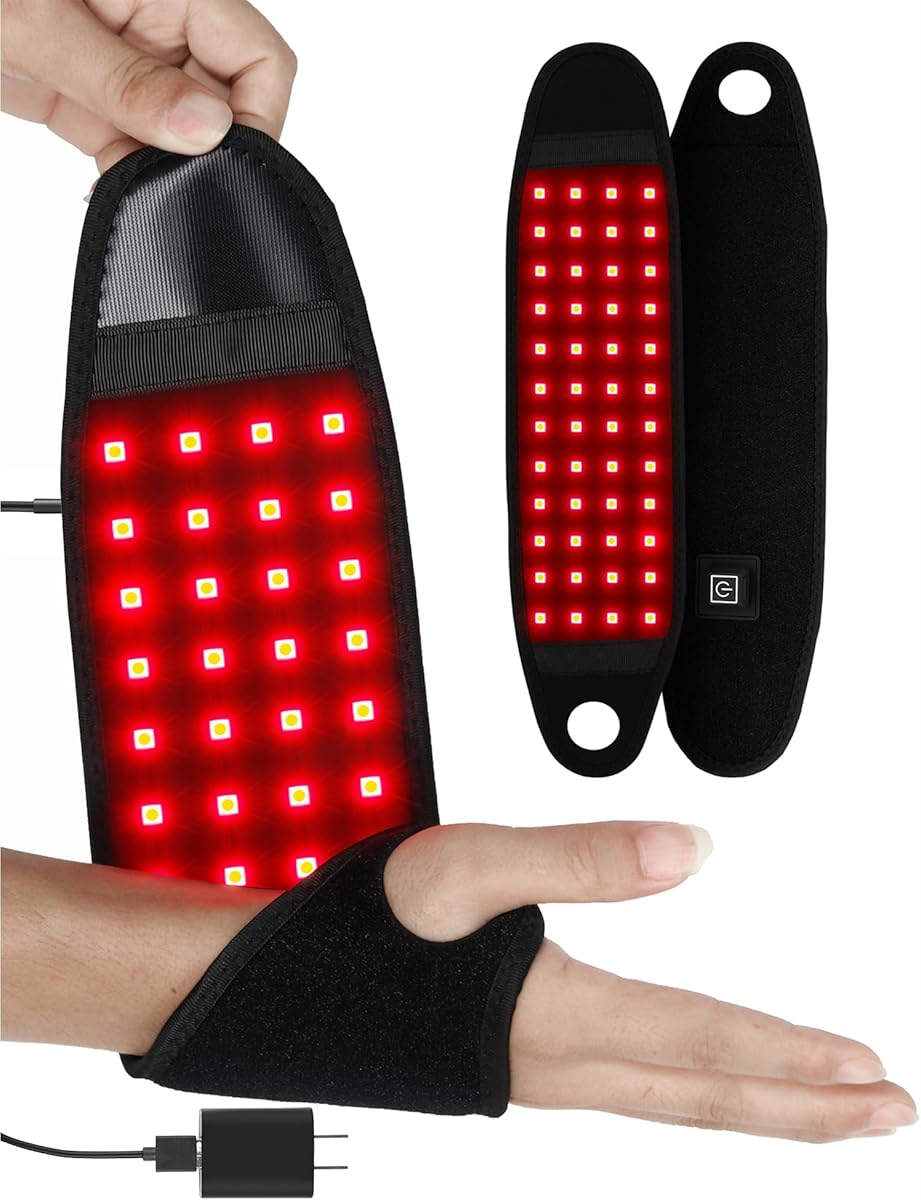
Choosing a Flexible Red Light Therapy Wrap for Targeted Joint and Muscle Relief
When evaluating this specific Therawrap with 144 LED chips delivering dual 660nm red and 850nm near-infrared wavelengths, buyers should understand how its flexible design targets carpal tunnel and hand pain differently than rigid panels. The combination of wavelengths is specifically chosen for penetrating different tissue depths—red light for superficial inflammation and near-infrared for deeper joint and tendon issues.
Key Considerations Before Buying
- Assess your target area: This wrap's flexible design excels for wrapping around wrists, thumbs, and fingers, but may be less ideal for broad back or shoulder coverage compared to larger panels.
- Consider treatment consistency: The 144-chip array must provide even light distribution across curved surfaces; look for reviews mentioning 'hot spots' or uneven coverage.
- Evaluate power delivery: Unlike stationary devices, flexible wraps must maintain consistent light output when bent; check for mentions of dimming or connection issues at joints.
What Our Analysts Recommend
Quality indicators include medical-grade silicone construction that withstands repeated bending without LED failure, and controllers with adjustable timing settings (15-30 minute sessions are typical for therapeutic doses). Genuine dual-wavelength devices should specify exact nanometer outputs—660nm for visible red light therapy and 850nm for invisible near-infrared—not vague 'red and infrared' claims.
Infrared Light Therapy Market Context
Market Overview
The UK infrared therapy market has expanded rapidly with wearable options, creating a spectrum from medical-grade prescription devices to consumer-grade wraps like this Therawrap. Flexible wraps represent a growing subcategory targeting specific joints rather than whole-body treatment.
Common Issues
Consumer devices often overstate power density (mW/cm²) or use inferior LEDs that degrade quickly. Many wraps fail at connection points after repeated flexing, and some combine wavelengths inefficiently, reducing therapeutic effect.
Quality Indicators
Legitimate products provide FDA-registered or CE-marked components, specify irradiance measurements at different distances, and use medical-grade silicone that remains pliable without cracking. Quality controllers offer precise timing rather than simple on/off switches.
Review Authenticity Insights
Grade B Interpretation
A Grade B authenticity rating with 11% estimated fake reviews indicates predominantly genuine feedback with some promotional content. For this specific therapy wrap, the 4.10 adjusted rating (down from 4.33) suggests authentic users experience slightly less satisfaction than initial ratings imply.
Trust Recommendation
Focus on verified purchase reviews mentioning specific conditions like 'thumb arthritis' or 'post-carpal tunnel surgery' rather than vague 'pain relief' claims. The high verification rate (153 reviews) provides substantial authentic data points to analyze.
Tips for Reading Reviews
Prioritize reviews discussing treatment protocols ('used for 20 minutes daily for three weeks') and specific outcomes ('reduced morning stiffness in my index finger'). Be skeptical of reviews that don't mention the flexible design or wavelength specifics—these may be copied from other light therapy products.
Expert Perspective
This Therawrap's combination of flexibility and dual wavelengths addresses a genuine need for targeted joint therapy, though its 4.10 adjusted rating suggests some users may find results inconsistent. The 144-chip configuration provides adequate coverage for wrist and hand applications, but consumers should temper expectations—this is a consumer-grade device, not clinical equipment. The authentic reviews consistently praise the wrap's ability to conform to curved areas that rigid panels cannot reach, which is its primary advantage.
Purchase Considerations
Weigh the convenience of targeted treatment against the need for consistent daily use (most studies show benefits require regular 3-8 week protocols). Consider whether your pain is localized to wrap-accessible areas or would benefit from broader coverage. The dual wavelengths are appropriate for carpal tunnel, but deep joint arthritis might respond better to higher-power near-infrared devices.
Comparing Alternatives
Shoppers should compare this wrap's chip count, wavelength specifications, and flexibility against similar wraps, as well as consider whether stationary panels might better suit their needs.


