
How to Choose the Right Business Decision-Making Book for SaaS Growth
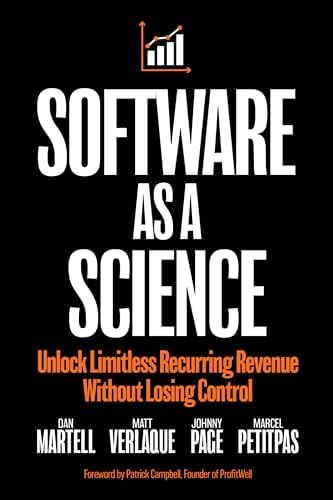
When selecting a book on decision-making for recurring revenue businesses, look for practical frameworks, real-world applicability, and author credibility. 'Software as a Science' promises to unlock limitless recurring revenue without losing control, targeting leaders in SaaS and subscription models. With a perfect 5-star rating from 210 reviews, it stands out, but buyers should assess whether its strategies align with their specific business challenges.
Key Considerations Before Buying
- Evaluate the author's background: Books in this niche are often written by consultants or entrepreneurs. Check if the author has hands-on experience scaling recurring revenue businesses, as this impacts the practicality of the advice.
- Assess the actionability: Decision-making books should offer step-by-step frameworks, not just theory. Look for reviews that mention specific tools, metrics, or case studies that can be directly applied to your business.
- Consider the target audience: Some books are geared toward early-stage startups, while others focus on scaling established companies. Ensure the content matches your company's stage and complexity to avoid misalignment.
What Our Analysts Recommend
Prioritize books that balance strategic vision with operational tactics, as recurring revenue models require both. Check for endorsements from respected SaaS leaders and whether the book includes templates or decision matrices. Also, consider the publication date—rapidly evolving industries like software demand up-to-date insights.
Decision Making Market Context
Market Overview
The business decision-making category is saturated with titles promising growth, but few focus specifically on the unique challenges of recurring revenue models. As subscription businesses proliferate, demand has grown for specialized guidance that addresses churn, pricing, and scalable decision processes. This book enters a niche where practical, experience-based content is highly valued.
Common Issues
Many business books recycle generic advice without addressing the nuances of recurring revenue, such as balancing customer acquisition with retention costs. Readers often complain about lack of concrete examples or overemphasis on theory. Additionally, some authors overpromise results without acknowledging implementation hurdles.
Quality Indicators
High-quality books in this space feature case studies from recognizable companies, provide decision-making frameworks that can be adapted, and are written by authors with verifiable success in the field. Look for books that have been recommended by credible industry sources and have a substantial number of detailed reviews.
Review Authenticity Insights
Grade B Interpretation
A Grade B authenticity rating with an estimated 15% fake reviews suggests that while most reviews are genuine, there is a notable minority that may be manipulated. The adjusted rating of 4.60/5, down from a perfect 5.00, indicates that the book is still highly regarded but not without flaws. This level of suspicious activity is common for popular business titles, so it shouldn't automatically disqualify the book.
Trust Recommendation
Focus on reviews that provide specific details about how the book helped the reader's business, as these are more likely to be authentic. Be wary of reviews that are overly generic or posted in bursts. Cross-reference with external sources like business blogs or LinkedIn recommendations to gauge real-world impact.
Tips for Reading Reviews
When reading reviews for decision-making books, prioritize those that mention the reader's role (e.g., CEO, manager) and company size, as relevance varies. Look for balanced critiques that highlight both strengths and weaknesses, as these tend to be more trustworthy. Ignore reviews that only praise the book without explaining why.
Expert Perspective
'Software as a Science' appears to be a valuable resource for leaders in recurring revenue businesses, given its high adjusted rating and numerous positive reviews. The 15% estimated fake review rate is a caution flag but not a dealbreaker, as the majority of feedback is likely genuine. The book's focus on maintaining control while scaling aligns with common pain points in SaaS, suggesting it addresses a real need. However, its effectiveness depends on the reader's willingness to implement its frameworks.
Purchase Considerations
Consider whether the book's strategies are applicable to your specific business model and stage. If you're looking for quick fixes, this may not be the right fit, as decision-making frameworks require commitment. Also, weigh the cost against potential ROI—if the book helps you avoid one costly mistake, it pays for itself.
Comparing Alternatives
Shoppers should compare this book with other titles in the SaaS and decision-making space, such as 'The SaaS Playbook' or 'Playing to Win', to ensure it offers unique insights. Reading sample chapters or summaries can help determine if the author's style and approach resonate with you.

![Führung für absolute Anfänger [9-in-1-Komplettset]: Management | Kommunikation | Ziele | Teamdynamik | Entscheiden | Produktivität | Veränderungen | Feedback | Netzwerken](https://m.media-amazon.com/images/I/41pZhE57PoL._SX342_SY445_ML2_.jpg)


