
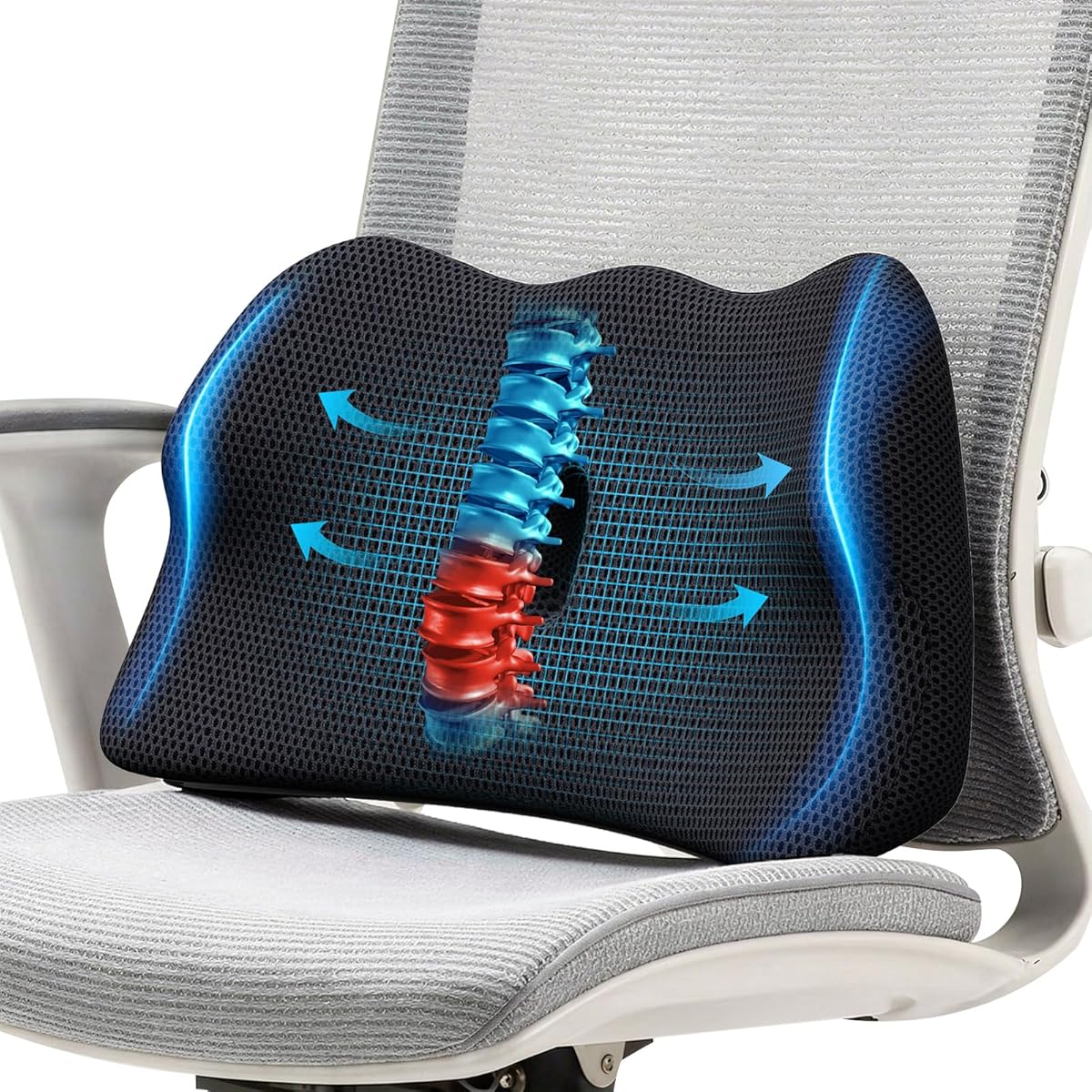
Choosing the Right Lumbar Support Cushion: What Benazcap's Design Reveals
When evaluating the Benazcap Lumbar Support Cushion, focus on its dual-function design that addresses both lumbar and coccyx support—a feature not all cushions offer. This specific model's ergonomic contour and memory foam construction target pressure point relief across multiple seating environments, from office chairs to car seats.
Key Considerations Before Buying
- Assess whether you need primarily lumbar support, coccyx relief, or both, as the Benazcap's wedge shape and central cutout aim to serve dual purposes.
- Consider the chair type; this cushion's non-slip base and adjustable straps are designed for stability on both mesh and upholstered office chairs.
- Evaluate pain origin—the cushion's firm memory foam is engineered for structural support rather than plush comfort, targeting specific musculoskeletal relief.
What Our Analysts Recommend
Quality indicators include high-density memory foam that retains shape without bottoming out and a breathable mesh cover that remains secure via adjustable straps. For the Benazcap, examine the stitching around the coccyx cutout and the durability of the strap buckles, as these are stress points during daily adjustment.
Back & Seat Cushions Market Context
Market Overview
The lumbar support cushion market is saturated with products making similar pain-relief claims, but genuine ergonomic design varies significantly. Many cushions prioritize initial comfort over long-term postural correction, creating a gap between consumer expectations and therapeutic outcomes.
Common Issues
Frequent problems include cushions that slide out of position, memory foam that loses resilience within months, and one-size-fits-all designs that fail to accommodate different body types and chair configurations. Poor strap systems and non-breathable materials are recurring complaints.
Quality Indicators
Look for detailed specifications about foam density (ideally 40kg/m³ or higher), multi-point attachment systems, and covers with removable, washable components. Premium cushions often feature dual-layer foam construction with a supportive base layer and a comfort top layer.
Review Authenticity Insights
Grade B Interpretation
A Grade B with 15% estimated fake reviews suggests the Benazcap's review profile is reasonably trustworthy but requires discerning reading. The 4.30 adjusted rating (down from 4.67) indicates some review inflation, though the majority of feedback appears authentic.
Trust Recommendation
Prioritize reviews that discuss specific, long-term use cases (e.g., 'after 3 months of office use' or 'for my 45-minute commute') over vague praise. Verified purchase status adds credibility, but focus on detailed experiences with the strap system and foam durability.
Tips for Reading Reviews
Pay particular attention to reviews mentioning the cushion's performance in cars or gaming chairs, as these applications test the strap system's effectiveness. Look for patterns in complaints about the cover's breathability or the wedge shape's comfort over extended periods.
Expert Perspective
The Benazcap presents a compelling value proposition with its dual-support design and multi-environment versatility. The 4.30 adjusted rating from verified purchases suggests genuine satisfaction, particularly regarding its ergonomic contour and pain relief claims. However, the product's effectiveness heavily depends on proper positioning—the lumbar bulge must align precisely with the natural curve of your spine. The non-slip base and straps appear adequate for stationary office use but may require frequent adjustment in vehicle applications.
Purchase Considerations
Weigh the cushion's medium-firm density against your personal comfort preferences; some users find firmer support more therapeutic. Consider your primary use case—while marketed for multiple settings, its design seems optimized for standard office chairs rather than deeply contoured car seats or soft living room furniture.
Comparing Alternatives
Shoppers should compare the Benazcap's dual-function design against specialized single-purpose cushions if their pain is isolated to either the lumbar or coccyx region exclusively.


