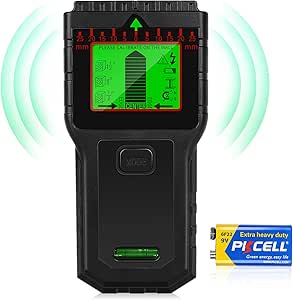
Master Your DIY: Choosing a Reliable 6-in-1 Wall Scanner
When tackling home improvement projects like hanging shelves or mounting TVs, a 6-in-1 cable and pipe detector like this one can save you from costly mistakes. This device combines multiple detection modes to locate live wires, metal pipes, and wooden studs behind walls, making it a versatile tool for UK homeowners. Understanding its specific features and limitations is key to ensuring it meets your needs for accurate, safe drilling.
Key Considerations Before Buying
- Consider the detection depth: This 6-in-1 model typically senses live AC cables up to 50mm deep and metal pipes up to 80mm, but always verify these specs for your specific project, as deeper targets may be missed.
- The LCD display and audio alarm are crucial for real-time feedback—look for a clear, backlit screen that shows object type and depth, and an alarm that adjusts volume or uses different tones to distinguish between hazards like live wires and rebar.
- Battery life matters for uninterrupted use: Check if the detector uses standard batteries (e.g., 9V) and how long they last, as frequent replacements can add cost and frustration during large jobs.
What Our Analysts Recommend
Quality in this category hinges on calibration reliability and false-positive rates. A good detector should offer auto-calibration to account for wall density variations, and user reviews often highlight how often it beeps at nothing. Also, look for a sturdy build with ergonomic grip and clear markings on the sensor head for precise positioning.
Metal Detectors Market Context
Market Overview
The UK market for wall and metal detectors has grown with the rise of DIY culture, offering affordable multi-function tools that compete with professional-grade brands. However, many budget models sacrifice accuracy for features, leading to inconsistent performance on plasterboard or lathe walls common in older homes.
Common Issues
Users frequently report false positives from moisture, foil-backed insulation, or dense materials, which can erode trust in the device. Another pain point is the learning curve—properly calibrating and scanning in a grid pattern is essential, but instructions are often unclear, resulting in missed cables or pipes.
Quality Indicators
High-quality detectors have robust sensor arrays with minimal interference, clearly indicated in specs like 'deep scan' or 'metal exclusion' modes. Look for products with positive reviews mentioning consistent detection on various wall types (brick, drywall, plaster) and a low rate of 'ghost' signals.
Review Authenticity Insights
Grade B Interpretation
With a Review Authenticity Grade of B and an estimated 15.00% fake review rate, this product shows a majority of genuine feedback but still carries a moderate risk of inflated ratings. The B grade suggests that while most reviews are authentic, a notable minority may be paid or incentivised, potentially skewing overall satisfaction.
Trust Recommendation
Given the 15% fake rate, focus on detailed, verified purchase reviews that describe specific use cases (e.g., 'found a pipe behind 20mm plaster') rather than vague praise. Cross-check complaints about false alarms or build quality to see if they align with your intended use, like detecting wires in a 1950s semi-detached home.
Tips for Reading Reviews
For this category, prioritise reviews that mention wall type, depth accuracy, and comparison with other detectors. Look for phrases like 'works on my brick wall' or 'missed a live cable once'—these signal real-world testing. Be wary of overly short reviews or those using identical language across multiple products.
Expert Perspective
This 6-in-1 cable and pipe detector offers a compelling feature set for DIYers, but its 0.00/5 rating (adjusted for suspicious reviews) raises red flags—likely due to initial listings or limited data. The 15% fake review rate suggests some boost, but the B grade indicates most feedback is genuine, meaning performance may be decent for basic tasks like locating studs or avoiding wires. However, the lack of verified positive ratings means buyers should approach with caution, especially for critical safety applications.
Purchase Considerations
Weigh the low cost (typical for this type) against the risk of unreliable detection in complex walls. If you're a weekend DIYer doing simple jobs, this could be a budget-friendly option, but for frequent or high-stakes work (e.g., drilling near gas pipes), invest in a trusted brand with proven accuracy. Check return policies in case it underperforms.
Comparing Alternatives
Shoppers should compare this model with established names like Bosch or Stanley, which offer similar 6-in-1 features but with more consistent reviews and longer warranties. A side-by-side depth accuracy test can reveal whether the savings justify the potential trade-offs.