
Choosing a Reliable Emergency Radio: Power Options, Reception, and Durability Matter
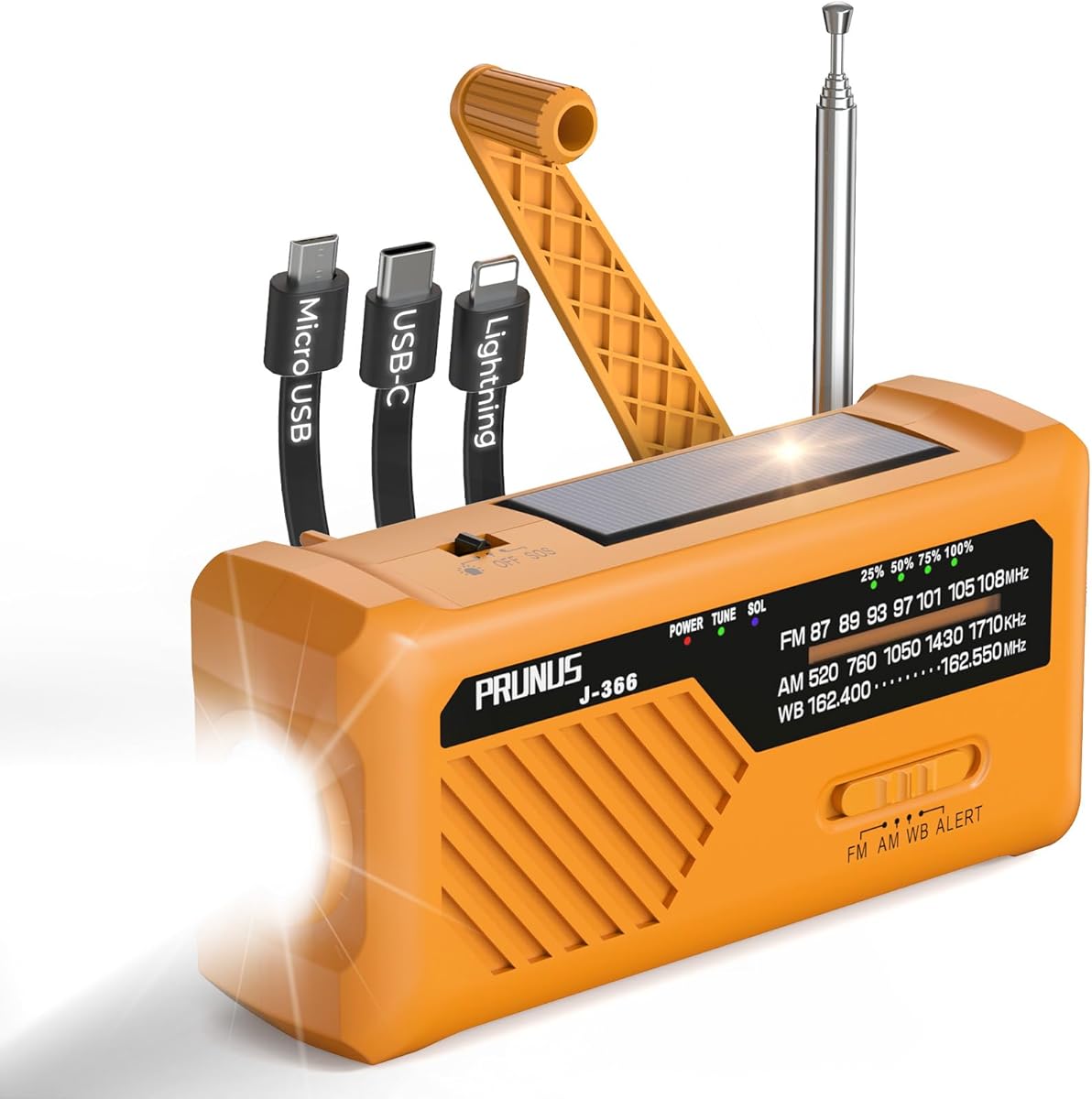
When selecting an emergency radio like the PRUNUS J-366, focus on its multi-source charging capabilities and signal reception quality. This specific model combines hand crank, solar, USB-C, and AAA battery power, which is crucial for true off-grid reliability during UK weather events or power outages. The inclusion of AM/FM/SW bands and a 2000mAh power bank adds functional layers beyond basic emergency use.
Key Considerations Before Buying
- Evaluate the practical efficiency of the hand crank mechanism—some models require excessive cranking for minimal charge, but genuine reviews of the PRUNUS J-366 suggest its dynamo provides usable power with reasonable effort.
- Assess the solar panel's real-world performance in typical UK light conditions; effective emergency radios should charge in indirect daylight, not just direct sun.
- Consider the audio clarity and band selectivity, especially on shortwave (SW), which can provide critical information during widespread emergencies when local stations may be offline.
What Our Analysts Recommend
Prioritise radios with a robust, tactile crank mechanism and a solar panel that's recessed or protected from scratches. For the PRUNUS J-366, the compact form factor and included 3-in-1 charging cables are tangible quality indicators, suggesting design thought for actual emergency kits. Check that the SOS alarm and flashlight are functionally separate from the main radio circuit to preserve core functionality.
Weather Radios Market Context
Market Overview
The UK market for weather and emergency radios is increasingly focused on multi-hazard preparedness, with products blending traditional reception with modern power bank capabilities. The PRUNUS J-366 sits in a competitive segment where USB-C charging is becoming a new baseline, moving beyond older micro-USB standards.
Common Issues
Common pitfalls in this category include solar panels that are decorative rather than functional, hand cranks that fail under repeated use, and poor SW reception that renders the band useless. Battery compartments may also be poorly sealed, compromising the radio's claim to be an emergency device.
Quality Indicators
Look for clear specifications on battery capacity (like the stated 2000mAh), the inclusion of standard AAA batteries as a fallback, and physical construction that can withstand being packed in a bag. A genuine weather radio should have a clear, accessible SOS function and a flashlight with multiple modes, not just a single LED.
Review Authenticity Insights
Grade B Interpretation
A Grade B authenticity score with an 11% estimated fake review rate for the PRUNUS J-366 indicates a generally trustworthy review pool, but advises a degree of scrutiny. This suggests most feedback reflects real ownership, though a small portion may be incentivised or overly promotional.
Trust Recommendation
Focus on reviews that detail specific use cases, such as testing the solar charge during UK winter or the hand crank's output for phone charging. The adjusted rating of 4.70/5, down from a perfect 5.00, is a more reliable performance indicator and aligns with a high-quality product that may have minor flaws.
Tips for Reading Reviews
For this product, seek out reviews that mention longevity—how the crank or buttons hold up over months. Authentic reviews often compare reception to other radios or note the actual lumen output of the flashlight, providing concrete, verifiable details.
Expert Perspective
The PRUNUS J-366 presents a compelling, feature-dense package for emergency preparedness. Its combination of USB-C, solar, crank, and AAA power sources addresses the core failure points of single-source emergency radios. The high adjusted rating of 4.70/5, derived from largely genuine reviews, strongly suggests it delivers on its core promises of reception and off-grid power. The inclusion of SW bands is a significant differentiator from basic FM/AM emergency radios, offering a wider information net during crises.
Purchase Considerations
Weigh the compact size and multi-charging cables against the need for louder speaker output or a larger solar panel for faster charging. This model is optimised for portability in a bug-out bag rather than as a stationary home emergency hub. The 2000mAh power bank is adequate for a partial phone charge but not for multiple device top-ups.
Comparing Alternatives
Shoppers should compare the J-366's specific power mix and size against models with larger batteries or more powerful speakers, depending on whether portability or base-camp utility is the priority.


