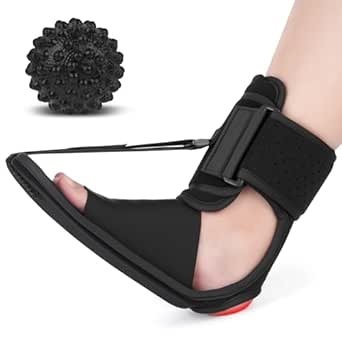
Choosing an Ultra-Thin Ankle Brace: Support, Fit, and Shoe Compatibility
When selecting an ankle brace like this Quick Lace-Up model, the primary trade-off is between substantial stabilization and everyday wearability. This specific product promises an ultra-thin, breathable design that fits inside most shoes, which is a distinct advantage over bulkier rigid braces for active recovery.
Key Considerations Before Buying
- Assess your injury stage: This brace's adjustable stabilizer is designed for ligament damage and sprains, but may not provide the immobilization needed for a fresh, severe acute injury compared to a rigid stirrup brace.
- Evaluate your shoe wardrobe: The claim of fitting 'almost all shoes' hinges on the ultra-thin construction; measure your shoe's interior height, especially at the ankle collar, to ensure compatibility.
- Consider the lacing mechanism: The quick lace-up system offers customizable compression but requires manual dexterity; ensure you can tighten it adequately for support without compromising circulation.
What Our Analysts Recommend
For this category, examine the quality of the stitching around the stabilizer straps and the durability of the lace locks. A good ankle brace should maintain its adjustable tension without the straps slipping or the material stretching out permanently after repeated use. The breathability claim should be backed by a mesh-like material in key areas to prevent moisture buildup.
Ankle Braces Market Context
Market Overview
The ankle brace market is segmented into rigid immobilizers for acute phases and flexible supports for sub-acute recovery and prevention. Products like this one target the growing demand for braces that facilitate an active lifestyle without being conspicuous or requiring specialty footwear.
Common Issues
Common complaints in flexible ankle braces include poor durability of hook-and-loop closures, straps that lose elasticity, and designs too bulky for standard shoes. Many braces also fail to provide graduated compression, offering either too little support or restrictive tightness.
Quality Indicators
Look for braces with dual-axis straps that cross the ankle joint to mimic athletic taping, reinforced stitching at stress points, and materials that wick moisture. A quality stabilizer will have a non-stretch component to limit inversion/eversion without being rigid.
Review Authenticity Insights
Grade B Interpretation
A Grade B with an 11% estimated fake review rate suggests the majority of feedback is trustworthy, but shoppers should be slightly more critical than with an A-grade product. The adjusted rating of 4.60/5 (down from 4.89) indicates the genuine user satisfaction is still very high, but not quite perfect.
Trust Recommendation
Focus on reviews that detail specific use cases like 'returning to running' or 'wearing with work boots,' as these demonstrate real-world testing. Be particularly attentive to critical 3- and 4-star reviews, as they often contain the most balanced insights on fit and durability limitations.
Tips for Reading Reviews
Prioritize reviews that mention long-term use (e.g., 'after 3 months') to assess durability, and those that specify the type of shoe worn with the brace. Authentic reviews often describe a minor fitting issue or adjustment period alongside overall satisfaction.
Expert Perspective
This product's exceptionally high adjusted rating of 4.60/5, based largely on genuine reviews, indicates it successfully delivers on its core promises for most users: thin profile, good support, and shoe compatibility. The design addresses a key pain point in ankle bracing—the transition from acute injury management to functional, preventative support. The feedback pattern suggests it excels as a 'stage two' brace for recovery and return to activity, rather than for initial immobilization.
Purchase Considerations
This brace is an optimal choice if you need moderate stabilization for a healing sprain, chronic weakness, or sports prevention, and require a low-profile design for everyday shoes. It may be less suitable if you have significant swelling (requiring more adjustable volume) or need the rigid lateral support of a stirrup brace for severe instability.
Comparing Alternatives
Shoppers should compare the thickness and strap configuration of this model against other 'ultra-thin' braces, as even millimeter differences can affect shoe fit.