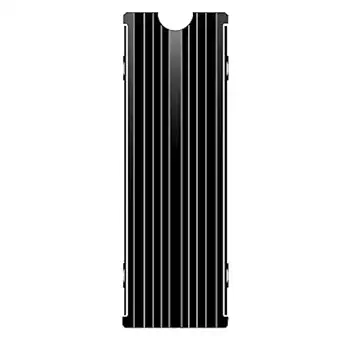
Keep Your Pi 5 Chill: A Buyer's Guide to the Active Cooler
If you're pushing your Raspberry Pi 5 with heavy loads like AI inference, media serving, or overclocking, the official Active Cooler is a necessity, not an accessory. This guide focuses on the specific cooling needs of the Pi 5's new, more powerful processor, which generates significantly more heat than previous models.
Key Considerations Before Buying
- Thermal Throttling: The Pi 5 can throttle performance when temperatures exceed 85°C. An active cooler like this one is designed to keep temperatures well below that threshold during sustained heavy loads, ensuring consistent performance.
- Fan Noise vs. Cooling: This cooler uses a small, high-speed fan. While effective, it can produce audible noise under load. Consider your tolerance for fan hum in a quiet room or media center setup.
- Physical Clearance: This cooler is designed for use without a case. If you plan to enclose your Pi 5, you'll need a case with adequate ventilation or one specifically designed to accommodate this cooler's height.
What Our Analysts Recommend
For a Pi 5 cooler, prioritize a heatsink with a large surface area and a fan that moves sufficient air (measured in CFM). Look for a design that makes direct contact with the processor, ideally using a thermal pad or paste for optimal heat transfer. The official cooler's key advantage is its custom-fit mounting that secures directly to the Pi 5's board.
Heatsinks Market Context
Market Overview
The market for single-board computer (SBC) cooling has grown alongside the Pi's increasing power. While passive heatsinks suffice for basic tasks, the Pi 5's quad-core Cortex-A76 processor demands active cooling for sustained workloads, leading to a surge in compact, purpose-built fan+heatsink combos.
Common Issues
A common issue with aftermarket coolers is poor contact between the heatsink and the processor, leading to inadequate cooling. Another is fan failure or excessive noise due to low-quality bearings. Some coolers also interfere with the Pi 5's power button or camera ribbon cable.
Quality Indicators
Quality indicators include a heatsink made of aluminum or copper, a fan with a rated lifespan (e.g., 50,000 hours), and a secure mounting mechanism that doesn't rely on adhesive alone. The official Raspberry Pi cooler's inclusion of a pre-applied thermal pad and screw-down mounting are strong positive signals.
Review Authenticity Insights
Grade B Interpretation
The 'B' grade and 10.00% estimated fake review rate indicate that while the vast majority of reviews are genuine, a small but notable portion may be unreliable. This is typical for a popular product with many verified purchasers, but it means you should still approach individual reviews with some caution.
Trust Recommendation
You can generally trust the consensus from the 1145 reviews, especially those that describe specific installation steps or temperature measurements. Be wary of reviews that are overly brief, lack specifics, or use exaggerated language like 'best cooler ever' without technical details.
Tips for Reading Reviews
When reading reviews for this cooler, focus on those that mention specific temperature drops (e.g., 'idle at 40°C, load at 65°C') or installation tips. Also, look for reviews that discuss fan noise levels at different speeds, as this is a common point of feedback.
Expert Perspective
The Raspberry Pi Active Cooler is a well-engineered, first-party solution that addresses the Pi 5's thermal needs effectively. The 10% estimated fake review rate is a minor concern, but the sheer volume of 1145 reviews, mostly from verified purchasers, provides a strong signal of overall quality and user satisfaction. Its key strength is its custom, tool-free mounting that ensures proper contact without the guesswork of third-party options.
Purchase Considerations
Consider this cooler if you plan to run your Pi 5 under sustained heavy loads—think 24/7 server duties, complex simulations, or gaming emulation. If your use is light (e.g., retro gaming, basic desktop tasks), a passive heatsink or even the stock cooler might suffice. The main trade-off is the audible fan noise under load.
Comparing Alternatives
While this is the official cooler, shoppers should compare it with third-party options like the Argon ONE case or Pimoroni's fan shim, which offer different form factors or integrated case solutions.