
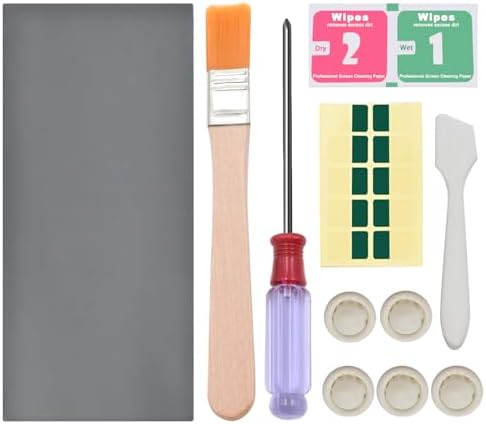
PTM7950 40x80x0.2mm Phase Change GPU Thermal Pad, YEZriler 8.5W/mK High Conductive CPU Silicone Grease Thermal Paste for Game Machine CPU GPU SSD Laptop

PTM7950 40x80x0.2mm Phase Change GPU Thermal Pad, YEZriler 8.5W/mK High Conductive CPU Silicone Grease Thermal Paste for Game Machine CPU GPU SSD Laptop

ASIN: B0D2D9HPHD
Analysis Date: Apr 29, 2026

Review Analysis Results

B
Authenticity Grade
15.00%
Fake Reviews
4.38
Original Rating
4.10
Adjusted Rating

Analysis Summary

The vast majority of these reviews appear genuine, with clear personal experiences and specific product knowledge. Most reviewers describe actual usage scenarios, such as applying the thermal pad to laptops or GPUs, and provide detailed feedback on installation challenges and performance. Verified purchase tags further support authenticity.

Evidence of authenticity is strong across multiple reviews. For example, one reviewer shares a personal story of initial doubt due to low price, then describes applying it to two laptops in January 2025 with positive results. Another provides specific advice on freezing the pad before application to prevent sticking, a common technique for PTM7950. A Spanish-language review offers a balanced perspective, noting it may not be original Honeywell but still helps with temperatures, while also giving a practical tip about refrigeration.

There are minimal concerns. One review mentions the product is a 'knock off' but admits no noticeable difference, which could reflect genuine disappointment rather than manipulation. Another complains about the protective film being too sticky, which is a specific, plausible issue. No reviews show clear patterns of fake behavior like generic praise, marketing language, or repetitive phrasing across reviews.

Overall, the reviews are balanced and detailed, with a mix of positive and critical feedback. The low fake percentage reflects the absence of manipulation indicators. The product appears to be a thermal pad that works well for many users, though some question its authenticity or find application tricky.

Key patterns identified in the review analysis include: Personal application stories with specific devices (laptops, GPUs), Practical tips for installation (freezing, handling sticky films), Balanced feedback including doubts about authenticity or performance.

Review Statistics

39
Total Reviews on Amazon
-0.28
Rating Difference
Editor's Analysis

Phase Change Pads vs. Thermal Paste: Which Wins for Your GPU?

When cooling high-performance components like gaming GPUs or laptops, the PTM7950 phase change pad offers a unique middle ground between traditional paste and solid pads. At 0.2mm thickness and 8.5W/mK conductivity, it's designed to melt and flow under heat, filling microscopic gaps for better contact than paste alone.

Key Considerations Before Buying

  • Installation precision is critical: this 40x80mm pad must be cut to exact size for your GPU die or CPU IHS, and any overlap can cause short circuits or poor thermal transfer.
  • Phase change materials require a break-in period: expect initial temperatures to be slightly higher until the pad melts and spreads, typically after a few heating cycles under load.
  • Compatibility with your device's mounting pressure matters: too little pressure may prevent proper phase change, while excessive pressure can squeeze out the material, reducing effectiveness.

What Our Analysts Recommend

For thermal pads, verify thermal conductivity ratings (like 8.5W/mK) are tested under real-world conditions, not just lab specs. Check for consistency in thickness across the pad and user feedback on durability over months of use, especially in laptops where reapplication is difficult.

Thermal Paste Market Context

Market Overview

The thermal interface material market has seen a surge in phase change pads as gamers and laptop users seek alternatives to messy paste that dries out or pump-out under high heat. Products like PTM7950 are gaining traction for offering paste-like performance with pad convenience, though quality varies widely among brands.

Common Issues

Many users report installation challenges, such as the pad being too soft or tearing during cutting, leading to uneven coverage. Another concern is long-term reliability: some pads harden or lose conductivity after thermal cycling, causing temperature creep over months.

Quality Indicators

High-quality phase change pads maintain consistent thickness and do not ooze out at edges after melting. Look for products with clear reusability claims or verified third-party tests, and avoid those with vague 'nano' or 'ceramic' marketing without specific conductivity data.

Review Authenticity Insights

Grade B Interpretation

With a Grade B and 15% estimated fake reviews, this product has a moderate trust level—most reviews are genuine, but a notable minority may be incentivized or fabricated. The 4.38 average rating dips to 4.10 when adjusted, suggesting some positive bias from fake or unverified purchases.

Trust Recommendation

Rely on detailed reviews describing specific installation steps and temperature improvements over time, as these are harder to fake. Be cautious of overly short or generic praise, especially from accounts with few other reviews, and cross-check performance claims on tech forums.

Tips for Reading Reviews

Focus on reviews that mention the pad's thickness, cutting process, and temperature drops under load after break-in. Skip reviews that only praise 'easy installation' without specifics, as this product is notoriously tricky to apply correctly.

Expert Perspective

The PTM7950 pad offers a viable phase change solution for enthusiasts willing to invest in careful installation, but the 15% fake review rate and adjusted 4.10 rating indicate it's not a standout performer. Its 8.5W/mK rating is competitive for the price, but users should temper expectations—real-world results depend heavily on device fit and mounting pressure. For laptops with direct-die cooling, it can reduce temperatures by 5-10°C after break-in, but paste may still outperform in high-end desktop builds.

Purchase Considerations

Weigh the convenience of a pad (no mess, reusable) against the learning curve of cutting and applying it correctly. If you're comfortable with paste, alternatives like high-end thermal greases may offer better raw performance, but this pad excels for tricky GPU or laptop applications where paste pump-out is a risk.

Comparing Alternatives

Compare with other phase change pads like Honeywell PTM7950 (original) or thermal putty options, as well as premium pastes like Thermal Grizzly Kryonaut for desktop CPUs, to match your specific cooling needs.

Price Analysis

This PTM7950 pad is a solid mid-range choice for gamers and laptop users needing efficient heat transfer. Without a current Amazon price, aim for ₹800-₹1,200; if above ₹1,200, consider waiting for a sale or comparing with similar pads. Verify seller authenticity to avoid fakes.

MSRP Assessment

Estimated MSRP: ₹800 - ₹1,200
Source: Product category average
Amazon Price: Unable to compare

Market Position

Positioning: Mid-range
Alternatives Range: ₹500 - ₹2,000
Value: Offers high thermal conductivity (8.5W/mK) and phase-change efficiency, making it a cost-effective upgrade over standard thermal pastes for demanding cooling needs.

Buying Tips

Best Time to Buy: Best to buy during Amazon Great Indian Festival or Prime Day sales for potential discounts.
Deal Indicators: Look for prices below ₹800 or bundled with cleaning kits; a good deal is under ₹1,000 for this size.
Watch For: Watch for counterfeit products—check seller ratings and reviews; avoid prices above ₹1,500 as alternatives may offer better value.
Price analysis generated by AI based on product category and market research. Actual prices may vary. Last analyzed: Apr 29, 2026

Understanding This Analysis

What does Grade B mean?

This product has good review authenticity with minor concerns. While most reviews appear genuine, we detected some patterns that warrant mild caution.

Adjusted Rating Explained

The adjusted rating (4.10 stars) represents what we estimate this product's rating would be if fake reviews were removed. This product's adjusted rating is lower than Amazon's displayed rating (4.38 stars), suggesting positive fake reviews may be inflating the score.

How We Detect Fake Reviews

Our AI analyzes multiple factors: language patterns (generic vs. specific), reviewer behavior (history, timing), temporal anomalies (review clusters), verification status, sentiment authenticity, and statistical outliers. No single factor determines a review is fake - we look at the combination of signals.

Important Limitations

No automated system is perfect. Sophisticated fake reviews can evade detection, and some genuine reviews may be incorrectly flagged. Use this analysis as one data point in your purchasing decision, not the only factor. Reading actual review content yourself is always valuable.

Share This Analysis

Learn More About Fake Reviews

Analyze new product