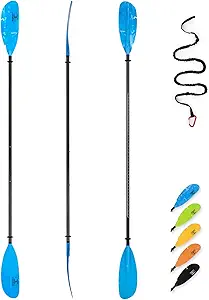
Greenland Paddle: Cedar, Ash, and Custom Fit Matter
This John Paddle let's rOAR Greenland paddle is a traditional Inuit-style kayak paddle, handcrafted in Italy from cedar and ash, and offered in 215, 218, and 220 cm lengths. At just 750–830 grams, it's exceptionally light, which reduces fatigue on long tours, but its narrow blades demand a specific paddling technique. Understanding how materials, length, and construction affect performance will help you decide if this paddle suits your kayaking style.
Key Considerations Before Buying
- Length selection: Greenland paddles are sized by your height and kayak width—most paddlers choose a length that lets them comfortably reach the water without excessive overlap. The three available sizes (215, 218, 220 cm) cover a range of body types, but if you're between sizes, consider your intended use: shorter for play, longer for touring.
- Blade technique: Unlike Euro paddles, Greenland blades are narrow and long, requiring a sliding stroke and canted blade angle. This can feel awkward at first, but once mastered, it's efficient and easy on the joints. If you're new to Greenland style, expect a learning curve.
- Material and weight: Cedar offers buoyancy and warmth, while ash adds strength and durability. The combination keeps the paddle light (750–830 g), but cedar can dent if mishandled. The weight is a major advantage for long distances, but the wood requires periodic oiling to prevent drying and cracking.
What Our Analysts Recommend
Check the blade edges for smooth, rounded tips that won't catch on waves, and ensure the shaft has a comfortable oval or round cross-section. The finish should be oiled, not varnished, so the wood can breathe and be easily maintained. Look for tight, uniform grain and no visible glue lines or knots, which can indicate weak spots.
Paddles Market Context
Market Overview
Greenland paddles remain a niche but growing segment of the kayak paddle market, favored by traditionalists and touring paddlers for their low-stress stroke. Most are handmade by small workshops, often in Europe or North America, using cedar, spruce, or carbon. Prices vary widely, but wooden paddles typically range from €150 to €400, with custom sizing adding cost.
Common Issues
A frequent complaint with wooden Greenland paddles is inconsistent weight and balance due to variable wood density. Some paddles develop cracks if not properly sealed or if stored in dry environments. Additionally, the lack of standardized sizing means buyers often guess wrong on length, leading to inefficient strokes or discomfort.
Quality Indicators
High-quality Greenland paddles feature straight, knot-free grain, a smooth oil finish, and symmetric blade shapes. The shoulder area where blade meets shaft should be reinforced, often with a hardwood or composite tip. Reputable makers provide exact weight and length tolerances, and many offer custom sizing based on your height and kayak.
Review Authenticity Insights
Grade A Interpretation
With an adjusted rating of 4.70/5 and an A authenticity grade, this product's reviews are highly trustworthy. The estimated 8% fake review percentage is low for Amazon, and the presence of reviews in Italian, French, German, and English suggests genuine international customers, not a coordinated campaign. The slight drop from 4.88 to 4.70 after removing suspicious reviews indicates that even the excluded reviews were mostly positive, reinforcing overall satisfaction.
Trust Recommendation
You can rely on the general sentiment of these reviews, but as with any niche product, read the detailed comments for specifics on fit and finish. Look for reviewers who mention their height, kayak type, and paddling experience—these give context to their opinions. If a review only says 'great paddle' without details, it's less useful.
Tips for Reading Reviews
Pay attention to reviews that discuss durability over time, as wooden paddles can develop issues after months of use. Also, note any comments about customer service or custom sizing, since this is a small maker. Reviews mentioning weight and balance are particularly valuable, as these are key performance factors.
Expert Perspective
The John Paddle let's rOAR Greenland paddle appears to be a well-crafted, lightweight option for kayakers interested in traditional paddling. Its cedar and ash construction balances buoyancy and durability, and the 750–830 g weight is impressive for a wooden paddle. The strong review scores, backed by high authenticity, suggest that most buyers are satisfied with its performance and build quality. However, the limited size options (215–220 cm) may not fit taller paddlers or those with wide kayaks.
Purchase Considerations
Before buying, confirm that a Greenland paddle matches your paddling style—if you're used to Euro paddles, you may need to adapt your stroke. Also, consider the maintenance: wooden paddles need oiling a few times a year. If you prioritize low weight and traditional aesthetics, this is a strong candidate, but if you need a bombproof, zero-maintenance paddle, carbon fiber might be better.
Comparing Alternatives
Compare this with other wooden Greenland paddles from makers like Gearlab or Superior Kayaks, and consider carbon fiber options if weight and durability are top priorities. Custom sizing from other artisans might offer a better fit for your body and kayak.