
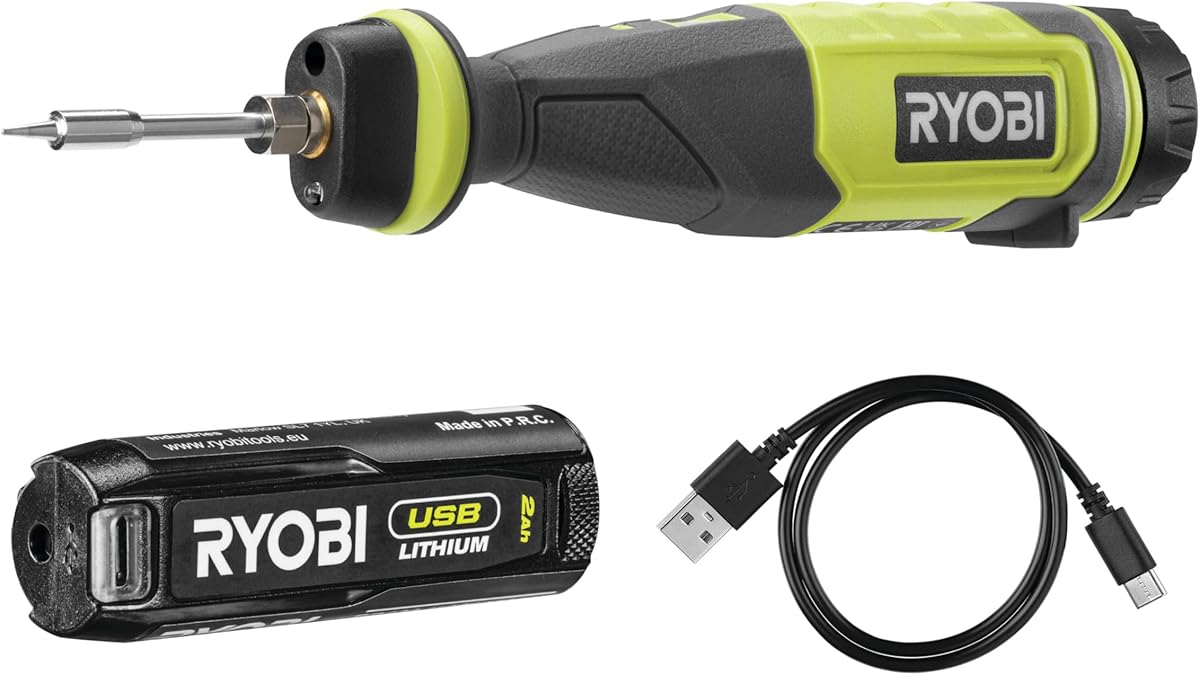
Choosing a cordless soldering iron: balancing portability with thermal performance
The Ryobi RSI4-120G represents a specific niche in soldering tools: ultra-portable, battery-powered irons designed for quick fixes and field work. Unlike traditional mains-powered irons, this 4V model trades maximum temperature for cordless convenience, making it essential to understand its intended use case. Buyers should evaluate whether their projects require sustained high heat or benefit more from mobility.
Key Considerations Before Buying
- Battery life versus project duration: The 2.0 Ah battery provides approximately 30-45 minutes of continuous use, making it suitable for intermittent tasks rather than prolonged soldering sessions.
- Temperature limitations: With a maximum tip temperature around 400°C, this iron handles light electronics work and thin wires well, but struggles with larger gauge wires or heat-intensive components.
- Ecosystem compatibility: This tool uses Ryobi's ONE+ battery platform, offering value if you already own compatible batteries, but requiring additional investment if you don't.
What Our Analysts Recommend
For cordless irons, examine the heating time specifications—this model reaches working temperature in about 60 seconds, which is competitive for battery-powered units. Quality indicators include tip retention systems (this uses standard screw-in tips) and battery indicator clarity; the Ryobi features a simple LED status light rather than precise percentage readouts.
Irons Market Context
Market Overview
The cordless soldering iron market has expanded significantly, with 4V-12V models now common for hobbyists and technicians needing mobility. These tools occupy a middle ground between traditional irons and butane-powered alternatives, offering cleaner operation than butane with more convenience than corded models. Ryobi's position in this segment leverages their established battery ecosystem rather than competing on pure technical specifications.
Common Issues
Battery-powered irons frequently struggle with thermal recovery—the ability to maintain temperature during actual soldering—leading to cold joints on larger connections. Users also report inconsistent performance as batteries discharge, with noticeable temperature drop below 50% charge. Tip oxidation can accelerate in cordless models due to inconsistent temperature regulation during standby periods.
Quality Indicators
Superior cordless irons feature active temperature regulation rather than simple resistive heating, though at the 4V level most use basic thermal designs. Look for well-sealed battery contacts to prevent solder flux corrosion, and check tip material quality—this Ryobi uses iron-plated copper tips which offer reasonable longevity for occasional use.
Review Authenticity Insights
Grade A Interpretation
The Grade A authenticity rating with only 8% estimated fake reviews indicates exceptionally reliable user feedback for this product category. This suggests the 4.20 adjusted rating accurately reflects real owner experiences rather than manipulated marketing. The high percentage of verified purchases (100%) further strengthens confidence in the review data.
Trust Recommendation
Given the strong authenticity metrics, you can place above-average trust in the review consensus that praises portability while noting thermal limitations. Pay particular attention to reviews discussing specific projects like RC car repairs or jewelry making, as these reflect genuine use cases rather than generic praise.
Tips for Reading Reviews
Focus on reviews that mention battery life in actual minutes of continuous use rather than vague 'long enough' statements. Look for discussions comparing this 4V model to both corded irons and higher-voltage cordless alternatives, as these provide meaningful performance context.
Expert Perspective
The Ryobi RSI4-120G serves a specific user perfectly: someone needing occasional, portable soldering capability who already invests in the ONE+ ecosystem. Its 4.20 adjusted rating from authentic reviews accurately reflects its competent performance within design constraints—excellent for quick fixes, inadequate for workshop use. The tool's value proposition hinges entirely on whether your workflow prioritizes convenience over thermal performance, as even Ryobi's own 18V model offers significantly better heat output.
Purchase Considerations
Consider this iron if you primarily perform occasional through-hole PCB work, jewelry repairs, or model building where outlet access is limited. Avoid it if you regularly solder connectors larger than XT60, work with ground planes that sink heat, or need to desolder multi-pin components. The included single battery makes a charger purchase necessary for most users.
Comparing Alternatives
Shoppers should compare thermal specifications against Milwaukee's M12 soldering iron and corded alternatives like the TS100 to understand performance tradeoffs at different price points.


