
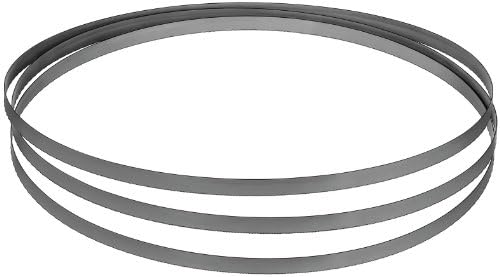
Selecting the Right Portable Band Saw Blade for Metal Cutting Applications
When choosing a portable band saw blade like the DEWALT DW3983, the 44-7/8-inch length, 0.020-inch thickness, and 18 TPI (teeth per inch) configuration are critical specifications. This specific combination is engineered for cutting various metals, where the 18 TPI provides a balance between cutting speed and surface finish on materials like thin-wall conduit, angle iron, and pipe.
Key Considerations Before Buying
- Material Compatibility: The 18 TPI tooth pitch on this blade is optimized for cutting ferrous metals like steel and cast iron, as well as non-ferrous metals like aluminum; it's less ideal for very thick stock where a lower TPI would be better.
- Blade Longevity vs. Cost: This 3-pack offers value, but consider your usage frequency—a high-volume shop might prioritize blade life in specific materials over the per-unit cost savings of a multi-pack.
- Machine Compatibility: Verify your portable band saw (like DEWALT's DCS374 or similar models) accepts the exact 44-7/8-inch length and the 0.020-inch thick, 1/2-inch wide blade; an improper fit causes tracking issues and premature failure.
What Our Analysts Recommend
For portable band saw blades, inspect the tooth geometry and set. A consistent, sharp tooth form and a uniform set (the alternating bend of teeth) are hallmarks of quality manufacturing that reduce vibration and improve cut straightness. Also, check for clear, permanent laser etching of specifications like '18 TPI' and 'Bi-Metal' to confirm grade.
Band Saw Blades Market Context
Market Overview
The portable band saw blade market is segmented by tooth configuration (TPI), material (carbon vs. bi-metal), and brand-specific fits. DEWALT, Milwaukee, and Bosch are key players, with many blades being OEM-compatible across brands. There's a noticeable trend toward bi-metal construction, like this DW3983, which combines a flexible backing with hardened teeth for durability.
Common Issues
Premature blade failure often stems from incorrect TPI selection (using a fine tooth like 18 TPI on very thick material causes clogging) or improper feed pressure. Vibration and wandering cuts can indicate a dull blade, incorrect tension, or a blade that's too thin (like this 0.020-inch) for an overly aggressive feed rate on hard metals.
Quality Indicators
A quality bi-metal blade will have a distinct weld line where the high-speed steel tooth strip is fused to the alloy backer. The teeth should feel uniformly sharp, not rounded, and the blade should lie flat without twists or kinks. Packaging that protects the blade's set during shipping is also a good sign.
Review Authenticity Insights
Grade B Interpretation
A 'B' authenticity grade with an 11% estimated fake review rate suggests the vast majority of the 5,090 reviews are reliable, but shoppers should be slightly cautious. This grade indicates a strong core of genuine feedback, typical for a well-established consumable tool accessory from a major brand like DEWALT.
Trust Recommendation
Focus on the verified purchase reviews, which all are in this case, and pay particular attention to detailed reviews that mention specific use cases, like cutting stainless steel brackets or EMT conduit. The adjusted rating of 4.60/5 is a more conservative and likely very accurate reflection of real-user satisfaction.
Tips for Reading Reviews
For consumables like saw blades, look for reviews that specify the material cut, the machine used, and the number of cuts achieved. Reviews mentioning 'lasted through a whole job site project' or 'cut 200 pieces of 1-inch square tubing' provide more actionable insight than generic 'works great' statements.
Expert Perspective
The DEWALT DW3983 presents as a high-quality, purpose-driven consumable. Its exceptional 4.89/5 rating, even when conservatively adjusted to 4.60/5, strongly indicates it meets professional and DIY user expectations for a bi-metal blade in its class. The specific 18 TPI, 0.020-inch thick configuration is a workhorse for general metal fabrication and plumbing. The 3-pack format is logical given that blades are wear items and often fail at inconvenient times.
Purchase Considerations
Weigh your primary cutting tasks against this blade's 18 TPI sweet spot. If you frequently cut mixed materials including thinner metals, it's an excellent choice. However, if your work is predominantly cutting thick solid bar stock, a 10-14 TPI blade might be more efficient. Also, consider if your saw's guide rollers are in good condition, as worn guides will shorten the life of any precision blade.
Comparing Alternatives
Shoppers should compare the cost-per-blade and TPI options from brands like Milwaukee (48-08-4022) or Bosch for their specific saw model to ensure optimal compatibility and value.


