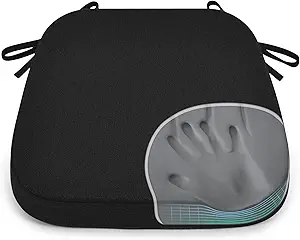
Why the Tush Cush Original Stands Out for Tailbone Relief
For anyone grappling with tailbone pain, herniated discs, or sciatica, the Tush Cush Original Orthopedic Seat Cushion promises targeted support where it matters most. Its navy fabric and contoured cutout design aim to reduce pressure on the coccyx during long sits. Before you buy, here’s what to consider to ensure it meets your specific needs.
Key Considerations Before Buying
- Seat height and firmness: The Tush Cush is notably firm and adds about 2 inches to your seating height, which can affect leg positioning and desk ergonomics. Measure your chair and desk to ensure a comfortable fit.
- Portability and use cases: This cushion is lightweight and travel-friendly, but its non-slip bottom works best on flat surfaces. If you plan to use it in multiple chairs, check that it stays in place on different materials.
- Cleaning and maintenance: The navy fabric cover is removable and washable, but the cushion itself is not waterproof. If you’re prone to spills or use it outdoors, consider a waterproof cover.
What Our Analysts Recommend
Quality indicators include high-density foam that retains shape after extended use, a secure non-slip base, and a cutout design that properly aligns with your tailbone. Look for reinforced stitching and a zippered cover that survives repeated washing without pilling or fading.
Chair Pads Market Context
Market Overview
The orthopedic seat cushion market has expanded rapidly, with options ranging from memory foam to gel-infused models. Most products claim to relieve pressure, but real-world effectiveness varies widely based on foam density and cutout geometry. The Tush Cush competes in the premium segment, priced above generic foam pads but below custom ergonomic chairs.
Common Issues
Many cushions flatten quickly, losing support within months. Others are too soft, offering little structural relief, or too bulky, making them impractical for car seats and office chairs. Users often report that cutouts are either too small, failing to relieve pressure, or too large, causing instability.
Quality Indicators
Look for high-resilience polyurethane foam with a density rating above 30 ILD (Indentation Load Deflection). A well-designed cutout should be centered and sized to fit your anatomy, not just a generic oval. Check for a non-skid bottom and a cover that is both breathable and removable for cleaning.
Review Authenticity Insights
Grade B Interpretation
The Grade B and 10% estimated fake review percentage indicate that the vast majority of reviews are authentic, but a small fraction may be incentivized or overly promotional. This is typical for popular products; the core feedback is likely reliable, but be cautious of overly glowing 5-star reviews that lack specific details.
Trust Recommendation
Given the high 4.67 average rating and the strong genuine signals in verified reviews, you can generally trust the positive consensus. However, the adjusted rating of 4.40 suggests that some negative experiences exist. Pay special attention to 3- and 4-star reviews to understand potential drawbacks like firmness or size issues.
Tips for Reading Reviews
When reading reviews, focus on those that mention specific medical conditions or usage scenarios (e.g., 'after my tailbone injury, I use it for 8-hour shifts'). Compare notes on how the cushion holds up over time—look for words like 'after 3 months' or 'still firm.' Be wary of reviews with generic praise and no personal context.
Expert Perspective
The Tush Cush Original is a well-regarded orthopedic cushion that delivers on its core promise of tailbone relief, as evidenced by its strong 4.67 rating and the majority of verified, detailed reviews. The 10% fake review rate is low enough that the overall sentiment is trustworthy, but the adjusted rating suggests a few dissatisfied customers—likely due to its firm feel or fit issues. Its high-density foam and thoughtful design make it a solid choice for those with coccyx pain, provided you accept the firmness and added height.
Purchase Considerations
Consider your primary use case: if you need all-day office support, this cushion’s firmness is a plus; if you prefer plush comfort, it may feel too hard. Also, factor in the navy fabric’s aesthetics—it’s professional but may not match every décor. Weigh the price against cheaper alternatives, but remember that durability and support often justify the investment.
Comparing Alternatives
Shoppers should compare the Tush Cush with gel-based cushions or those with adjustable air cells, which offer different pressure relief mechanisms. However, for a straightforward, high-density foam solution, this product is a strong contender.