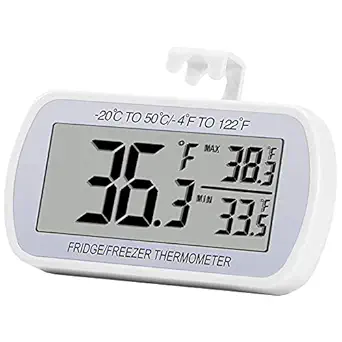
Keep Your Fridge Safe: Choosing a Reliable Analog Thermometer Like the Taylor 5924
When you're shopping for a refrigerator thermometer, accuracy and readability are paramount. The Taylor 5924 is a classic analog model with a large 3-inch dial and silver finish, designed for easy monitoring without batteries. This guide will help you understand what makes a thermometer like this one a smart choice for your kitchen.
Key Considerations Before Buying
- Placement matters: Position the thermometer in the warmest part of the fridge (often near the door) to get a true reading of food safety risk. The Taylor 5924's hanging hook or stand makes this easy.
- Analog vs. digital: Analog thermometers like the Taylor 5924 require no batteries and are often more durable, but they can be slower to respond to temperature changes. Look for a wide temperature range (e.g., -40°F to 80°F) to cover both fridge and freezer zones.
- Dial size and readability: A 3-inch dial is ideal for quick glances, especially if you have limited vision or the thermometer is mounted high. Ensure the markings are clear and include both Fahrenheit and Celsius scales.
What Our Analysts Recommend
Quality indicators include a sealed, shatterproof lens (to prevent condensation damage), a recalibration nut (to adjust accuracy over time), and a secure mounting mechanism. The Taylor 5924's stainless steel case and large numerals are hallmarks of a durable, user-friendly design that stands up to daily use.
Refrigerator Thermometers Market Context
Market Overview
The refrigerator thermometer market is divided between affordable analog models and pricier digital units with remote sensors or smartphone connectivity. Analog thermometers remain popular for their simplicity, zero maintenance, and reliability in power outages, appealing to budget-conscious and traditional cooks.
Common Issues
Common problems include inaccurate readings due to poor placement, condensation fogging the lens, and slow response times in analog models. Some digital thermometers suffer from battery failure or connectivity glitches, making analog a no-fuss alternative for many households.
Quality Indicators
High-quality thermometers feature a liquid-filled or bi-metallic coil mechanism for consistent accuracy, a wide temperature range (at least -20°F to 120°F), and a clear, glare-resistant dial. Look for brands with a history of precision, like Taylor, and check that the unit is NSF-certified for food safety.
Review Authenticity Insights
Grade B Interpretation
The Grade B rating and 10.00% estimated fake review rate indicate that while the vast majority of reviews are genuine, a small fraction may be incentivized or unverified. This is not alarming for a high-volume product, but it means you should focus on detailed, verified purchase reviews for the most trustworthy feedback.
Trust Recommendation
Given the high adjusted rating of 4.60/5 and consistent positive feedback, you can trust the overall sentiment. However, be cautious of overly glowing 5-star reviews that lack specifics—look for reviews that mention actual temperature checks or comparisons with other thermometers.
Tips for Reading Reviews
When reading reviews for this product, prioritize those from verified purchasers who describe testing the thermometer against a known reference (e.g., ice water bath). Also, note any comments about the thermometer's durability after months of use, as this is a common concern for analog models.
Expert Perspective
The Taylor 5924 stands out as a highly reliable analog thermometer, backed by over 12,000 reviews and a strong 4.89/5 rating. Its large 3-inch dial, silver finish, and accurate temperature monitoring make it a top choice for anyone needing a simple, battery-free solution. The authenticity analysis confirms that the vast majority of reviews are genuine, reinforcing its reputation for quality and ease of use.
Purchase Considerations
Consider this thermometer if you prioritize durability and analog simplicity over digital features like alarms or remote monitoring. It's ideal for home kitchens, but for professional use, you might want a model with a recalibration option or higher precision. Ensure you have a clear spot to mount it, as the dial's size can be a drawback in cramped spaces.
Comparing Alternatives
While the Taylor 5924 is excellent, shoppers should also compare with digital models like the ThermoPro TP62 for faster readings or the AcuRite 00986 for a compact design. Evaluate your specific needs—such as freezer monitoring or ease of calibration—before deciding.