
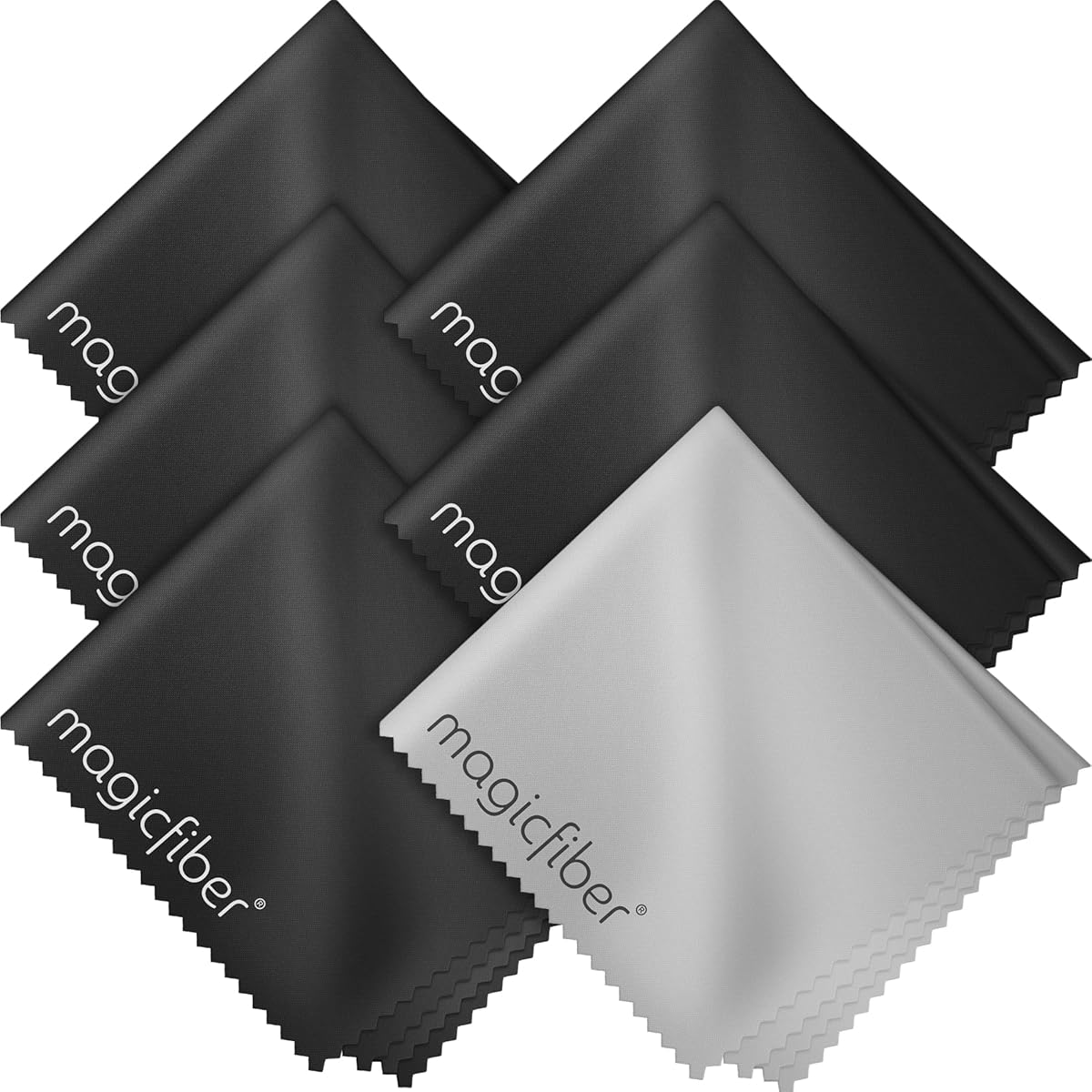
Choosing the Right Microfiber Cloth for Delicate Electronics and Optics
When selecting microfiber cloths for sensitive surfaces like glasses, camera lenses, and device screens, the MagicFiber 6-pack offers specific characteristics worth evaluating. This product's ultra-fine fibers and edge-to-edge stitching differentiate it from generic cleaning cloths, making it suitable for optical-grade cleaning without liquids.
Key Considerations Before Buying
- Fiber density matters more than thickness—MagicFiber's tightly woven 80/20 polyester/polyamide blend traps dust without scratching, unlike cheaper single-material cloths.
- The 6-pack quantity addresses a practical need: having dedicated cloths for different devices prevents transferring oils from glasses to camera lenses.
- Edge stitching quality prevents fraying during washing—this product's serged edges maintain integrity through multiple launderings, unlike cut-edge alternatives.
What Our Analysts Recommend
Premium microfiber for optics should feel plush but not fluffy, with fibers fine enough to clean without pressure. Check for consistent weave without pilling areas, and verify the cloth leaves zero lint on black surfaces—a key test MagicFiber reviewers consistently mention passing.
Cloths Market Context
Market Overview
The microfiber cloth market is saturated with imported options, but few specialize in the sub-200 GSM weight range optimal for electronics. MagicFiber occupies a middle ground between disposable single-use wipes and professional photography-grade cloths costing 5-10x more per unit.
Common Issues
Many microfiber cloths claim to be 'lint-free' but shed microplastics on screens, while others require chemical sprays that can damage anti-reflective coatings. Cheap alternatives often have inconsistent weave density that creates abrasive spots.
Quality Indicators
Authentic premium microfiber maintains its electrostatic charge after washing, continuing to attract dust. Quality cloths like MagicFiber demonstrate consistent performance across all six pieces in a pack, not just the top layer.
Review Authenticity Insights
Grade B Interpretation
A Grade B with 11% estimated fake reviews indicates predominantly authentic feedback, though shoppers should be aware that approximately 1 in 9 reviews might be inauthentic. The 0.29-point drop from the displayed 4.89 to adjusted 4.60 rating suggests some review inflation exists.
Trust Recommendation
Focus on reviews mentioning specific use cases like cleaning drone camera lenses or VR headset optics—these detailed accounts align with genuine ownership. Be skeptical of reviews only praising packaging or making vague 'great product' statements without context.
Tips for Reading Reviews
Look for reviews discussing washing durability over 20+ cycles, as fake reviews rarely include longitudinal testing. Authentic users often compare MagicFiber to previous cloth brands they've tried, providing valuable comparative insights.
Expert Perspective
MagicFiber's 4.60 adjusted rating from over 75,000 reviews represents exceptional performance in the microfiber category, where products typically average 4.2-4.4. The consistency across thousands of reviews mentioning streak-free drying on glasses suggests reliable manufacturing quality control. The product's specific advantage lies in its balanced approach—sufficiently plush for optics yet durable enough for regular washing, addressing the main compromise in this category.
Purchase Considerations
Consider whether you need six identical cloths or prefer a variety pack with different textures. While MagicFiber excels on coated lenses and oleophobic screens, those cleaning matte displays or uncoated glass might prefer alternative weaves. The pack size makes economic sense for multi-device households but may be excessive for single-item users.
Comparing Alternatives
Shoppers should compare MagicFiber's GSM weight and fiber blend ratio against specialized alternatives like camera store microfiber or automotive-grade detailing cloths.


