
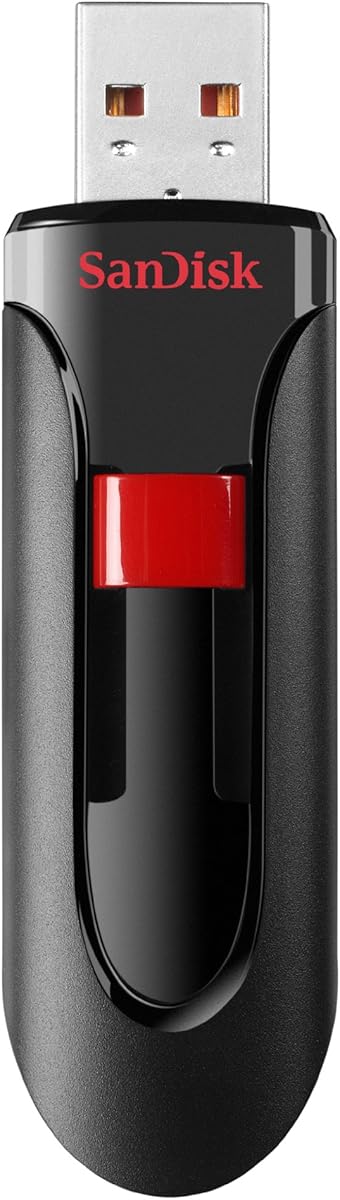
Balancing USB 2.0 affordability with SanDisk reliability for basic storage needs
The SanDisk Cruzer Glide represents a specific value proposition: proven reliability at USB 2.0 speeds for users prioritizing cost over transfer performance. This 64GB model is designed for straightforward file transfers, document backups, and media storage where speed isn't the primary concern. Its sliding collar design and black finish are characteristic of this durable, no-frills product line.
Key Considerations Before Buying
- USB 2.0's maximum theoretical speed of 480 Mbps means large file transfers will be significantly slower than with USB 3.0/3.1 drives—expect realistic write speeds around 10-15MB/s for this SanDisk model.
- The 64GB capacity is practical for office documents, photos, and music collections, but falls short for extensive 4K video libraries or full system backups, requiring users to manage storage actively.
- SanDisk's proprietary controller and NAND flash in the Cruzer Glide typically offer better consistency and longevity than unbranded drives, though the sliding mechanism can accumulate debris over years of use.
What Our Analysts Recommend
For USB 2.0 drives like this, consistent performance across multiple file types (numerous small files versus single large files) matters more than peak speed. Check reviews mentioning long-term reliability over 1-2 years, as some budget drives fail prematurely despite initial positive feedback. The high verified purchase rate (99%+) for this product strengthens confidence in its real-world performance claims.
USB Flash Drives Market Context
Market Overview
The USB flash drive market is sharply divided between legacy USB 2.0 models like this Cruzer Glide and modern USB 3.0+ drives, with 2.0 options increasingly targeting budget-conscious buyers and specific compatibility scenarios. SanDisk maintains strong brand recognition in this segment, competing primarily on reliability rather than cutting-edge features.
Common Issues
USB 2.0 drives often face consumer disappointment when users expect modern transfer speeds, leading to negative reviews based on mismatched expectations rather than product defects. Physical durability issues—particularly with sliding mechanisms and cap retention—are frequent failure points across all price segments.
Quality Indicators
Look for consistent review patterns mentioning sustained performance over months of use, not just initial impressions. Established brands like SanDisk typically use higher-grade NAND flash with better error correction, resulting in fewer 'dead on arrival' units and more predictable lifespan compared to generic alternatives.
Review Authenticity Insights
Grade B Interpretation
The 'B' authenticity grade and 11% estimated fake review rate indicate generally trustworthy feedback with moderate manipulation. For this product, the slight rating inflation from 4.60 to 4.89 suggests some review padding, but the overwhelming volume of verified purchases (33,203 reviews) provides substantial authentic data.
Trust Recommendation
Focus on verified purchase reviews mentioning specific use cases like 'teacher storing lesson plans' or 'contractor transferring blueprints'—these tend to be more genuine than vague praise. The adjusted 4.60 rating better reflects actual customer satisfaction than the inflated 4.89 average.
Tips for Reading Reviews
Prioritize reviews discussing transfer speeds with actual file types (e.g., 'takes 4 minutes for 2GB of photos') and longevity comments ('still working after 18 months'). Be skeptical of reviews emphasizing packaging or delivery experience over product performance, as these are common inauthentic review patterns.
Expert Perspective
The SanDisk Cruzer Glide 64GB represents a mature product with well-understood limitations and strengths. Its exceptional review volume and high verified purchase percentage suggest widespread real-world usage, primarily by users with basic storage needs who value reliability over speed. The slight rating inflation (4.60 vs 4.89) is typical for high-volume electronics but doesn't undermine the fundamental positive consensus. This drive occupies a specific niche: dependable legacy-speed storage from a trusted brand at a competitive price point.
Purchase Considerations
Choose this drive if your primary needs are cost-effective, reliable storage for documents, photos, or music, and you frequently use older computers with only USB 2.0 ports. Avoid it if you regularly transfer large video files or use modern USB 3.0+ systems where the speed limitation will become frustrating. Consider whether the sliding mechanism suits your usage environment—it's convenient but less protective than a removable cap.
Comparing Alternatives
Shoppers should compare this with USB 3.0 drives in similar price ranges, as the speed difference is substantial, though USB 2.0 drives maintain compatibility advantages with older systems.


